TL;DR: Star-studded and conceptually bold, In the Hand of Dante on Netflix mixes mob heists with Dante Alighieri’s world in dual timelines but loses momentum in languid pacing and unfulfilled thematic depth, resulting in an ambitious miss that feels more like academic notes than living poetry. Worth a glance for the performances, but it won’t linger like a true masterpiece.
In the Hand of Dante
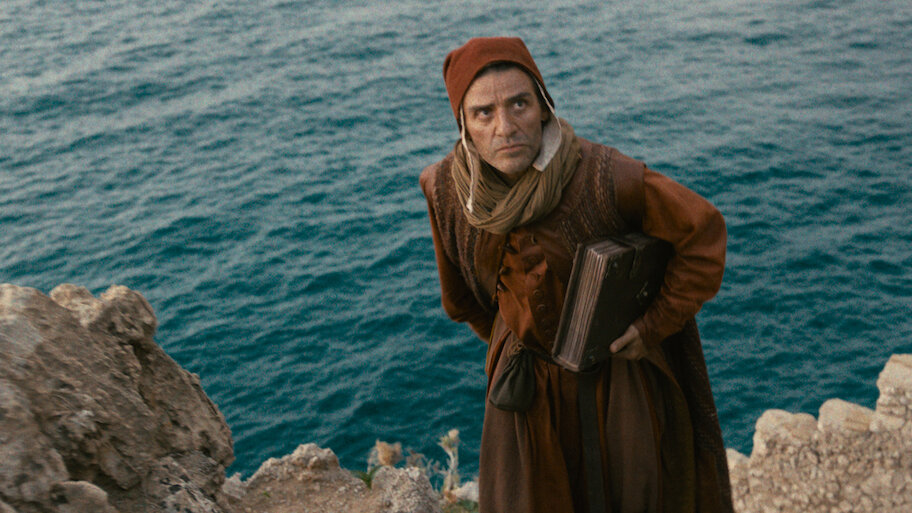
There I was, settling into my couch in the heart of Dubai after a long day chasing deadlines and squeezing in a sunset coastal run, remote in hand, expecting something that might stir the soul like a great epic RPG campaign where past legends bleed into present chaos. In the Hand of Dante promised exactly that kind of layered adventure, with Oscar Isaac stepping into dual boots as both the legendary Italian poet crafting his Divine Comedy and a modern-day writer Nick Tosches entangled in a shady New York underworld plot. What unfolded over its sprawling runtime, however, felt less like a masterful turn-based strategy unfolding across centuries and more like a beautifully rendered cutscene that keeps loading without ever delivering the boss fight payoff. The film, now streaming on Netflix after its Venice bow, teases profound intersections between faith, violence, art, and identity, yet it drifts through its own narrative fog, leaving you pondering the untapped potential rather than reveling in the journey.
As someone who geeks out over stories that bridge eras—think the Clone Wars era tactics echoing in modern strategy games or how sci-fi binges make you see reflections of ancient myths in today’s tech—this movie’s double-timeline conceit should have hooked me instantly. Isaac brings his signature intensity to both roles, making you feel the weight of creative exile and moral reckoning that links a 14th-century wordsmith to a 21st-century scribe. The supporting cast fires on all cylinders too, with heavy hitters like John Malkovich as a calculating mafia don, Gerard Butler channeling enforcer energy across timelines, and even Martin Scorsese popping up as a wise mentor figure in the historical threads. These aren’t just cameos; they’re attempts at weaving a tapestry where actors echo across time, suggesting deeper commentaries on power structures, redemption, and the artist’s burden. Yet, for all the star wattage, the connections often land with the subtlety of a side quest that forgets its own lore, resulting in moments that hint at brilliance without ever igniting it fully.
Diving deeper into the modern strand, the plot pulls Tosches into a high-stakes quest to authenticate a rare Dante artifact, one that could fetch a fortune on the black market. Paired with a volatile crew including Butler’s trigger-happy muscle, this heist narrative sprawls across sun-baked Italian locales and gritty New York backrooms, complete with Rolling Stones-infused vibes that nod toward classic crime sagas. I found myself leaning forward during the early setup, imagining how this could mirror the thrill of tracking down rare in-game relics in an open-world adventure, where every clue builds toward a cathartic reveal. Instead, the story meanders into repetitive dialogues that circle around religion and regret without landing solid punches, turning what could have been a pulse-pounding thriller into something that feels like watching a promising multiplayer session devolve into aimless wandering.
The historical segments, shot in a more intimate 4:3 aspect ratio bursting with vivid color against the present’s stark black-and-white, offer glimpses of genuine poetic fire. Here, Dante navigates papal politics, personal loss, and the forge of his masterpiece, with Isaac embodying the exile’s fire and doubt in ways that resonate with any creator who’s ever poured their chaos onto the page or screen. Gal Gadot and others double up effectively in these passages, creating visual rhymes that spark curiosity about cycles of human struggle. But even these threads suffer from the film’s overall languid pace, where observational camerawork floats without purpose, trapping the viewer in a form that ironically echoes the very constraints Tosches rants about in Dante’s poetry. It’s as if the director, known for vibrant artist portraits in past works, chose restraint over revelation this time, resulting in a visual style that whispers potential rather than roaring with it.
One of the most intriguing layers involves the film’s subtle wrestling with post-9/11 anxieties and Catholic guilt, filtered through Al Pacino’s impactful single-scene turn as a guiding uncle figure. These beats carry emotional heft, reminding me of those pivotal character moments in tactical games where a mentor’s wisdom shifts your entire playstyle. Tosches’ arc away from faith toward something more raw and self-defined feels ripe for exploration, especially in a world where we’re all biohacking our own recoveries and narratives. Yet, the movie never fully commits, letting these profound ideas simmer without boiling over into meaningful confrontation or transformation. The arrival of Jason Momoa’s rugged pursuer injects some late momentum, but by then, the timelines have tangled in too many loose ends, diluting what began as an exciting fusion of mob intrigue and literary mysticism.
What frustrates most is how close the film sails to greatness before veering into monotony. Schnabel’s track record with tales of creative geniuses suggests he knows how to capture the alchemy of inspiration, yet here the result resembles a dense academic tome on poetry—informative on the surface but devoid of the verses’ living rhythm. The ensemble’s cross-timeline performances, while clever in concept, rarely spark the thematic fireworks they promise, leaving social and religious parallels feeling incidental at best. As a geek who thrives on stories that reward deep dives, whether it’s dissecting Star Wars lore or optimizing Oura Ring metrics after a marathon gaming session, I craved more of that connective tissue, more visceral links between Dante’s inferno and Tosches’ modern hell.
Ultimately, the film’s biggest miss lies in its failure to make the personal identification between Tosches and Dante sing beyond surface gestures. Those initial conversations about seeing oneself in ancient words hold such promise for exploring how art transcends eras, much like how classic RPG mechanics still shape today’s blockbusters. Had it leaned harder into the authentication process or the soul-stirring act of creation, it might have transcended its genre trappings. Instead, it lingers in florid exchanges and handheld drifts that sap energy, turning an ambitious experiment into a cautionary tale about balancing vision with vitality. For cinephiles hunting their next immersive fix, it serves as a reminder that not every star-studded voyage reaches paradise.
In the Hand of Dante arrives with lofty dreams of blending literary history with underworld grit, boasting an impressive cast and intriguing dual timelines that should ignite passionate debates among film geeks. Yet its execution drifts into languid territory, where big ideas about faith, art, and identity fail to cohere amid repetitive pacing and undercooked connections. Julian Schnabel’s direction teases magic but delivers a handsome yet hollow experience that squanders its potential, making it a tough sell even for dedicated explorers of cinematic epics.