
Samsung is turning some of its wireless earbuds into something considerably more useful than another way to listen to music. The company has received clearance from the US Food and Drug Administration for a Hearing Aid feature that allows compatible Galaxy Buds to function as over-the-counter hearing aids for adults with perceived mild to moderate hearing loss.
The feature will initially be available on the Galaxy Buds3 Pro and Galaxy Buds4 Pro in selected approved markets during the fourth quarter of 2026. Full functionality requires a compatible Galaxy device running One UI 8 or later, and availability will vary depending on the market and paired device.
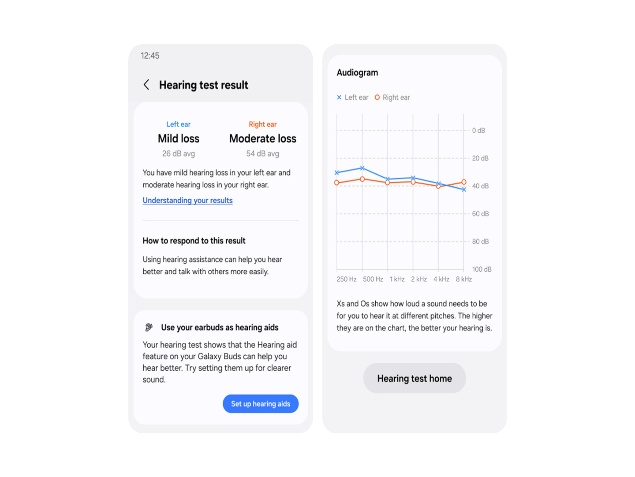
Samsung’s approach combines two related features. A Hearing Test lets users conduct a roughly five-minute assessment from the Galaxy Buds menu within their phone’s Settings, without requiring a separate application. Each ear is tested individually using pure-tone audiometry, with the software producing an audiogram and classifying hearing across normal, mild, moderate, severe or profound hearing loss.
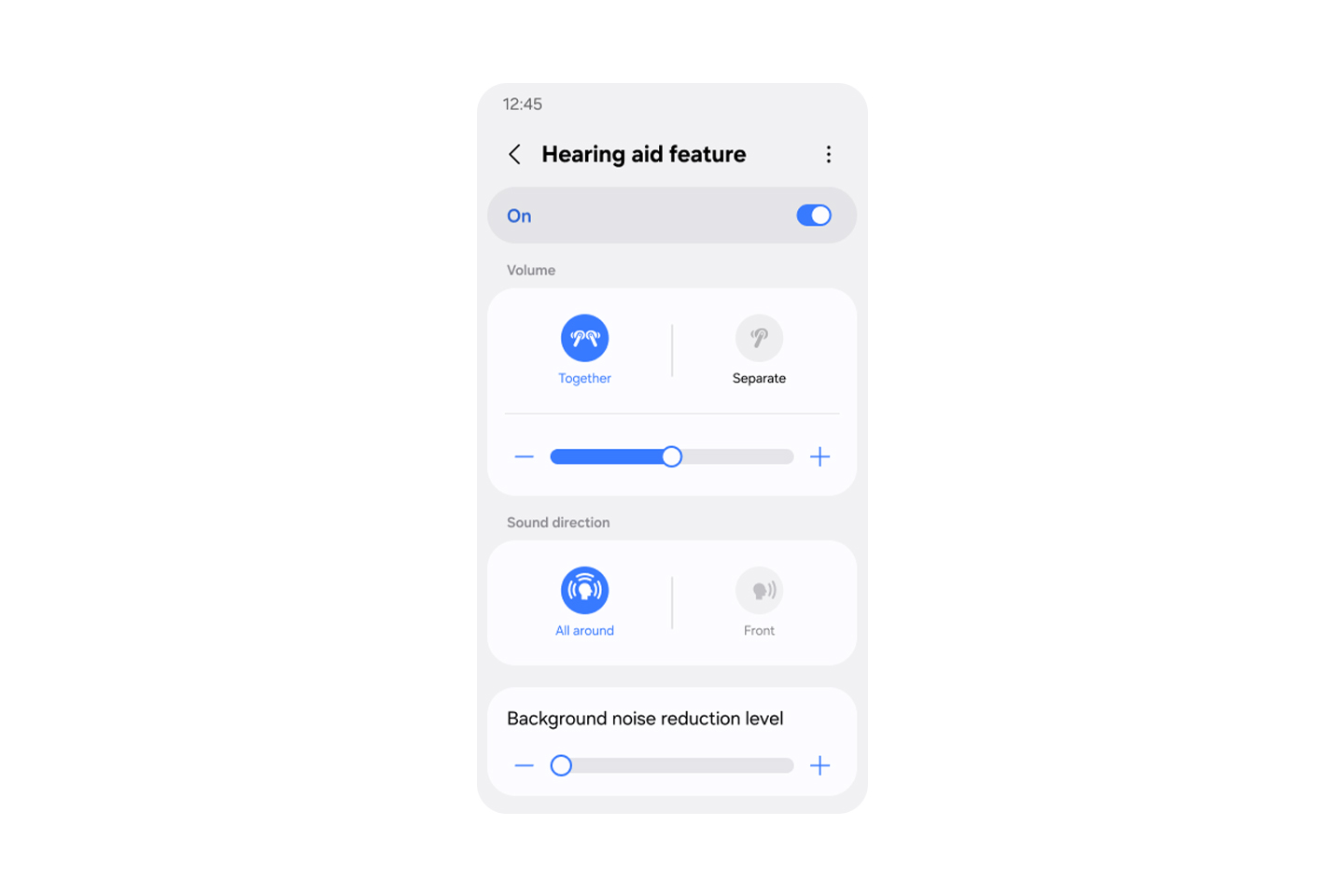
Samsung says the Hearing Test is registered as Software as a Medical Device and can produce results comparable in accuracy to an evaluation conducted by an audiologist. The Hearing Aid feature then uses those results to create a personalised hearing profile, amplifying frequencies and sounds that may otherwise be difficult for the user to hear.
The system uses NAL-NL2, a widely used hearing-aid fitting formula, while additional processing includes noise reduction and beamforming intended to make voices in front of the listener easier to distinguish from surrounding noise. Hearing Test results and information about noise exposure can also be viewed through Samsung Health.
The FDA clearance is the latest step in Samsung’s longer-running work on hearing accessibility. The company introduced Personal Sound Amplification Product functionality with the Galaxy Buds+ in 2020, with that technology subsequently receiving clinical validation for assisting everyday communication. Samsung says development of its newer hearing technology involved the National Acoustic Laboratories and Samsung Medical Center, with clinical validation studies conducted at Vanderbilt University Medical Center, San Jose State University and the University of Memphis.
There is a broader shift happening here beyond Samsung’s earbuds. Consumer audio products are increasingly overlapping with technologies that once required dedicated medical hardware. Modern earbuds already contain capable microphones, sophisticated audio processing and enough computing power to adapt sound in real time, making hearing assistance a logical extension of the hardware.
That does not make Galaxy Buds a universal replacement for professional hearing care. Samsung specifically positions the FDA-cleared Hearing Aid feature for people aged 18 and older with perceived mild to moderate hearing loss, and the company notes that it is not a substitute for professional diagnosis or treatment.
Still, putting an OTC hearing aid into earbuds people may already wear every day could reduce some of the cost, inconvenience and stigma associated with traditional hearing devices. As Samsung brings the feature to approved markets later this year, the bigger question will be how effectively consumer earbuds can bridge the gap between everyday audio accessories and regulated hearing-health technology.