

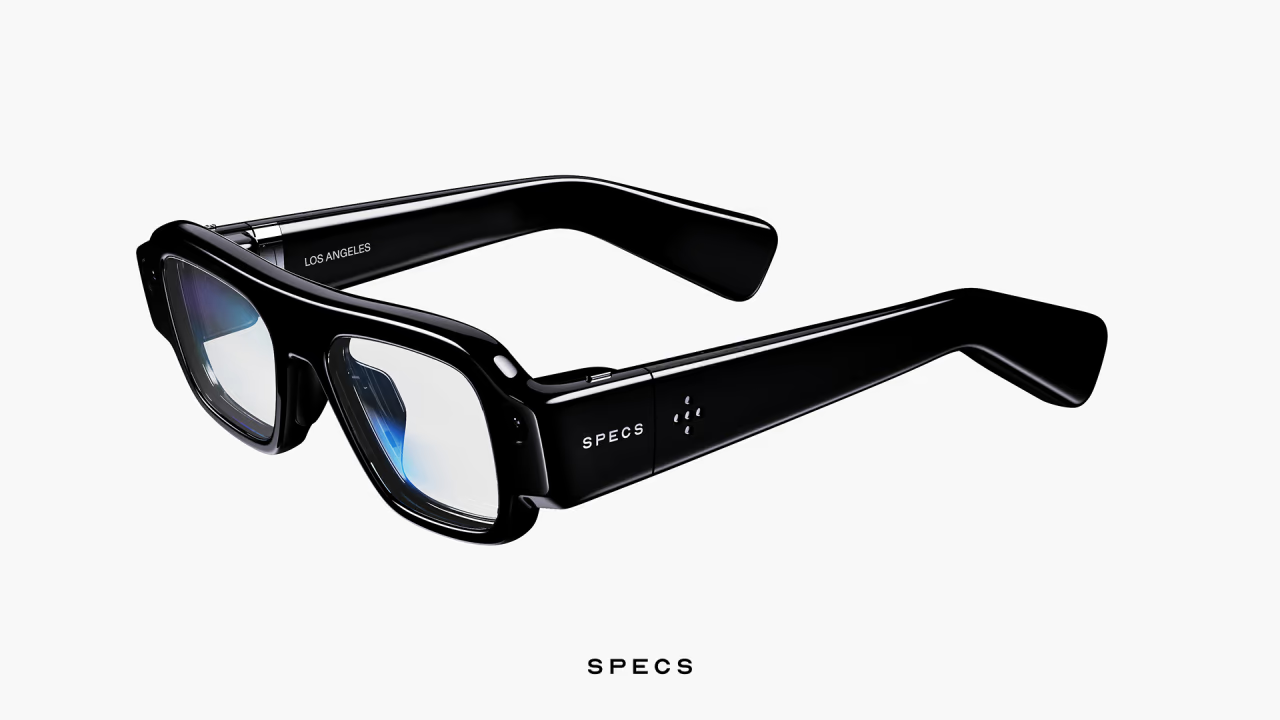
Snap has entered the augmented reality hardware arena with SPECS, a standalone pair of smart glasses priced at $2,195. The device aims to blend everyday wear with digital overlays, though its cost and early-stage capabilities raise questions about mainstream viability in a market still searching for compelling daily use cases.
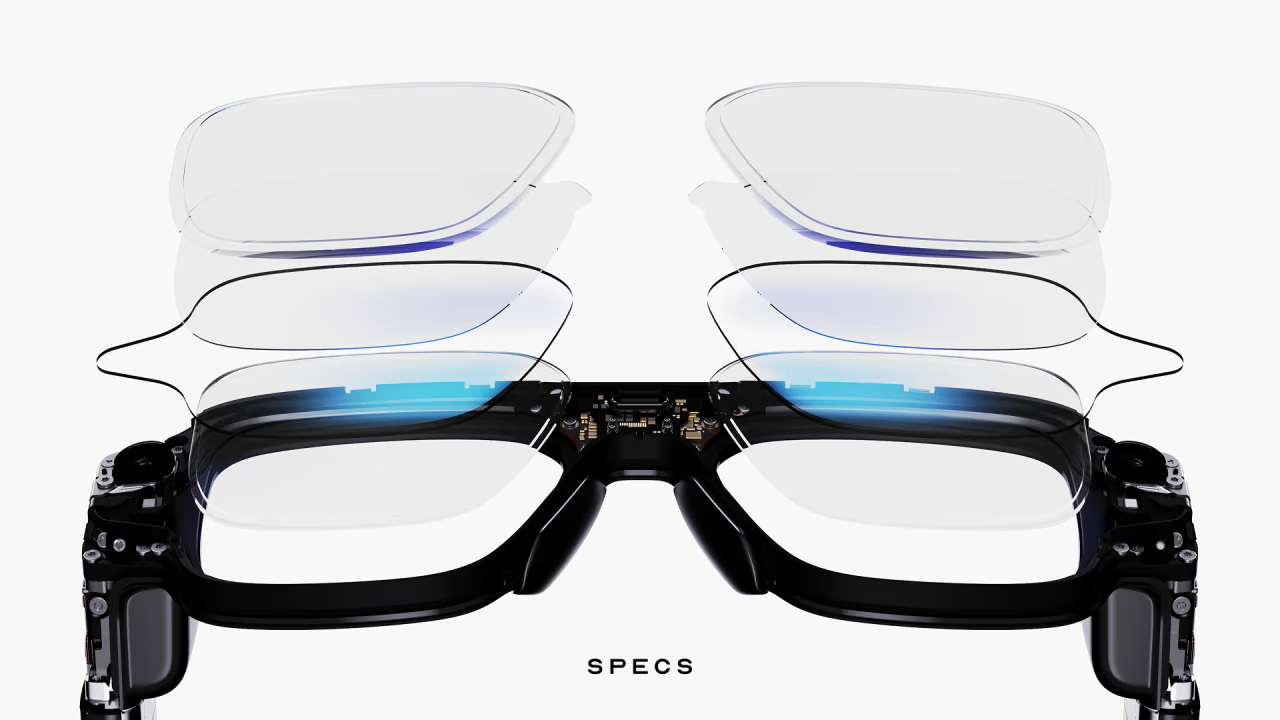
Constructed from lightweight Swiss TR90 polymer, the glasses come in 47mm and 52mm frames weighing 132 and 136 grams respectively. Removable prescription inserts and electrochromic lenses that tint in roughly 10 seconds address basic adaptability to user needs and lighting changes. Visual output relies on Snap’s custom liquid crystal on silicon displays and a stereo waveguide with intricate nanostructures, delivering a claimed 51-degree field of view and 16 million colors. The company positions this as equivalent to a 24-inch monitor for productivity or a large home screen for entertainment, with optics tuned to minimize distortion and better blend digital elements with the real world.
Processing comes via a dual Snapdragon setup, separating computer vision tasks from the Lenses platform. This supports hand tracking, voice input, and low latency around seven milliseconds to anchor virtual content more convincingly. Stereo speakers and a microphone array handle spatial audio and voice interactions. Notably, SPECS operates independently without external battery packs or tethers, a practical step forward compared to some prior AR attempts. Battery life reaches about four hours in mixed use, supplemented by a charging case for additional cycles totaling up to 20 hours, plus magnetic wired charging during wear. USB-C connectivity allows the glasses to serve as an external display for Macs, iPhones, or consoles.
The launch emphasizes developer tools, including agentic features in Lens Studio with ties to external coding assistants like Claude and Cursor. This focus suggests Snap recognizes the need for a robust ecosystem before the hardware can move beyond novelty. Pre-orders with a $200 deposit are open, with shipments expected this fall in select markets including the US, UK, and France.
Positioned ahead of Apple’s anticipated smart glasses, which reportedly remain display-free and years away, SPECS highlights the fragmented race toward wearable computing. Yet the $2,195 price point limits accessibility, echoing past premium AR efforts that struggled with adoption. Battery constraints and the challenge of creating truly useful, non-distracting experiences persist as hurdles. While the standalone design and optical refinements show thoughtful engineering, questions linger about real-world comfort during extended wear, privacy implications of always-on cameras and microphones, and whether AI-driven Lenses will deliver sustained value or merely occasional entertainment.
Snap’s move underscores broader industry momentum in AR hardware, driven by advances in miniaturization and processing efficiency. However, history with similar devices suggests success will hinge less on specifications and more on delivering seamless integration into daily routines without fatigue or social awkwardness. For enthusiasts and developers, SPECS offers an early platform to experiment; for most consumers, the combination of cost, battery life, and unproven utility may warrant waiting for further iterations or competitive pressure to drive improvements. As augmented reality edges closer to practical reality, devices like this test whether the technology can finally justify its promises.