
Samsung is using World Heart Day, which fell on September 29, as a reason to remind Galaxy Watch owners how much cardiovascular monitoring is already packed into their wrists. There is no new hardware here and no fresh feature launch, just a renewed pitch for tools that have been building up across recent Galaxy Watch generations. Still, it is a useful moment to look at what those tools actually do and where their limits sit.
The context is not in dispute. The World Health Organization lists heart disease as the leading cause of death globally, and the American Heart Association’s Life’s Essential 8 framework points to diet, exercise, sleep, weight, blood pressure, blood sugar, cholesterol and smoking as the factors that shape long-term heart health. A smartwatch can meaningfully track only some of those, mainly sleep, activity and, with caveats, blood pressure.
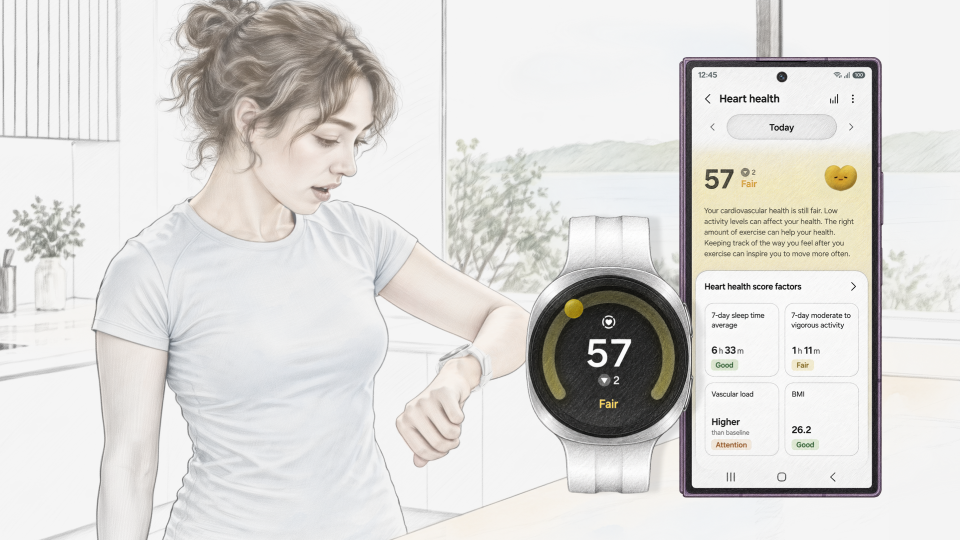
Samsung’s answer is the Heart Health Score in Samsung Health, which requires app version 7.0 or later. It rolls sleep duration, activity levels, body composition and a metric Samsung calls vascular load, a measure of cardiovascular strain during sleep compared against your baseline, into a single number. Skip several days of moderate or vigorous exercise and the score dips, with a nudge to get moving. It is a sensible way to make abstract data readable, although a single score inevitably hides how each factor is weighted.
The hardware doing the work is Samsung’s BioActive Sensor, which combines optical heart rate, ECG and bioelectrical impedance readings. A 30-second ECG taken by resting a finger on the watch’s button can flag signs of atrial fibrillation or premature beats, while Irregular Heart Rhythm Notification passively watches for repeated irregular patterns through the day. Blood pressure readings are the most qualified feature, since they rely on calibration against a conventional cuff monitor and must be recalibrated every 28 days.
Overnight, the watch tracks heart rate, heart rate variability, respiratory rate, skin temperature and blood oxygen, then alerts you in the morning if readings stray noticeably from your norm. Samsung says its notifications have helped users in several countries catch conditions such as atherosclerosis and heart attacks early, though it offers no figures to show how often that happens.
The more interesting addition for families is Health Data Sharing, which lets users choose to share selected metrics, including steps, blood pressure and medication adherence, with relatives. It requires consent, but it also raises fair questions about how comfortable older parents will be with being monitored, however lovingly.
None of this replaces a doctor. The real test is whether these alerts push people toward proper medical checks rather than false reassurance.