
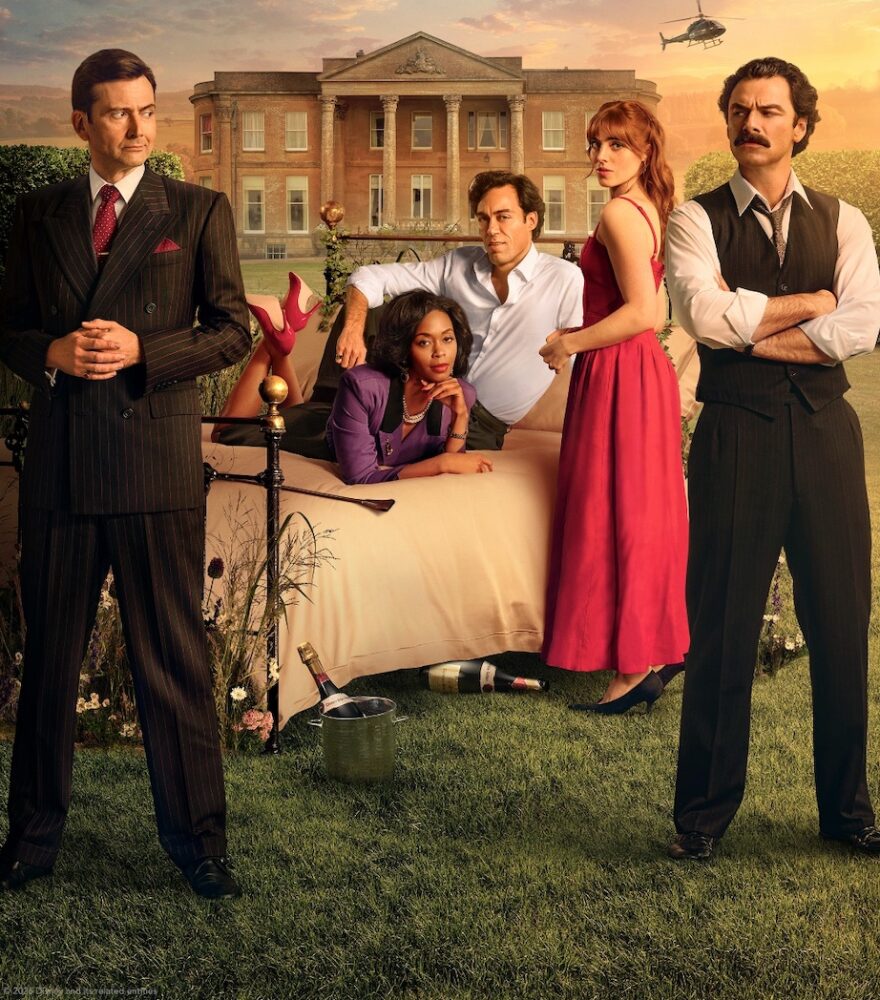
Rivals returns to Disney+ on 15 May with its second season, picking up the glossy, scandal-soaked rivalry at the heart of 1980s British television and high society. The adaptation of Jilly Cooper’s bestselling novel continues to chart the cut-throat battle for the Central South West franchise, where ambition, sex, and betrayal collide in the fictional county of Rutshire.
At the centre remains Lord Tony Baddingham, portrayed by David Tennant with a mix of ruthlessness and vulnerability that has drawn consistent praise. Season two promises to escalate the conflict between his Corinium operation and its rival Venturer, as buried secrets surface and fragile alliances crumble under mounting pressure. The story leans deeper into the excess and moral ambiguity of the era, where personal desire and professional scheming prove equally destructive.
New arrivals to the ensemble include Hayley Atwell as Helen Gordon, Rupert Campbell-Black’s ex-wife, and Rupert Everett as her husband Malise Gordon, adding fresh layers of history and tension to the established cast that features Alex Hassell, Danny Dyer, Katherine Parkinson, and others. The season expands to twelve episodes, released in two batches, beginning with a three-episode premiere.
Cooper’s Rutshire Chronicles have long offered a satirical yet affectionate lens on Britain’s elite, blending romance, power plays, and social commentary. The television version, which first launched in late 2024, captured that tone with lavish production values and an unapologetic willingness to embrace the source material’s steamy reputation. Critics noted its soapy pleasures alongside occasional narrative wobbles, yet the strong performances—particularly Tennant’s—helped it stand out in a crowded streaming landscape.
In an industry increasingly wary of risk, Disney+ has backed a project that celebrates unfiltered escapism. The show arrives at a time when period dramas often prioritise prestige over fun; Rivals makes no such concessions. Its appeal lies in the shameless spectacle of shoulder pads, affairs, and corporate warfare, all set against a meticulously recreated 1980s backdrop. Yet this very excess invites scrutiny. The series revels in the glamour of a deregulated television world that foreshadowed today’s media consolidation and influencer culture, but it rarely pauses to interrogate the deeper costs of that world—beyond the personal toll on its characters.
For viewers who enjoyed the first season’s cocktail of satire and scandal, the return offers more of the same with heightened stakes. Whether the expanded runtime allows for richer character development or simply more plot twists remains to be seen. At its best, the show reminds audiences why Cooper’s books endured: they deliver entertainment without pretending to be more virtuous than the society they mock. In a streaming era dominated by franchises and algorithms, a glossy, adult-oriented drama like this feels almost contrarian.
Rivals season two does not reinvent the formula, but it doubles down on what worked—charismatic performances, lavish settings, and unapologetic drama. For those drawn to stories of power and passion in Thatcher-era Britain, it provides another indulgent chapter.