
Google is expanding Gemini on Android this summer with a set of new features collectively branded as Gemini Intelligence, arriving first on recent Pixel and Samsung Galaxy devices. The update focuses on deeper integration with the home screen, task automation, form filling, and voice input, continuing the company’s steady push to embed generative AI more fully into daily phone use.
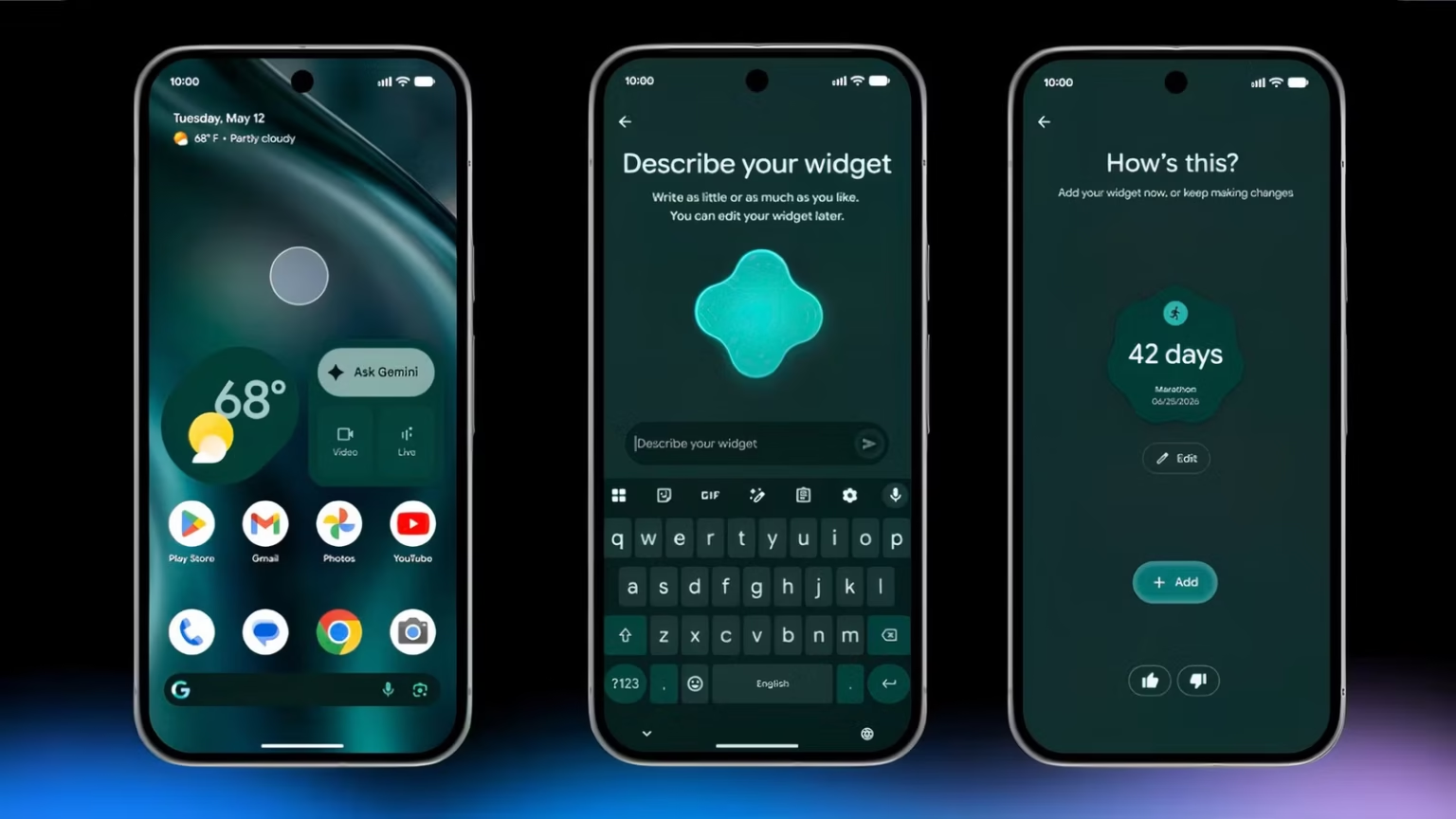
The most visible addition is Create My Widget, which lets users describe a desired widget in plain language and have Gemini generate a custom, adaptive version for the home screen. A meal-prepper might request weekly high-protein recipe suggestions, for instance, and receive a resizable dashboard that pulls relevant information. These widgets are meant to feel more personal and dynamic than traditional static ones, though their usefulness will depend on how reliably Gemini interprets requests and keeps data current.
Further along the automation spectrum, agentic AI aims to handle multi-step tasks across apps. Users can issue commands that involve navigating menus, pulling information from emails or images, and completing actions such as booking classes or building shopping carts. The system uses screen context, photos, and live notifications for awareness, with final results requiring user confirmation. While this could reduce friction in routine activities, it also raises practical questions about accuracy, battery impact, and what happens when the AI misinterprets intent or encounters app changes.
Personal Intelligence offers opt-in autofill across apps and Chrome, drawing from connected data to complete forms. Google emphasizes user control, but the feature sits at the intersection of convenience and privacy, an area where many remain cautious after years of data-handling controversies. Separately, Rambler in Gboard processes spoken input into concise, edited text without storing audio, addressing the common gap between casual speech and polished messages.
These capabilities build on existing Gemini tools rather than replacing them outright. Android has long relied on widgets for customization, and Google Assistant has attempted task automation for years; the current iteration simply adds more context awareness and generative flexibility. The rollout timing aligns with broader industry moves toward on-device and hybrid AI, yet it also highlights ongoing tensions around processing power, cloud dependency, and whether the average user needs this level of assistance for everyday phone tasks.
Samsung and Pixel owners with compatible devices will see the features arrive gradually. Early impressions from similar AI experiments suggest real productivity gains in narrow scenarios, tempered by occasional hallucinations, setup friction, and the familiar learning curve of teaching an AI your preferences. As phones become more capable intermediaries for real-world actions, the value of Gemini Intelligence will ultimately rest less on flashy demos and more on consistent reliability and transparent data practices.
In a market crowded with AI promises, Google’s approach feels measured: incremental enhancements that extend Android’s strengths rather than reinventing the wheel. Whether these tools become indispensable or remain occasional novelties depends on how thoughtfully they are refined in the months ahead.