


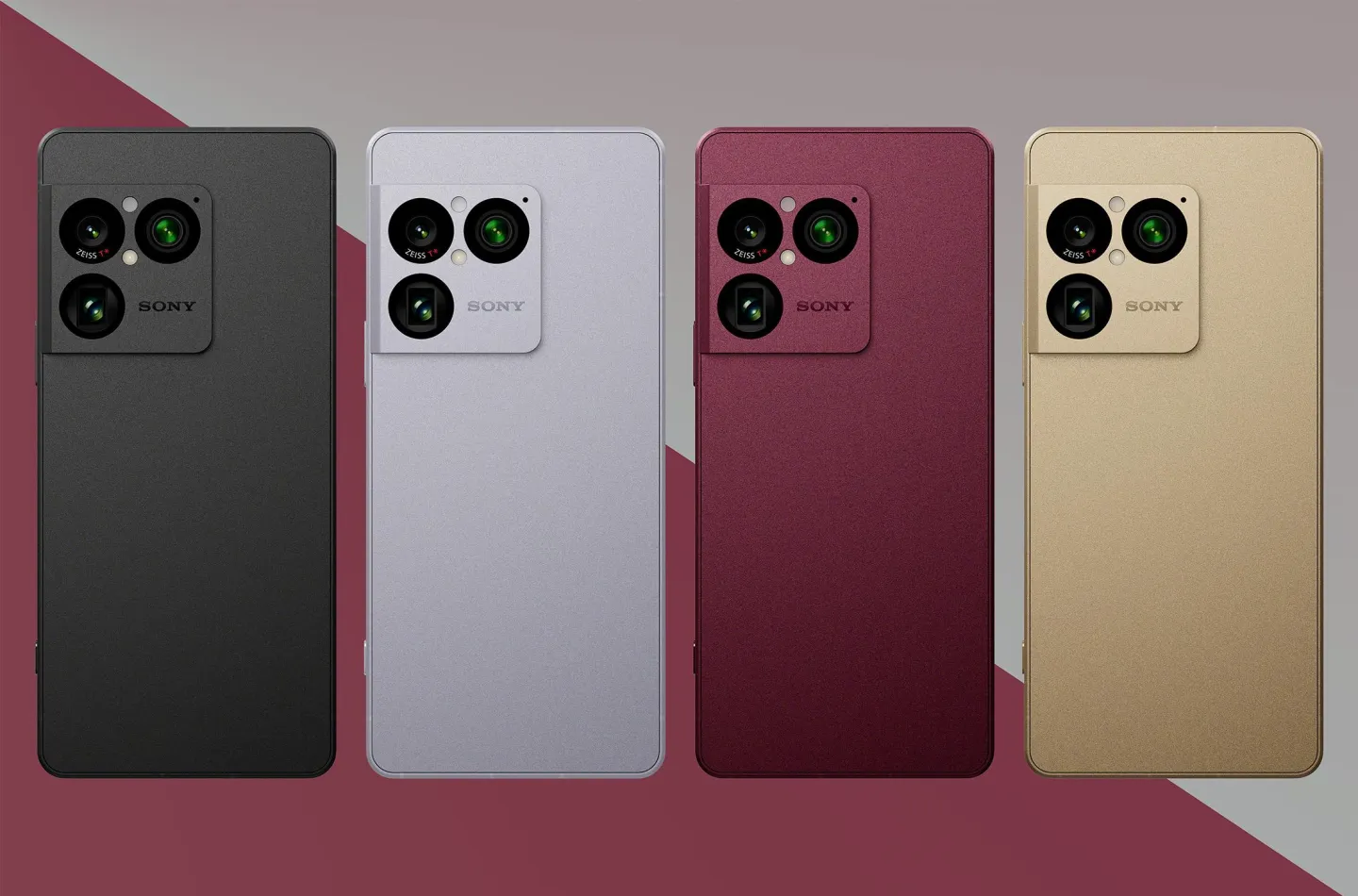
Sony’s Xperia 1 VIII arrives with a noticeable design shift after years of incremental updates that left the lineup feeling increasingly dated. The latest flagship moves away from the tall, narrow profile and vertical camera strip that defined its predecessors since 2020, adopting instead a chunky square camera island on the back. This raised, sloping module houses the lenses, flash, and branding in a layout that echoes elements of recent iPhones and Motorola Edge models, yet retains a distinct angular Sony character. It is a welcome refresh, though one that highlights how long the company stuck with a formula that had begun to look stale next to more fluid competition.
The change is not purely cosmetic. Sony has used the new arrangement to fit a significantly larger sensor in the telephoto camera, measuring 1/1.56-inch and roughly four times the size of the previous generation’s unit. Paired with a 48-megapixel resolution, f/2.8 aperture, and 70mm-equivalent focal length, it positions the lens as one of the stronger telephoto options available, at least on paper. This comes at the cost of the continuous optical zoom featured on the last four Xperia 1 models. Main and ultrawide cameras remain at 48 megapixels with relatively modest updates, while new processing pipelines aim to improve RAW output, bokeh simulation, and macro performance with autofocus now available in the standard mode.
An AI camera assistant adds another layer, offering real-time suggestions for framing, filters, lenses, and subject adjustments before the shutter is pressed. The feature can be disabled, but its default-on approach contrasts with more optional tools on rival devices. Whether it proves genuinely helpful or intrusive will depend on real-world tuning, an area where Sony’s photography software has sometimes lagged behind the hardware potential.
Elsewhere, the phone retains familiar Sony signatures: a 3.5mm headphone jack, microSD card slot, and IP65/68 water and dust resistance. Stereo speakers have been upgraded for clearer, louder output with input from Sony’s music and film divisions. Battery capacity stays at 5,000mAh with 30W charging, though efficiency tweaks are said to add about an hour of runtime. Under the hood sits the latest Snapdragon 8 Elite Gen 5 chipset, with configurations reaching 16GB of RAM and 1TB of storage. The display and core design language remain largely consistent with prior models, prioritising a tall aspect ratio suited to media consumption and gaming.
On the downside, software support is limited to four years of operating system updates and six years of security patches, noticeably shorter than most flagship competitors. Pricing starts at around £1,399 / €1,499 for the base 12GB/256GB model, climbing to £1,849 / €1,999 for the top variant. The Xperia 1 VIII is available now in parts of Europe and Asia in black, silver, red, and an online-exclusive gold finish, but Sony has again opted against a North American launch, continuing a pattern that has restricted the brand’s reach in one of the world’s largest smartphone markets.
Overall, the Xperia 1 VIII feels like a measured evolution rather than a bold reinvention. It addresses some long-standing visual fatigue and strengthens the telephoto camera, yet retains quirks and limitations that may keep it appealing mainly to niche enthusiasts who value the headphone jack, expandable storage, and Sony’s particular approach to photography. In a market dominated by Samsung, Apple, and increasingly capable Chinese flagships, it remains a distinctive but narrowly targeted option.