

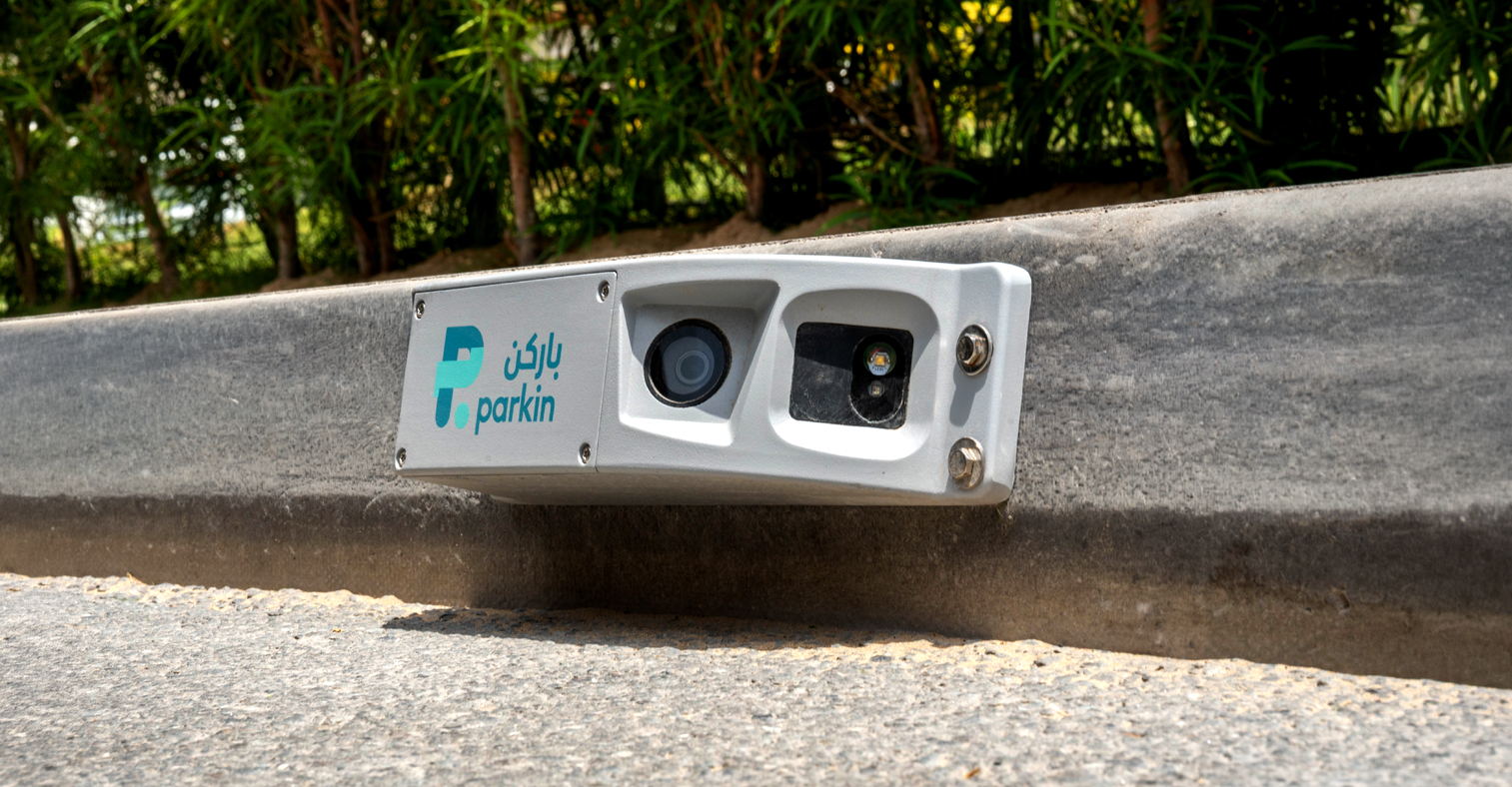
Dubai is rolling out its first wave of on-street parking cameras as part of a broader push to modernise parking management across the city. Parkin, the dominant operator of paid public parking in the emirate, has begun installing more than 500 curb and pole-mounted cameras in high-demand areas including Trade Centre 1, Burj Khalifa, and Al Corniche. The curb-side units are claimed to be the first of their kind in the region. A parallel deployment of around 200 cameras is also under way in controlled parking lots.
The systems rely on AI-powered cameras that automatically read vehicle number plates to log entry and exit times, calculate fees, process payments, and flag violations. All units are solar-powered and feed real-time occupancy data into a central platform. Once fully operational, the technology is expected to reduce the familiar frustration of circling for spaces, ease congestion caused by parking searches, and improve turnover rates in busy districts. Both on-street and off-street components integrate directly with the Parkin mobile app, allowing automatic deductions through the company’s digital wallet.
This is not entirely new territory. Many cities worldwide, from Singapore to London, have deployed similar automatic number plate recognition systems for years, often with mixed results. Proponents highlight smoother traffic flow and better use of limited urban space; critics point to concerns over constant surveillance, data security, and the potential for higher effective enforcement that feels more punitive than helpful. In Dubai’s context, the move aligns with long-standing ambitions to build a “smart” city, an effort that has accelerated since the early 2010s through various RTA initiatives. Yet success will ultimately depend less on the hardware rollout and more on how transparently usage data is handled and whether the system genuinely reduces overall hassle rather than simply shifting it to digital compliance.
Parkin holds a commanding position in Dubai’s parking market, managing roughly 229,000 paid spaces as of late 2025 under a 49-year concession from the Roads and Transport Authority. The company traces its roots to municipal operations established in 1995, later absorbed by the RTA in 2005. It was formally spun out as Parkin Company PJSC in late 2023 and listed on the Dubai Financial Market the following year. Beyond core parking operations, the firm earns revenue from enforcement, seasonal permits, reservations, and partnerships with developers and malls. In 2025 alone, customers completed 141 million parking transactions, many already shifting toward digital payments.
For everyday users, the immediate promise is convenience: fewer tickets for honest mistakes, faster payments, and real-time information on available spots. The company’s CEO, Eng. Mohamed Abdulla Al Ali, described the deployment as an important step in scaling infrastructure and improving customer interactions. CTO Eng. Talal Al Ajmi emphasised the role of real-time data in creating more accurate and connected operations. Both statements reflect standard corporate positioning for such upgrades.
Whether the system delivers lasting improvements to daily mobility in one of the world’s fastest-growing cities remains to be seen. Early adoption will likely hinge on reliability, fair enforcement, and the absence of technical glitches that could frustrate drivers further. For now, residents and visitors can test the experience by downloading the Parkin app on iOS, Android, or Huawei devices.