
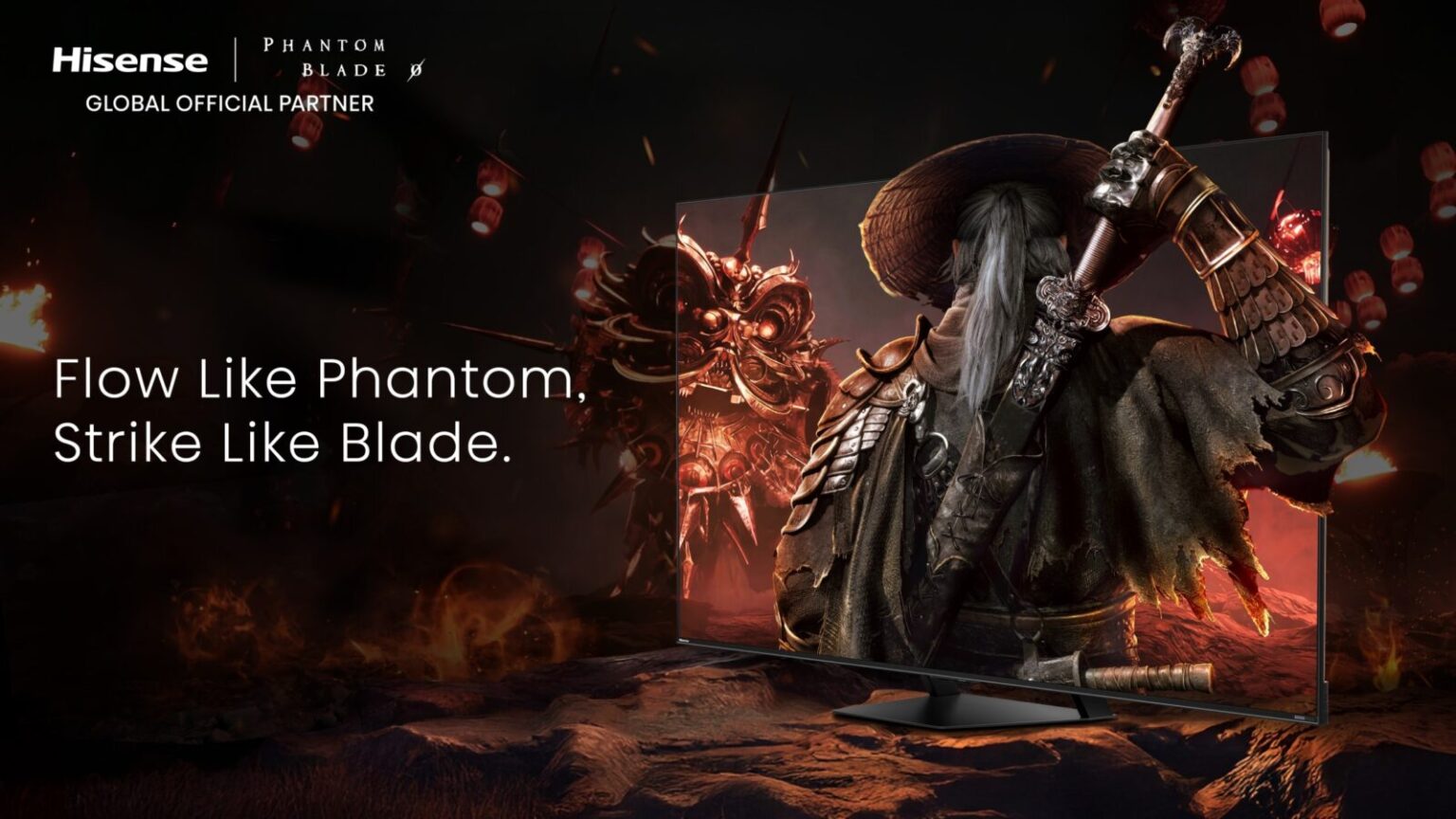
Hisense has entered a partnership with the upcoming action role-playing game Phantom Blade Zero, taking on the role of global official partner for both televisions and monitors. The collaboration, announced in early May 2026, will be highlighted at Gamescom LATAM in São Paulo, where the company plans to demonstrate how its displays handle the game’s visuals in real-time play.
Phantom Blade Zero, developed by Beijing-based S-GAME and powered by Unreal Engine 5, blends Wuxia storytelling with fast-paced martial arts combat. Set for release on September 8, 2026 for PlayStation 5 and PC, the title follows an elite assassin named Soul through a stylized “Phantom World” that mixes traditional Chinese martial arts aesthetics with darker, cinematic elements. The partnership focuses on leveraging Hisense’s display hardware—particularly its RGB MiniLED technology—to improve color range, contrast, and motion handling during intense sequences.
In practice, this means Hisense TVs and monitors will be used to showcase smoother combat animations, deeper environmental details, and more atmospheric lighting effects. Developers and players have praised the game’s fluid, high-speed action in early previews, but the actual benefit of any specific display brand will ultimately depend on calibration, room conditions, and individual preferences rather than marketing claims alone. Many modern gaming displays from multiple manufacturers already deliver strong HDR performance and high refresh rates, so the real differentiator often comes down to price, reliability, and consistent real-world results rather than partnership announcements.
Paul Zhang, general manager of brand and marketing at Hisense’s global commercial center, noted the importance of matching emotional tone and responsive visuals for this style of game. Julius Li, marketing director at S-GAME, described the shared goal of delivering a vivid, cinematic experience that makes the world feel tangible. These statements reflect standard language for such tie-ups, where hardware makers seek visibility in the growing gaming segment and game studios gain promotional reach.
Hisense, founded in 1969, has grown into a major player in consumer electronics with operations in over 160 countries. The company holds a strong position in the large-screen TV market, particularly models 100 inches and above, and has invested heavily in MiniLED backlighting. Like many established TV brands, it is actively expanding into gaming as consoles and PC hardware continue to push higher resolutions and frame rates. This latest move follows a pattern of consumer electronics firms aligning with entertainment properties—sports sponsorships such as the FIFA World Cup or game partnerships—to stay relevant with younger audiences who spend significant time in front of screens.
Whether these collaborations translate into noticeably better gameplay experiences remains debatable. While improved contrast and color can enhance immersion in atmospheric titles, core enjoyment of Phantom Blade Zero will still hinge more on its combat system, story, and overall design than on the specific television or monitor used. For consumers, the partnership serves as a reminder to evaluate displays based on independent testing for input lag, motion clarity, and HDR performance rather than tie-in hype.
As the line between consumer electronics and entertainment blurs further, expect more such arrangements in the coming years. Hisense’s involvement with Phantom Blade Zero offers one more data point in that ongoing shift.