
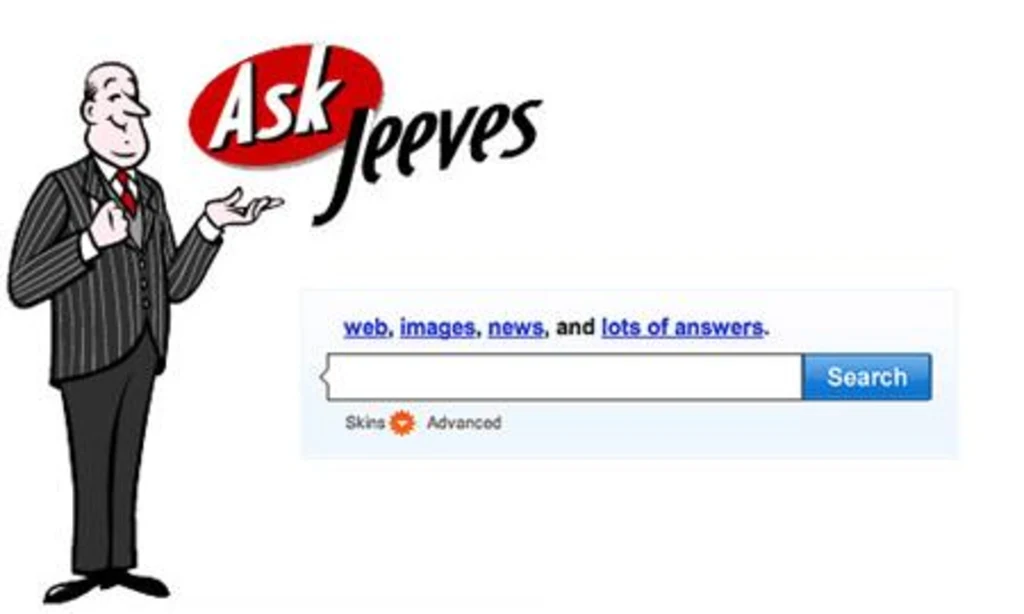
Ask.com, once known as Ask Jeeves with its polite butler mascot, has officially ceased operations, closing a chapter on one of the internet’s more distinctive early search tools. The service ended on May 1, 2026, after IAC, its parent company, chose to discontinue its entire search business to focus on other priorities. A brief statement on the site thanked millions of users for their support over 25 years and noted, with a touch of sentiment, that “Jeeves’ spirit endures.”
The shutdown marks another quiet exit for a veteran of the first-generation web. Launched in the late 1990s as Ask Jeeves, the platform stood out by encouraging users to type full questions in natural language rather than fragmented keywords. Its butler character, Jeeves, became an early mascot for a more conversational approach to searching, something that feels almost quaint today yet helped shape how people interact with search engines. While Google eventually dominated with superior algorithms and speed, Ask Jeeves taught a generation to phrase queries like they were speaking to another person, a habit that lingers even now.
Rebranded as Ask.com in 2006 under IAC ownership, the service gradually lost ground. It never matched the technical sophistication or scale of its competitors, and over time it shifted toward more ad-driven results and question-and-answer formats. Still, it maintained a loyal niche audience drawn to its simpler, more human interface. Its departure joins a growing list of early internet casualties: AltaVista disappeared in 2013, AOL phased out its dial-up services, and AIM messaging shut down years ago. Each closure chips away at the collective memory of a wilder, less centralized web.
The timing feels symbolic. Modern search is increasingly powered by large language models and AI assistants that deliver conversational answers, a direction Ask Jeeves gestured toward decades earlier without the infrastructure to fully realize it. In that sense, the butler’s retirement highlights how much the underlying technology has advanced while the core user desire for straightforward, spoken-language help remains unchanged. What began as a novelty in the dot-com era has become table stakes for tools like today’s AI chatbots.
For many, the news stirs mild nostalgia rather than shock. Ask.com was never the default choice for most users, but its presence reminded people that search could be friendlier and less mechanical. Its closure underscores the ruthless pace of digital evolution: services that once felt permanent can vanish overnight when business priorities shift. The internet continues to consolidate, with fewer independent players and more dominance by a handful of tech giants.
As Jeeves steps away, the episode serves as a small reminder of how the tools we use daily have histories, personalities, and limitations of their own. The conversational search experiment may not have won the market, but it left a subtle imprint on how we talk to machines.