
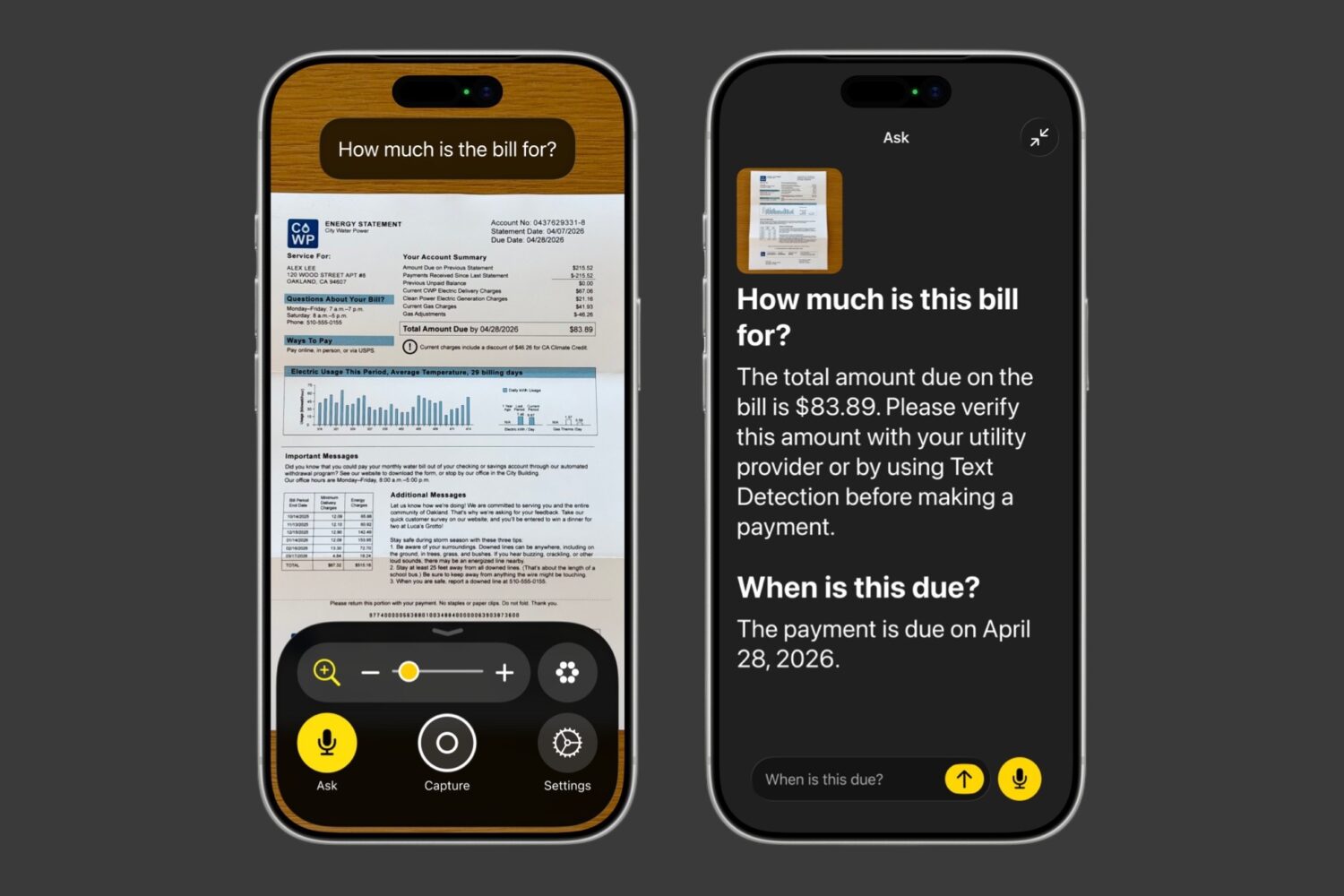
Apple has previewed a new set of accessibility updates for its devices, incorporating on-device processing from its Apple Intelligence system to enhance tools long used by people with disabilities. The changes, expected later in 2026, focus on making everyday interactions more intuitive for users who are blind or have low vision, those with physical limitations, and people who are deaf or hard of hearing.
VoiceOver, the screen reader that has helped blind and low-vision users for years, gains more sophisticated image descriptions. The Image Explorer feature can now provide richer details about photos, scanned documents, and other visuals across the system. Live Recognition lets users press the iPhone’s Action button to query the camera viewfinder and ask follow-up questions in natural language. Magnifier receives similar upgrades, adapting visual descriptions to a high-contrast interface while supporting voice commands like “zoom in” or “turn on flashlight.” These additions build on existing capabilities but aim for greater flexibility without relying on exact labels or rigid commands.
Voice Control also shifts toward natural language processing, allowing users with physical disabilities to navigate iOS and iPadOS by describing elements conversationally rather than memorizing precise terms. Phrases like “tap the guide about best restaurants” or “tap the purple folder” could simplify use in apps with complex layouts, potentially reducing frustration when accessibility labels fall short. Accessibility Reader expands its reach to denser materials such as scientific papers with multiple columns, tables, and images. It offers on-demand summaries and built-in translation while preserving custom fonts and formatting, which could prove useful for users with dyslexia or low vision tackling academic or professional content.
On the media side, Apple is introducing generated subtitles for videos lacking official captions. Using on-device speech recognition, the system will automatically transcribe spoken dialogue in personal clips, shared videos, and some streamed content across iPhone, iPad, Mac, Apple TV, and Vision Pro. Customization options in playback settings should help tailor appearance, addressing a gap where personal and user-generated videos often remain inaccessible.
Perhaps the most specialized addition targets power wheelchair users who cannot rely on traditional joysticks. A new feature for Apple Vision Pro uses the headset’s eye-tracking to control compatible alternative drive systems from Tolt and LUCI in the United States. It promises responsive input with minimal recalibration across lighting conditions, though it requires a controlled environment and, for wired setups, an additional developer strap. Feedback from users with ALS highlights the potential for greater independence, yet real-world reliability will depend on broader compatibility and extensive testing beyond initial launches.
Additional refinements include Vehicle Motion Cues in visionOS to ease motion sickness for passengers, improved Made for iPhone hearing aid integration, larger text options on tvOS, expanded Name Recognition across languages, and support for the Sony Access controller in gaming. A new API also allows sign language interpreters in FaceTime calls.
On the hardware front, the Hikawa Grip & Stand for iPhone — an adaptive MagSafe accessory developed with input from people with grip and mobility challenges — becomes available in new colors through a collaboration with PopSockets. It reflects ongoing efforts to design products with diverse needs in mind from the start.
These updates arrive amid broader industry conversations about accessibility. While Apple’s focus on on-device processing maintains strong privacy boundaries, questions remain about how these AI-enhanced tools perform in varied real-world scenarios, their accuracy across languages and accents, and whether they truly reduce rather than shift barriers. The company has a solid track record of iterative improvements in this space, but sustained impact will hinge on feedback from the communities these features aim to serve.