
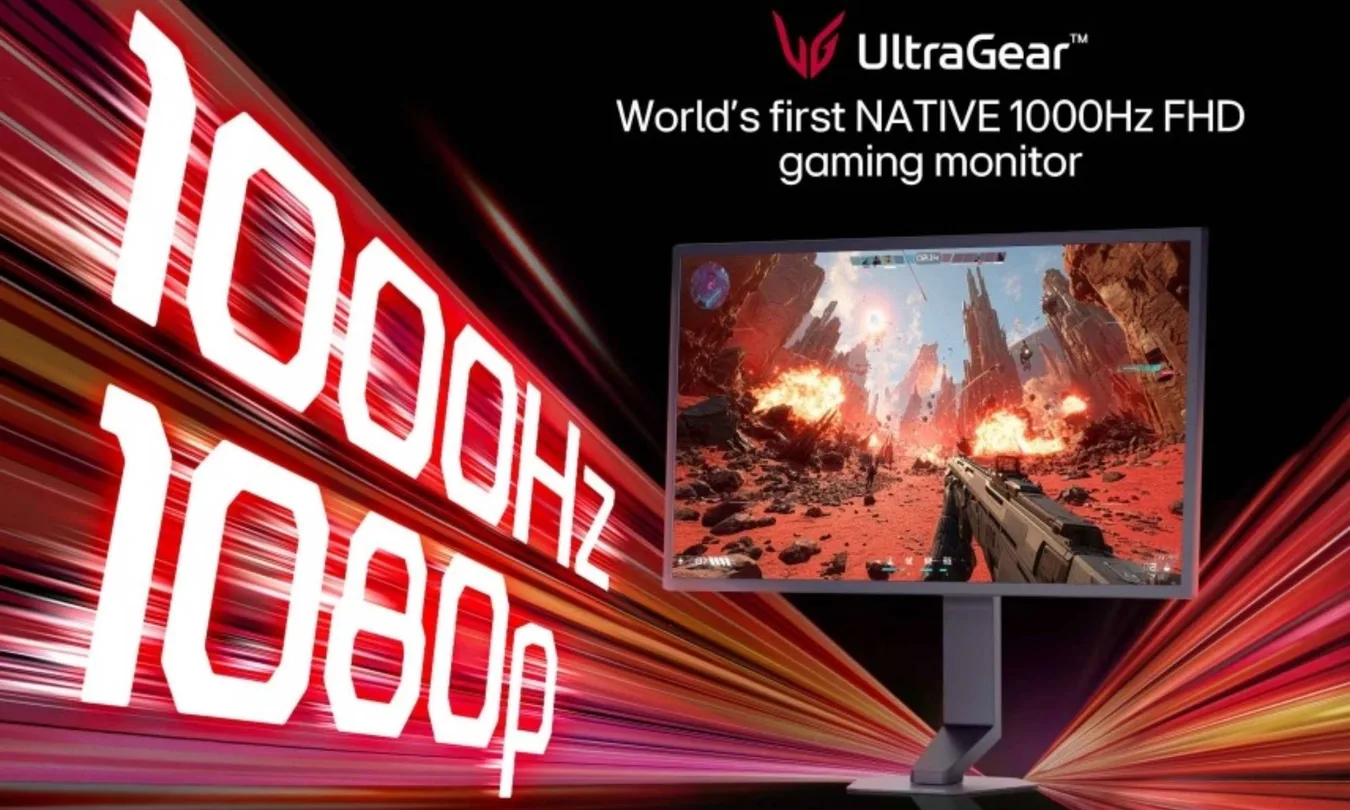
LG has introduced a new gaming monitor aimed squarely at competitive players chasing every possible edge in fast-paced shooters. The UltraGear 25G590B stands out as the first native 1000Hz Full HD panel on the market, a 24.5-inch display that promises smoother visuals without the resolution compromises seen in some rival models.
At its core, the monitor runs at a full 1920×1080 resolution while hitting that 1000Hz refresh rate out of the box. This matters for serious FPS gamers because it delivers consistent performance whether training or competing, without dropping to lower resolutions or smaller viewports to reach peak speeds. Earlier high-refresh attempts, like certain dual-mode panels from other brands, often required users to sacrifice image quality or screen real estate, creating a disconnect between practice and match conditions. LG’s approach avoids that trade-off, at least on paper.
The panel uses an IPS design with a low-reflection coating to maintain color consistency and cut glare in bright rooms or tournament halls. LG also includes its Motion Blur Reduction Pro feature, which aims to sharpen fast-moving targets and make side-to-side tracking feel more precise. Two AI-driven tools round out the package: one that automatically tweaks picture settings for different game genres, and another that enhances spatial audio and voice clarity when paired with compatible headsets. These additions sound convenient, though their real-world impact will depend on how well the algorithms read complex scenes without introducing artifacts or over-processing.
The 24.5-inch size feels deliberate. Professional esports setups have long favored this scale because it keeps critical information comfortably inside a player’s natural field of view, minimizing eye strain during long sessions. The stand follows the same practical mindset, with a compact footprint that leaves more desk space for mouse sweeps and built-in calibration marks so players can quickly replicate their exact height, tilt, and swivel preferences across multiple venues.
From a broader perspective, this monitor arrives at a time when refresh rates have climbed steadily but incrementally. We moved from 144Hz to 240Hz, then 360Hz and beyond, each step delivering diminishing but still noticeable returns for top-tier competitors. A native 1000Hz panel represents another jump, yet questions remain about whether current games and graphics hardware can fully saturate it in real scenarios, especially at higher detail levels. Graphics cards capable of pushing hundreds of frames at 1080p exist, but sustaining that near 1000fps in demanding titles still requires significant GPU headroom.
Pricing and exact availability details are still missing. LG plans a second-half 2026 launch in select markets, with wider rollout to follow. That timeline gives competitors room to respond and leaves enthusiasts wondering how much this technological bragging right will actually cost. For now, the 25G590B looks like a focused tool for players who treat reaction time as currency rather than a flashy all-rounder for casual use.
In an industry that often chases headline numbers, LG’s decision to prioritize native performance at a practical size and resolution shows a degree of restraint worth noting. Whether it translates to measurable wins in tournaments remains to be seen once reviewers and pros get their hands on production units.