

Late-night football matches in the MENA region test fans’ ability to enjoy communal viewing without sacrificing the next day’s responsibilities. Samsung positions its connected ecosystem as a practical solution, leveraging AI across TVs, Galaxy devices, and smart home appliances to manage everything from match immersion to morning recovery.
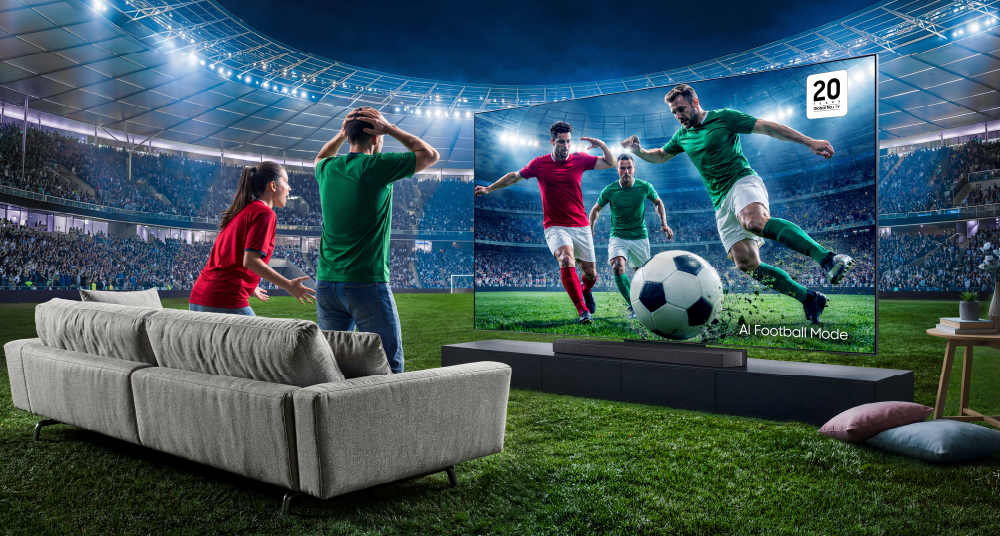
Samsung’s 2026 television lineup introduces Vision AI tailored for football broadcasts. AI Football Mode adjusts brightness, contrast, and motion processing to suit the game’s pace. Additional tools include AI Sound Controller Pro, which lets viewers emphasize announcers, crowd noise, or ambient stadium atmosphere, and AI Upscaling Pro, which aims to maintain clearer 4K-like quality even on lower-resolution feeds. Q-Symphony technology synchronizes the TV with compatible Samsung soundbars for more spatial audio that follows on-field action. These features build on years of incremental TV improvements, offering tangible enhancements for sports viewing rather than outright transformation, though effectiveness still varies with source material and room setup.
The experience extends beyond the screen through Galaxy smartphones. Now Brief provides an AI-generated morning summary covering overnight scores, schedules, weather, and traffic, consolidating information that fans might otherwise gather piecemeal. The Privacy Display on models like the Galaxy S26 Ultra helps keep personal content visible only to the user in shared spaces, a useful consideration during group watch parties common in the region. Such integrations reflect the maturing smart device ecosystem, where cross-device continuity addresses real friction points in daily routines.
SmartThings ties the setup together with automated adjustments. Pre-match routines can dim lights for better viewing, while during games the system may tweak air conditioning to handle extra people in the living room. Post-match, connected appliances like the Bespoke AI Washer complete cycles overnight and the refrigerator suggests breakfast options based on contents. These automations reduce minor interruptions, allowing focus on the match itself. However, reliance on a single-brand ecosystem means full benefits require compatible Samsung products, potentially limiting flexibility for users with mixed setups.
For MENA fans accustomed to extended family gatherings around late kickoffs, this interconnected approach acknowledges the cultural importance of football as a social event. It attempts to bridge evening excitement with morning sharpness, an ongoing challenge in regions with passionate followings and demanding work schedules. While AI promises anticipation of needs, real-world performance depends on reliable connectivity and accurate sensing—areas where smart home systems continue to evolve.
Overall, Samsung’s latest offerings provide meaningful refinements for football viewing rather than a complete reinvention. The combination of enhanced picture and sound processing, device continuity, and home automation supports a more seamless experience from night matches to the following day. Availability spans Samsung.com and experience stores across the region, fitting into a broader trend of ecosystems designed to blend entertainment with everyday practicality.