

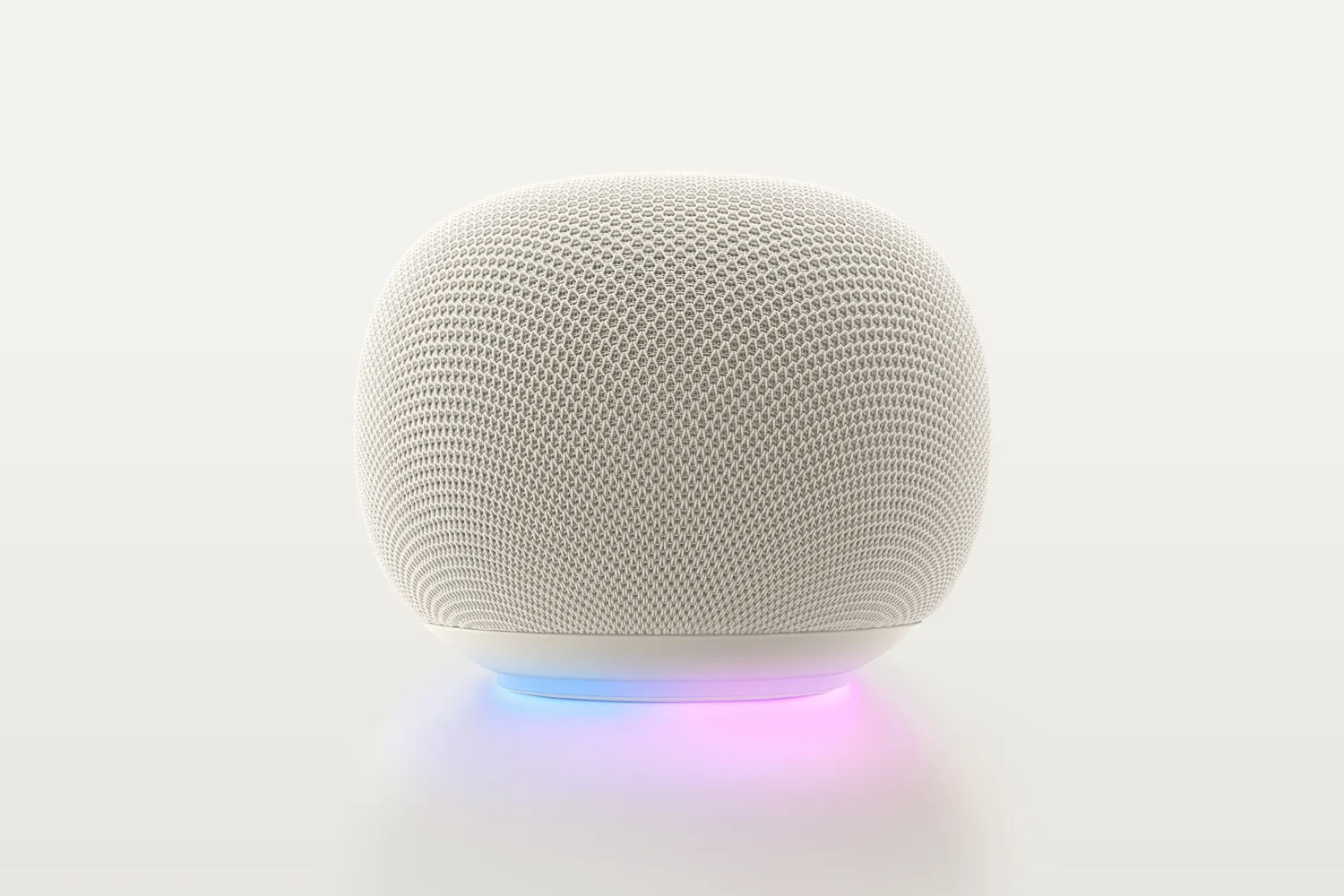
After a six-year gap since its last dedicated smart speaker launch amid the pandemic, Google has introduced a new Home Speaker designed around its Gemini AI model. Priced at $100, the device arrives with preorders starting June 17 and general availability on June 25. It comes in four colors—Berry, Jade, Hazel, and Porcelain—with the first two limited to the US market. The hardware adopts a more rounded, HomePod-like form, shifting focus from the previous Assistant-powered lineup to Gemini’s conversational strengths.
The core interaction remains familiar for anyone who has used Google’s earlier smart speakers. Users say “Hey Google” to activate it and issue commands or ask questions. Where it differs is Gemini’s improved handling of natural language. Queries no longer need rigid phrasing or repetition; the system better grasps intent, even when users pause mid-sentence to rephrase or add details. Multiple requests can be combined in one go—such as turning off specific lights while adjusting others—and follow-up questions work without repeating the wake word, thanks to Continued Conversation, now expanded beyond English.
This conversational fluidity marks a practical step forward from the more scripted exchanges common in older voice assistants. Gemini can also query connected security cameras for specific events, like checking for package deliveries or unusual activity at home. That capability already exists on existing Google Home setups with Gemini enabled, so the new speaker mainly offers convenient local access. Gemini Live mode, activated by saying “Hey Google, let’s talk,” allows back-and-forth dialogue without constant wake-word interruptions, though it is limited to newer hardware like this speaker and the Nest Audio.
The speaker inherits the always-listening microphone approach of its predecessors, raising familiar questions about privacy in an era of persistent data collection. While Google has improved on-device processing in recent years, the reliance on cloud-based AI for complex queries means users must weigh convenience against potential data flows. Voice options now include ten choices, giving more personalization than before.
In a market long dominated by Amazon’s Echo devices and Apple’s HomePod, Google’s latest entry feels like a measured evolution rather than a dramatic leap. The six-year wait reflects shifting priorities toward AI integration over frequent hardware refreshes, but it also highlights how smart speakers have matured into background utilities rather than headline gadgets. Battery life and audio performance details remain sparse in initial announcements, leaving room for real-world testing to determine if the $100 price delivers competitive sound and reliability compared to similarly positioned rivals.
For households already embedded in Google’s ecosystem, the new Home Speaker offers a straightforward upgrade path with better conversational AI. Yet broader adoption may hinge on how well Gemini handles edge cases, accents, and multi-user environments over time—areas where voice assistants have historically stumbled. As AI capabilities expand, the real test will be whether these devices become truly indispensable or remain convenient extras in an increasingly connected home.