

Instagram is expanding its selection of AI-powered voice message effects in direct messages, increasing the options from an initial eight to a total of 15. The update, now available on both Android and iOS in select countries, arrives as part of a larger push tied to the FIFA World Cup 2026. While the feature aims to add some levity to casual chats, it also raises familiar questions about how much novelty social platforms can layer onto basic communication before it starts feeling like clutter.
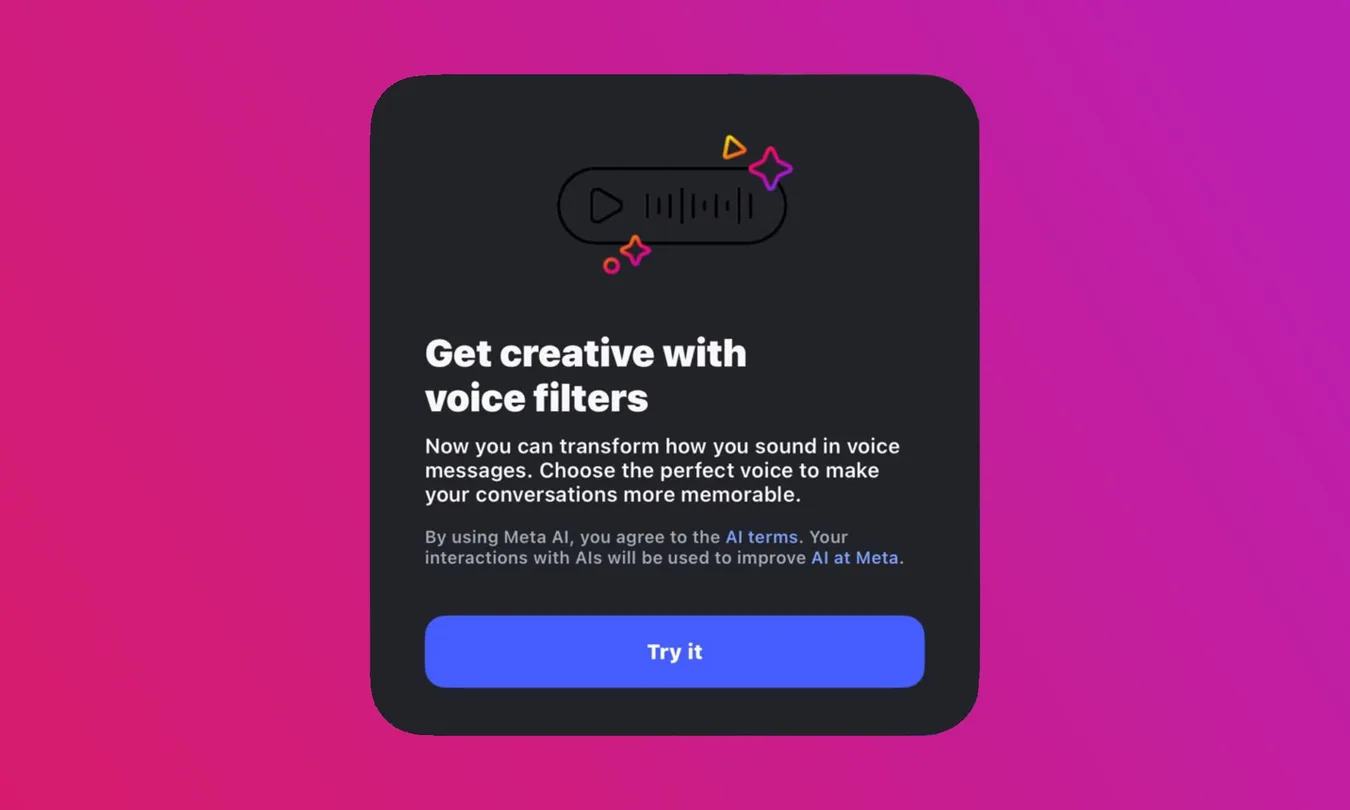
The voice effects debuted earlier this year in India with playful filters including Chipmunk, Demon, Alien, Robot, Underwater, Stadium, Wobble, and Fishbowl. The latest additions bring Goal!, Pirate, Autotune, Whisper, Grandpa, Grandma, and Princess into the lineup. The Goal! effect stands out for its World Cup timing, complete with a surprise animation upon sending. To apply one, users tap the voice message icon in a DM, then select the effect from a new button that appears alongside delete and send options. First-time users encounter a brief explanation, along with a disclaimer that their interactions help train Meta’s AI models.
Recipients see the chosen effect noted on the message and can tap it to apply the same filter in their reply, creating a simple back-and-forth loop. In practice, these transformations turn ordinary voice notes into something more theatrical. A quick rant might come out sounding like a stadium chant or an elderly relative offering advice. Yet beneath the fun lies the same data collection dynamic that has long characterized Meta’s approach to features across its apps.
This rollout forms part of broader World Cup integrations. Facebook gains a Football Mode, themed stickers, and real-time match highlights in Messenger groups. Instagram enhances its search to highlight official tournament content through Reels, Stories, and posts. Such coordinated campaigns show how platforms leverage major sporting events to boost engagement, a tactic refined over years of tying product updates to cultural moments like elections, holidays, or global tournaments.
Voice messaging itself has evolved steadily across apps. WhatsApp made voice notes mainstream for quick, asynchronous talk, while platforms like Telegram and Signal added speed controls and playback features. Instagram’s AI effects build on that by introducing real-time audio manipulation, similar to filters in video or photo sharing. The addition of more effects could prove handy in niche scenarios—perhaps a coach giving instructions or friends coordinating plans with a touch of humor—but many users may find them distracting rather than essential. Past experiments with AI audio tools have sometimes struggled with accuracy across accents, ages, or noisy environments, and it remains to be seen how reliably these perform in everyday use.
Critics might also note the timing. With ongoing scrutiny over how social media companies handle user data for AI training, the explicit disclaimer serves as a reminder that seemingly lighthearted tools contribute to larger datasets. In an era where privacy concerns influence app choices, features that encourage more voice sharing invite trade-offs between entertainment and control over personal information. Compared to earlier voice filters on other platforms, Instagram’s version emphasizes shareability and quick adoption, yet it risks blending into the background noise of constant algorithmic tweaks.
Overall, the expansion reflects the competitive pressure on social apps to keep feeds and chats feeling fresh amid shorter attention spans. Whether these voice effects enhance meaningful connections or simply provide fleeting amusement will depend on how users integrate them into real conversations. For now, they add another layer of experimentation to Instagram’s messaging toolkit, one that aligns with the platform’s history of borrowing and refining ideas from competitors while tying them to timely events.