
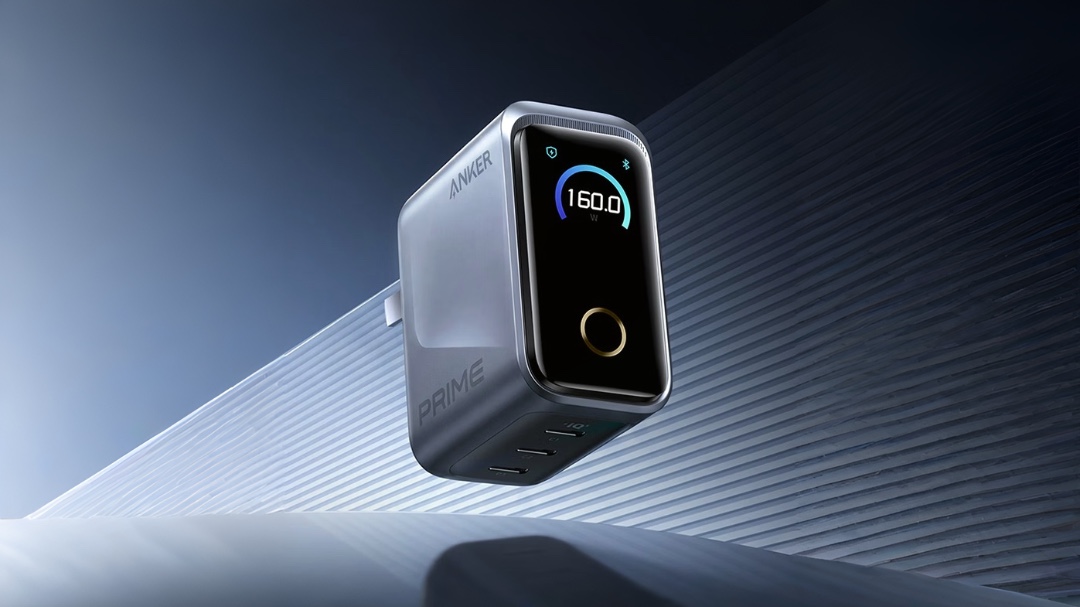
Anker has released a new high-power charger in China aimed at users frustrated by compatibility gaps with proprietary fast-charging standards. The 160W Smart Display Charger Pro+ directly supports Huawei’s 66W SCP and Xiaomi’s 120W MiPPS protocols, allowing devices from those ecosystems to charge at full advertised speeds without needing their original adapters. This addresses a longstanding inconvenience for owners of phones and accessories that rely on brand-specific technologies rather than universal standards.
Beyond the proprietary additions, the charger includes three USB-C ports and compatibility with a wide range of common protocols, including 140W USB Power Delivery 3.1, PPS, QC 3.0, and the unified UFCS standard. It can power everything from laptops and tablets to handheld gaming devices and phones from Apple, Samsung, and Lenovo. The maximum combined output across all ports reaches 160W, though real-world performance will depend on the mix of connected devices. Anker’s PowerIQ 5.0 system dynamically adjusts power allocation every two minutes based on detected needs, redirecting unused capacity where it is most useful.
A built-in color display on the front shows real-time power draw and can identify certain Apple devices by name, offering a level of transparency often missing in basic chargers. Bluetooth connectivity links the unit to Anker’s companion app, where users can customize the display, monitor usage, toggle individual ports, schedule charging sessions, and fine-tune power limits down to 1W increments. These software features add convenience for power users who want detailed control, though they also introduce another app into an already crowded device management ecosystem. Over-the-air firmware updates mean Anker can expand protocol support or refine features over time.
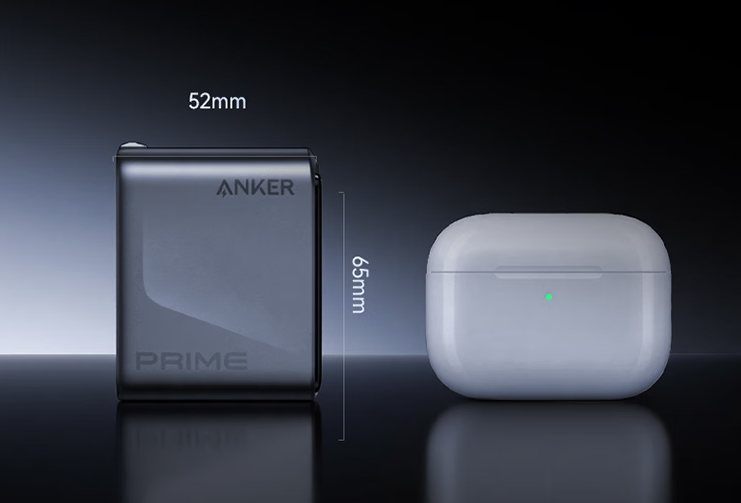
Physically, the charger measures a compact 65 x 52 x 35 mm, dense enough to handle high output without excessive bulk. Three internal temperature sensors help manage heat, and the company claims it can sustain a 140W single-port load for 24 hours without degradation, a claim backed by TÜV Rheinland certification. Such durability testing is welcome in a category where third-party chargers have sometimes raised safety concerns, but sustained high-wattage performance in everyday use still warrants real-world verification over extended periods.
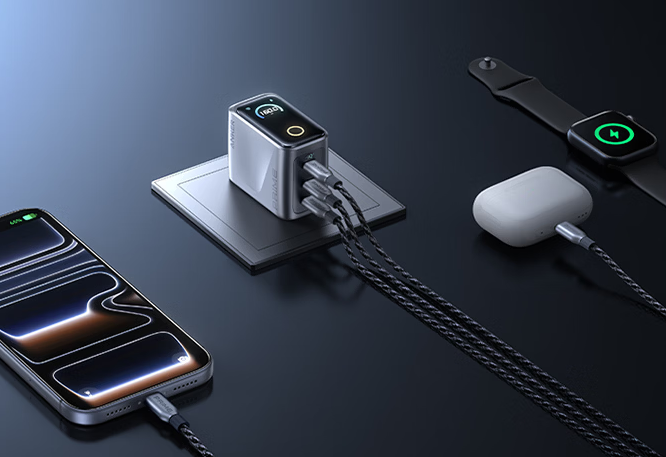
Priced at 699 yuan, roughly $103 during the initial launch on JD.com, the accessory sits at a premium compared to simpler high-wattage options. While the display and app integration differentiate it, they also add complexity and cost that casual users may not need. In a market flooded with increasingly capable chargers, Anker’s emphasis on proprietary compatibility and monitoring tools reflects the fragmented fast-charging landscape that persists despite efforts toward standardization. For owners of Huawei or Xiaomi flagships who travel between ecosystems, this could simplify setups meaningfully. Others might find the core functionality solid but question whether the extras justify the expense over more straightforward competitors.
The release follows Anker’s pattern of iterative improvements in power accessories, including recent wireless charging stations with similar display elements. It highlights ongoing demand for versatile, high-output solutions as devices continue pushing power limits, yet also underscores that even advanced chargers remain tools rather than transformative gadgets. Practical reliability and long-term software support will ultimately determine its value for users managing multiple high-end devices.