

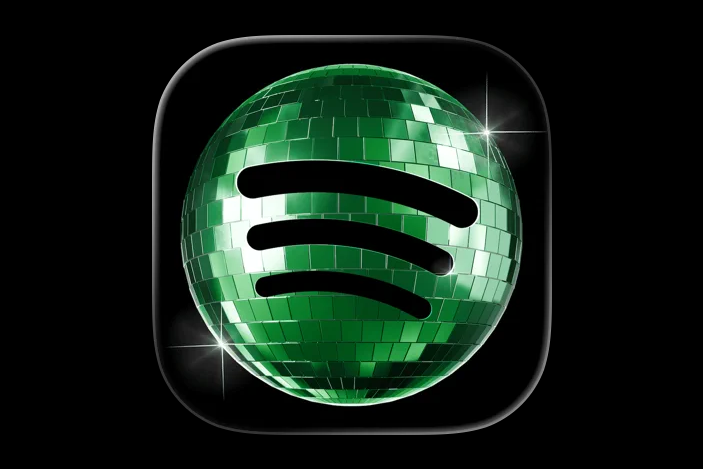
Spotify has finally ditched its ill-fated disco ball app icon, slinking back to the safe, flat green logo that users had grown accustomed to before the whole anniversary experiment went sideways. The update rolled out quietly, restoring the minimalist design that had served the streaming giant for years until May 13, when someone in marketing apparently decided a glowing retro orb would be the perfect way to celebrate two decades of playlists and skipped tracks. What started as a cheeky birthday party trick quickly turned into a masterclass in how not to mess with the tiny digital real estate people stare at dozens of times a day.
The disco ball itself came equipped with a flashy three-dimensional glow that clashed spectacularly with the sober flat aesthetics ruling modern app design. Reactions, as one might expect in the age of endless online hot takes, split like a poorly curated mixtape. Detractors called it eyesore incarnate, with iOS users particularly miffed that the shimmering effect made the app look perpetually mid-update, as if stuck in digital purgatory. On the flip side, a niche crowd latched onto the skeuomorphic nostalgia, christening the trend “discomorphism” and inspiring half-hearted meme knockoffs from brands desperate for some reflected glory. The whole saga proved that even a lighthearted visual gag can polarize faster than a controversial shuffle algorithm.
To Spotify’s credit—or perhaps its detriment—they initially floated the icon as pure anniversary flair without bothering to mention its temporary nature. Only after the complaints piled up did the company sheepishly promise a return to normalcy “in a few weeks.” This familiar pattern of testing the waters, gauging the outrage, then backpedaling mirrors recent stumbles, including the decision to embrace AI-generated tracks in playlists. While algorithms churn out endless content, many subscribers still crave actual human taste and curation, raising the eternal question of whether Spotify prioritizes innovation or just whatever keeps the engagement metrics glowing.
App icons are oddly intimate fixtures on our home screens, tiny anchors of habit in an otherwise chaotic digital existence. Tampering with them feels personal, like rearranging someone’s furniture without asking. The disco ball fiasco neatly illustrates how even well-resourced streaming services, armed with vast libraries and sophisticated recommendation engines, can trip over basic design empathy. The anniversary gesture aimed to inject personality, yet it mostly succeeded in reminding users why they value boring reliability over novelty—especially when interface clutter, pricing tweaks, and content policies already provide plenty of everyday gripes.
The quick reversal hints that Spotify might actually be paying attention this time, at least to the icon brigade. Still, the episode exposes deeper tensions in a market where Apple Music and others loom large. Small details like this shape perceptions of whether a platform truly respects its long-term users or simply views them as data points for the next experiment. Restoring the classic green logo brings a welcome dose of normalcy, though it also leaves behind the faint suspicion that these anniversary flourishes are less about celebration and more about fishing for free social media buzz.
For most people, the change will land as either invisible relief or a shrug. It’s a gentle reminder that in consumer tech, sometimes the smartest move is quietly admitting a mistake and hitting undo. As Spotify keeps iterating, focusing on the fundamentals that actually matter might do more for loyalty than any number of shiny, short-lived gimmicks. After all, nobody ever canceled their subscription because the icon was too consistent.