

Mass production has been around for a long, long time, dating back to the pre-industrial era when machines as we know them were not invented, and the mass-production process was a labour-intensive task. Though the mass production process has been through various iterations over time, it wasn’t until the early 1900s when it was first implemented in the automotive industry in familiar ways, with the introduction of the assembly line by Henry Ford to streamline the production of the Model T. The rise of such assembly lines have paved the way to consumerism as we know it today; thousands of brands cost-effectively produce hundreds of thousands of products to meet our demands.
Recent trends however, show that consumer interest is shifting to customised products, which challenges how brands approach mass-production. A recent publication by Deloitte has shown that a little less than half the consumers are interested in personalised technology products, and some of them are willing to pay a price premium. If you think about it, we all customise mass-produced products in a way or another – the marketplace for phone covers, MacBook stickers, and iPhone engraving is massive. Android users swear but the customisability of the operating system. Even brands like Nutella have jumped on the bandwagon to give you your own branded Nutella jars.


While Apple isn’t likely to be sending you a set of personalised stickers with your new MacBook orders, some brands like Nutella and Adidas are offering personalised products, but how do they do this without disrupting an established assembly-line?
In the case of Adidas, they’re partnering up with Siemens to “digitise” their factory. While most of us consumers think of Siemens as a company that makes some home appliances, the company’s bigger role that we are unaware of is in their technologies that are powering up consumer-oriented companies such as Adidas to keep up with our demands. Adidas will be utilising technologies by Siemens, such as the “digital twin” in which a digital simulation of the assembly line will be created. This “virtual reality” assembly line can then be optimised and tested without having to temper with the real-life factory. Once all the tweaks have been tested, adjustments can be then made quickly and cost effectively, shortening the time to market new sets of products.

What Siemens is offering in technology isn’t only limited to Adidas. Companies that manufacture consumer-products can use the “digital twin” to create products that are tailored to its consumers, tested in a virtual environment. In the pharmaceutical industry, for example, medicines can be manufactured tailored to your specific genomes and metabolism, and limb augmentation and transplants can be 3D printed to your own specific body measurements and mechanics.
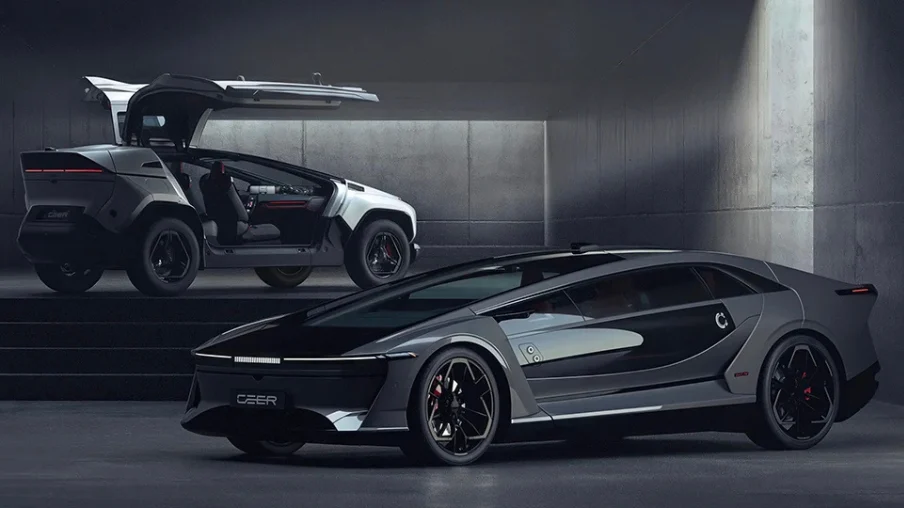
Another case in point is, of course, the automotive industry. And no cars need faster customisation than those partaking in NASCAR races. Engine improvements and car components need to be manufactured quickly without disrupting the entire process – with 38 races a year, the only way for this to be feasible is through digitisation.
This new form of merging the virtual and real world through digitisation of the manufacturing industry is dubbed as “Industrie 4.0” by Siemens, and will be next industrial revolution, one that is bridging the gap between traditional mass-production and personalised consumer products. So in the very near future, you will be able to pick up soft drinks with customised bottles, customised brand shoes, customised cars, and other consumer products. How awesome is that?