

Apple is taking its desktop silicon in two different directions with the introduction of the M6 and M5 Ultra, targeting mainstream Mac users with a new 2-nanometer design while pushing its highest-end hardware toward increasingly demanding professional and local AI workloads.
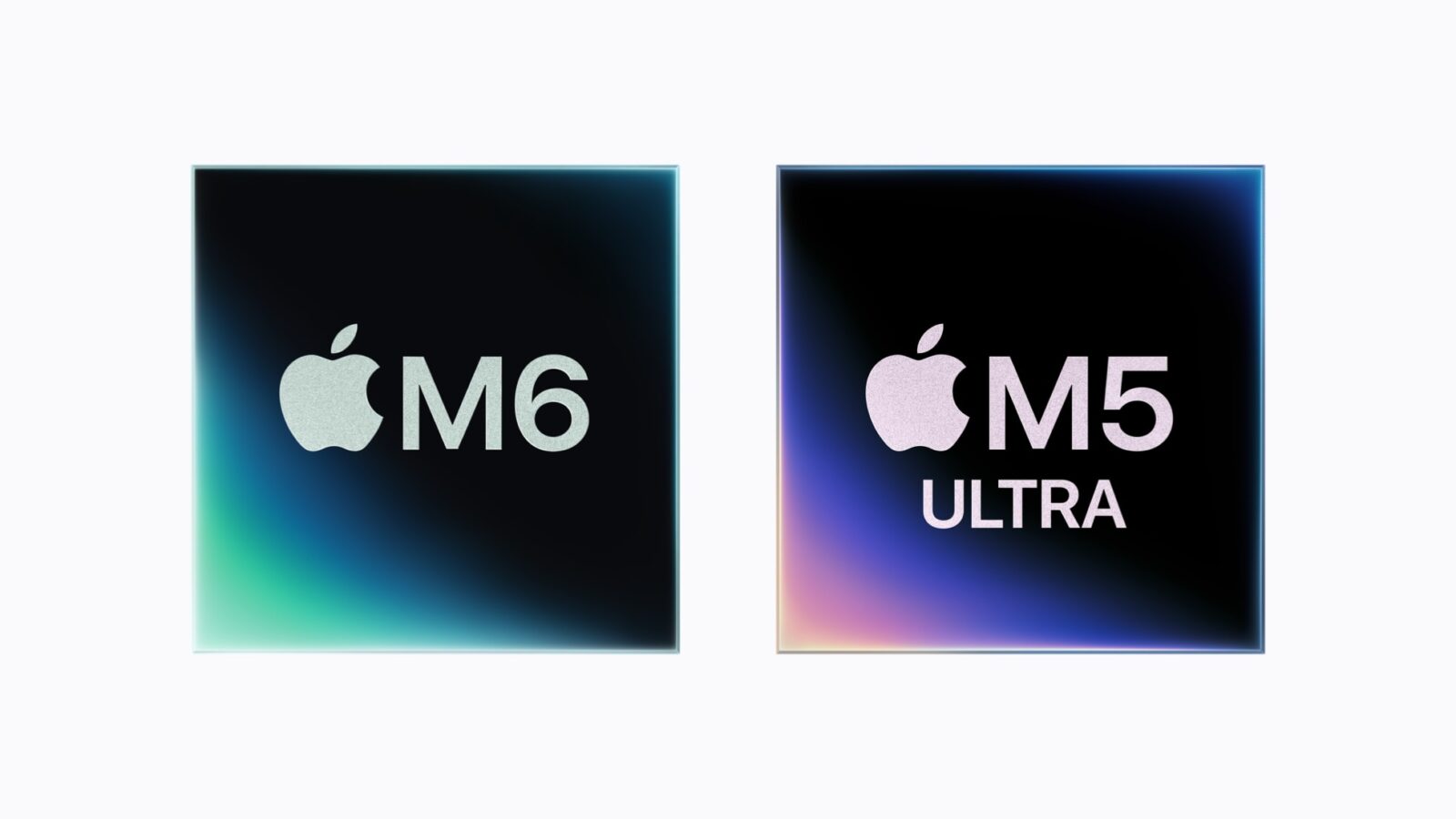
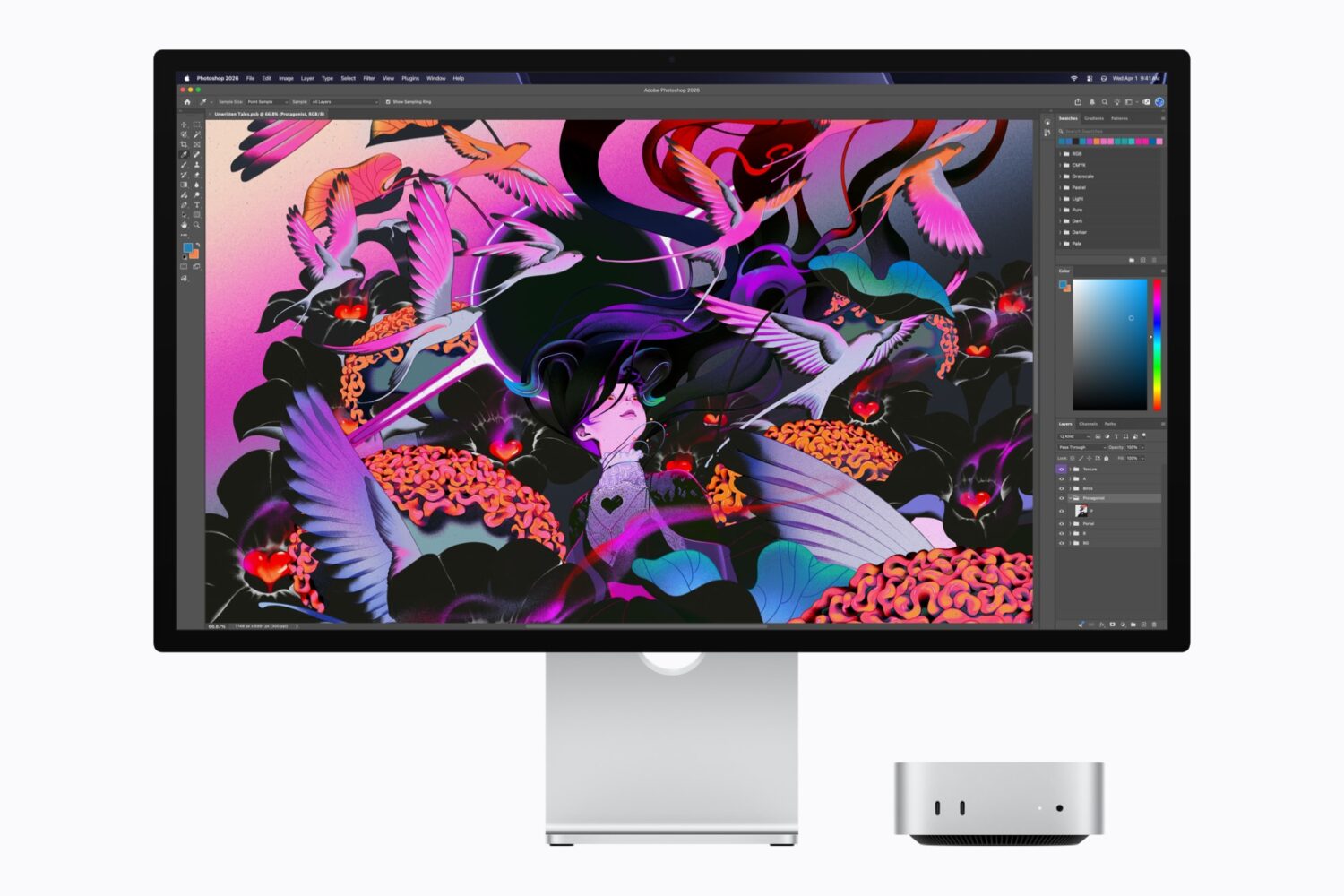
The M6 debuts in the new Mac mini and marks Apple’s first chip manufactured using a 2nm process. It pairs a 12-core CPU with a 12-core GPU, alongside what Apple calls a Dual 16-core Neural Engine. Memory bandwidth reaches 170GB/s, while configurations can include up to 32GB of unified memory.

The CPU architecture is also changing. Its 12 cores are divided between two new “super cores,” four performance cores and six efficiency cores. Apple claims the resulting design delivers up to 20 percent faster multithreaded performance than M5 and as much as 2.4 times the performance of the original M1. Those figures come from Apple’s own pre-production testing, however, so independent benchmarks will be needed to establish how much of that improvement translates into everyday workloads.
AI is becoming an equally important part of the M-series story. Each of the M6’s 12 GPU cores includes a Neural Accelerator, while its two 16-core Neural Engines can work simultaneously. Apple says peak GPU compute for AI has increased by nearly 30 percent compared with M5 and more than eightfold against M1. That should make the Mac mini more capable of running local language models, although its 32GB memory ceiling will naturally limit the size of models it can comfortably accommodate.
M5 Ultra tackles that problem from the opposite end of the spectrum. Designed for the new Mac Studio, it uses Apple’s UltraFusion technology to connect two dual-die M5 Max packages, effectively creating Apple’s first quad-die M-series processor. Inter-die bandwidth exceeds 4.4TB/s, with the system presenting the four dies as a unified processor.
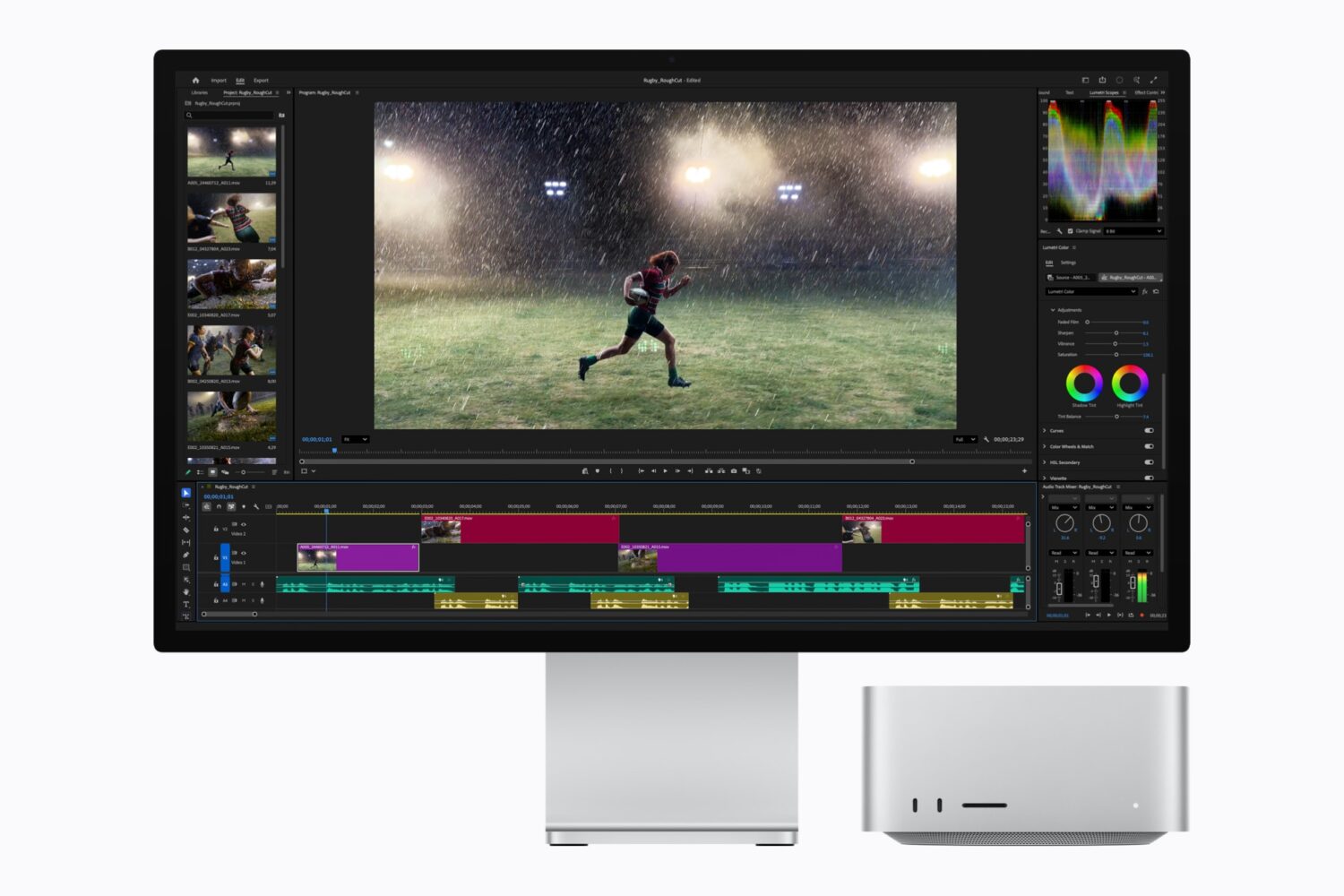
At maximum specification, M5 Ultra offers a 36-core CPU and 80-core GPU, alongside 1.2TB/s of unified memory bandwidth and as much as 512GB of unified memory. That unusually large shared memory pool could prove particularly useful for AI researchers and developers wanting to run large models locally rather than relying entirely on cloud infrastructure.
Apple claims M5 Ultra delivers up to 30 percent higher multithreaded CPU performance and 40 percent faster graphics than M3 Ultra. Its GPU also incorporates a Neural Accelerator into every core, with Apple claiming up to 4.5 times the peak GPU AI compute of M3 Ultra. Video professionals get dedicated H.264 and HEVC hardware, four ProRes encode and decode engines, and AV1 decoding.
Both chips underline how Apple’s silicon priorities are shifting beyond conventional CPU and GPU benchmarks. Faster neural processing, large unified memory pools and tighter integration with Core ML, Metal and Apple’s AI frameworks are becoming central to the Mac’s positioning.
The more interesting question will be how much developers exploit that hardware. Apple’s specifications suggest increasingly capable local AI machines, but software support, sustained performance and independent testing will determine whether M6 and M5 Ultra deliver advantages as substantial as the numbers suggest.