


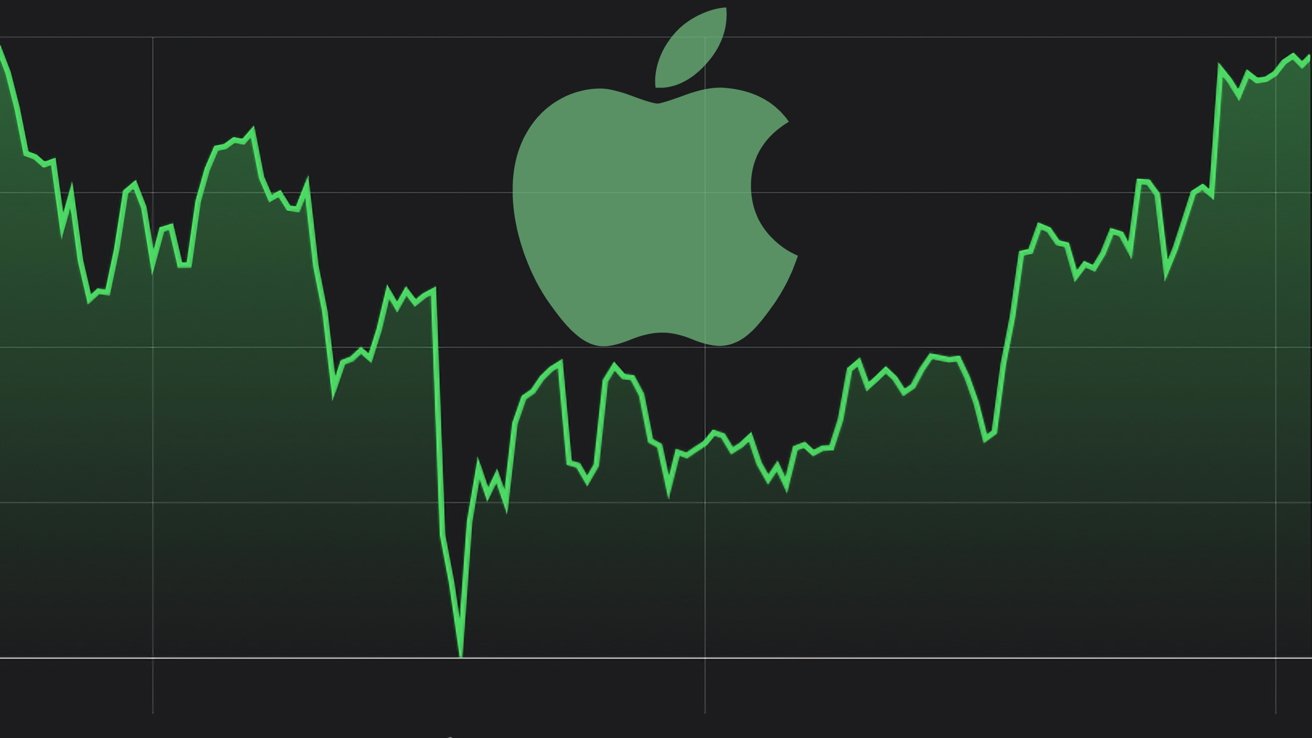
Apple’s share price crossed the $340 mark in early trading on Wednesday, briefly pushing the company’s market capitalization above five trillion dollars for the first time. The figure did not hold. Like most large-cap stocks, Apple’s valuation swung with the broader market, and the symbolic threshold was crossed and then lost within the same session. Even so, the move returned Apple to the top of the global ranking of publicly traded companies, a position Nvidia had occupied for much of the preceding period.
Market capitalization is simply the product of share price and shares outstanding. It is a useful snapshot of how investors currently value a firm, yet it is also volatile and often detached from near-term cash flow or earnings. Apple’s climb to five trillion reflects years of consistent revenue from the iPhone, growing services income, and a balance sheet that still commands confidence among large institutional holders. Nvidia’s earlier lead was built on a different foundation: explosive demand for graphics processors reconfigured as AI accelerators. That shift pulled capital away from the consumer gaming market that once defined the company and concentrated its prospects in a narrower, higher-risk segment of the technology sector.
The contrast is instructive. Apple’s valuation rests on a mature consumer franchise that has repeatedly demonstrated pricing power and customer retention. Nvidia’s rests on the assumption that capital spending by cloud providers and AI startups will continue at the current pace. History offers cautionary parallels. Previous technology manias, from the late-1990s internet boom to the more recent electric-vehicle surge, produced similar spikes in market capitalization that later proved temporary. Whether the present AI investment cycle follows the same pattern remains unknown, but the concentration of Nvidia’s revenue in a single growth story leaves it more exposed than a company whose largest product line has been selling hundreds of millions of units annually for over a decade.
None of this guarantees Apple will remain the most valuable firm indefinitely. Currency swings, regulatory pressure in major markets, or a prolonged slowdown in smartphone upgrades could compress its multiple just as quickly as recent optimism expanded it. The five-trillion mark itself is largely psychological. It does not alter the underlying business, nor does it protect against the next shift in investor sentiment. What it does illustrate is the degree to which equity markets continue to reward scale and perceived durability, even when the absolute numbers involved have become almost abstract.
For long-term observers the episode is less a celebration than a reminder of how quickly leadership can change hands in the technology sector. Apple’s return to the summit was measured in hours rather than years, and Nvidia’s earlier dominance was measured in months. In that light the five-trillion crossing is simply the latest data point in an ongoing contest between two very different models of value creation.