

Coca-Cola has returned with another AI-generated holiday campaign for 2025, reigniting debate over its increasingly digital approach to seasonal advertising. After last year’s much-criticized experiment—which featured awkward, lifeless characters and unsettling animation—the company’s new ad represents a technical step forward, but still struggles to capture the emotional warmth that once defined its festive imagery.
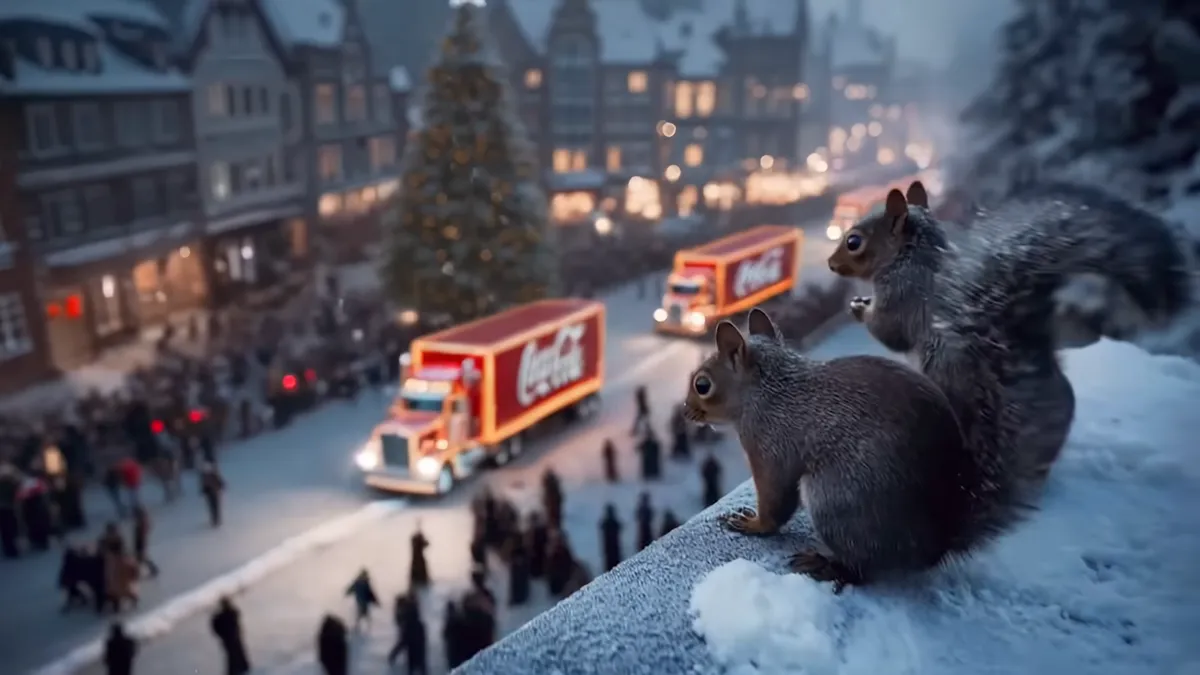
This year’s ad shifts focus from people to animals. Polar bears, rabbits, and sloths are shown gazing at Coca-Cola’s iconic red trucks as they move through a digitally rendered snowy landscape. The decision to minimize human faces was likely intentional, sidestepping the “uncanny valley” problem that plagued the 2024 version. The animation is smoother, lighting is more consistent, and the trucks’ movement feels more natural than before—proof of how quickly generative AI video tools have evolved in just a year.
Yet, despite the polish, something feels off. The ad’s visual tone fluctuates between cinematic realism and cartoon simplicity, leaving it uneven. More significantly, the charm that made Coca-Cola’s original 1995 “Holidays Are Coming” campaign an enduring cultural moment is missing. What remains feels more like an imitation of nostalgia than nostalgia itself—a replication of the emotional cues of the past without the emotional core.
Coca-Cola’s reliance on AI-generated content highlights a growing trend among major advertisers: using generative tools for not just production efficiency but creative direction. While this approach offers cost savings and scalability, it raises questions about authenticity and artistic integrity. For decades, holiday advertising from brands like John Lewis in the UK has thrived on emotional storytelling—human connection, shared experiences, and genuine sentiment. Replacing that with algorithmic precision risks making even the most familiar imagery feel hollow.
The 2025 Coca-Cola ad might technically outperform its predecessor, but it still struggles to feel alive. If the company continues to treat these campaigns as demonstrations of technology rather than reflections of human warmth, it may find its holiday message increasingly disconnected from the spirit it helped define. Nostalgia, after all, isn’t something that can be generated—it has to be felt.