

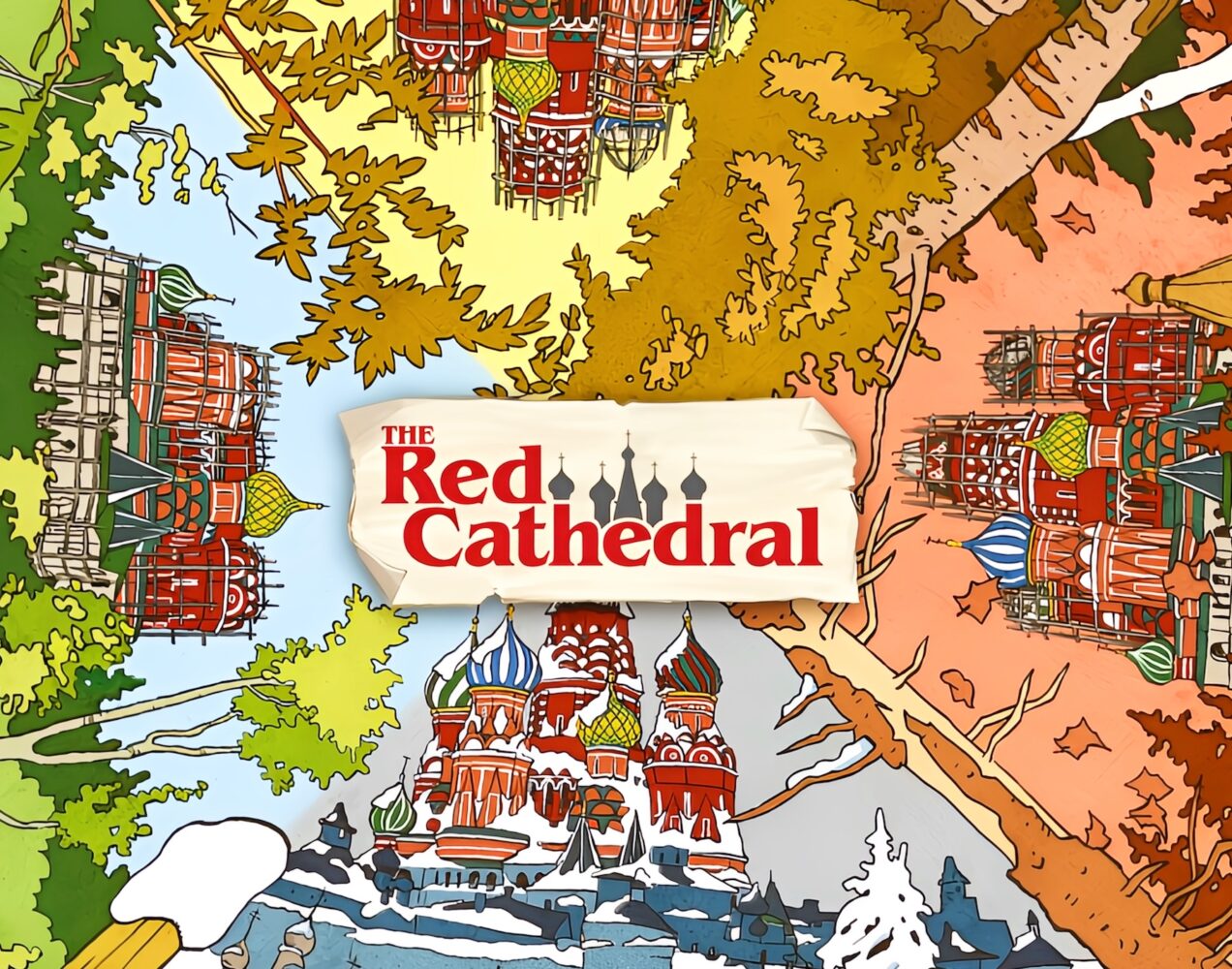
TL;DR: The Red Cathedral demo sold me on its clever rondel, satisfying resource optimisation and natural fit for digital play. Automation removes the tabletop busywork, while AI, multiplayer and an accessible tutorial make it easy to jump into. Most importantly, I finished the demo thinking about my mistakes and wanting another round.
There is something wonderfully dangerous about a strategy game that looks simple enough to understand in a few minutes and then quietly convinces you that every bad decision was entirely your own doing. That was my experience playing the demo of The Red Cathedral, Devir’s digital adaptation of the acclaimed Euro board game designed by Isra C. and Shei S. On the surface, I’m gathering resources, claiming sections of a cathedral, constructing them and decorating the finished building for prestige. Underneath all that historical architecture, however, is a compact optimisation puzzle that quickly had me staring at dice and reconsidering decisions I had confidently made minutes earlier.
The premise puts me in charge of a construction team competing to earn the favour of Tsar Ivan the Terrible. Players take turns gathering resources, constructing claimed sections and adding decorations, with prestige ultimately determining who has done the best job. The digital adaptation automates the mechanical housekeeping, which meant I could concentrate on strategy rather than manually managing components. More importantly, the demo showed me that The Red Cathedral isn’t particularly difficult to operate; the challenge comes from figuring out how to play efficiently.
Simple decisions quickly become dangerous
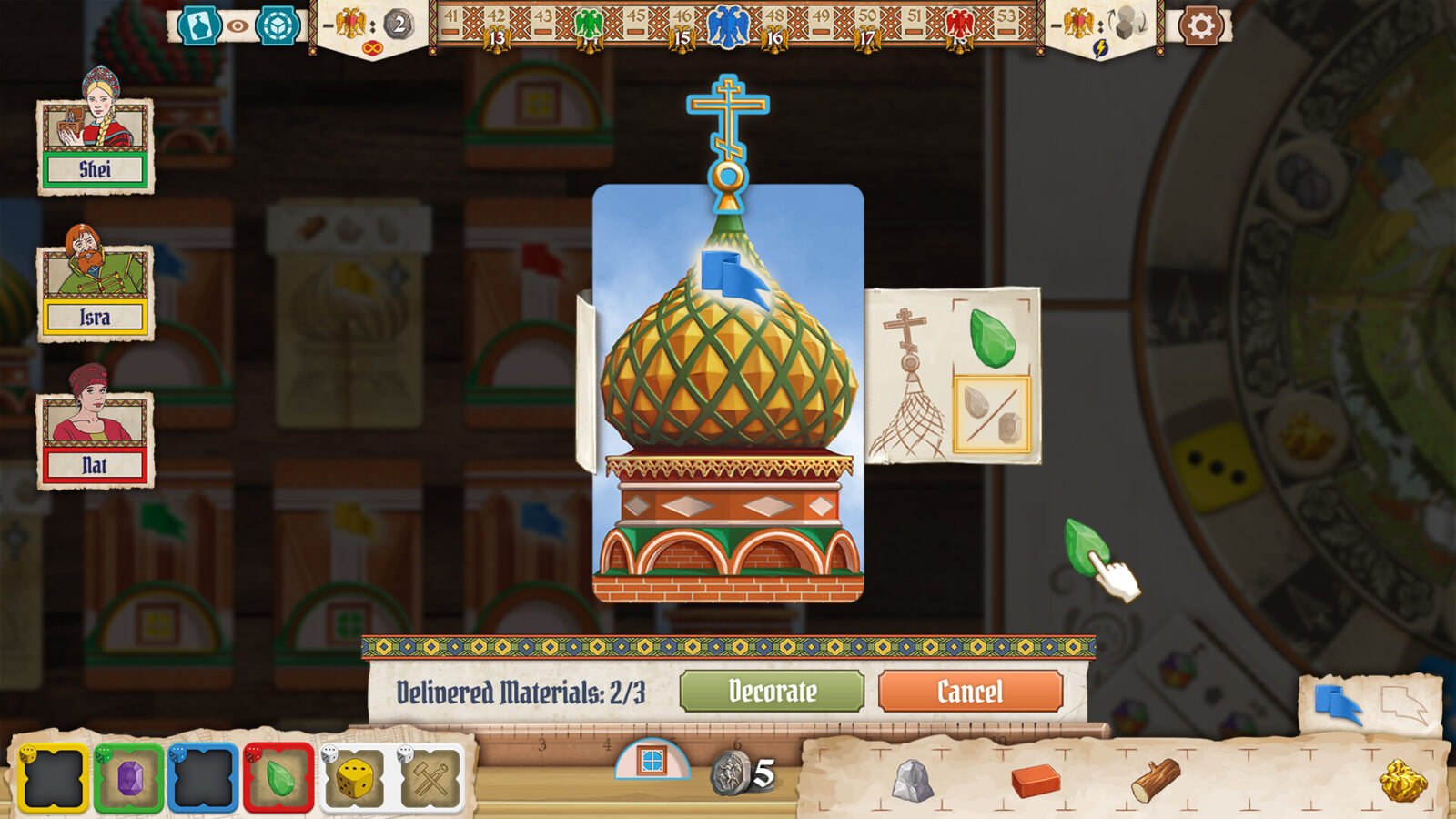
What I enjoyed most during the demo was how quickly straightforward actions started connecting to larger strategic decisions. There are only a handful of fundamental things I need to accomplish: collect materials, claim parts of the cathedral, deliver what’s required to build them and decorate the structure. None of that sounds particularly terrifying, but The Red Cathedral starts twisting the knife when it asks when I should do those things and whether the obvious move is actually the useful one.
Collecting resources isn’t automatically productive just because I can do it, and claiming another cathedral section isn’t necessarily smart simply because one is available. Every commitment creates another demand on my resources, while every turn spent preparing for one objective means delaying something else. I increasingly found myself thinking in sequences rather than individual actions, and that’s where the Euro-game magic kicks in: efficiency becomes far more important than simply keeping busy.
The market rondel is the real star
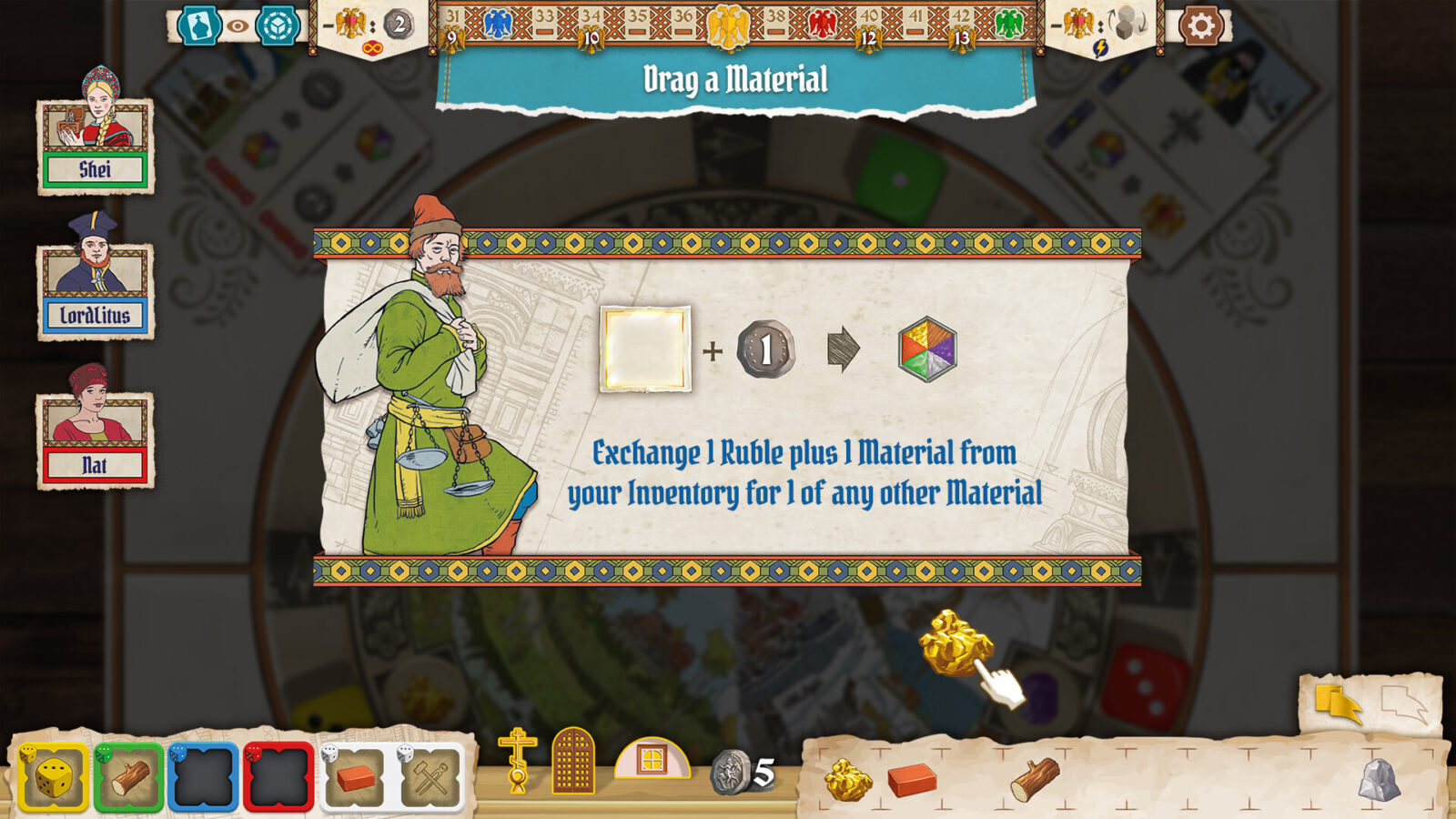
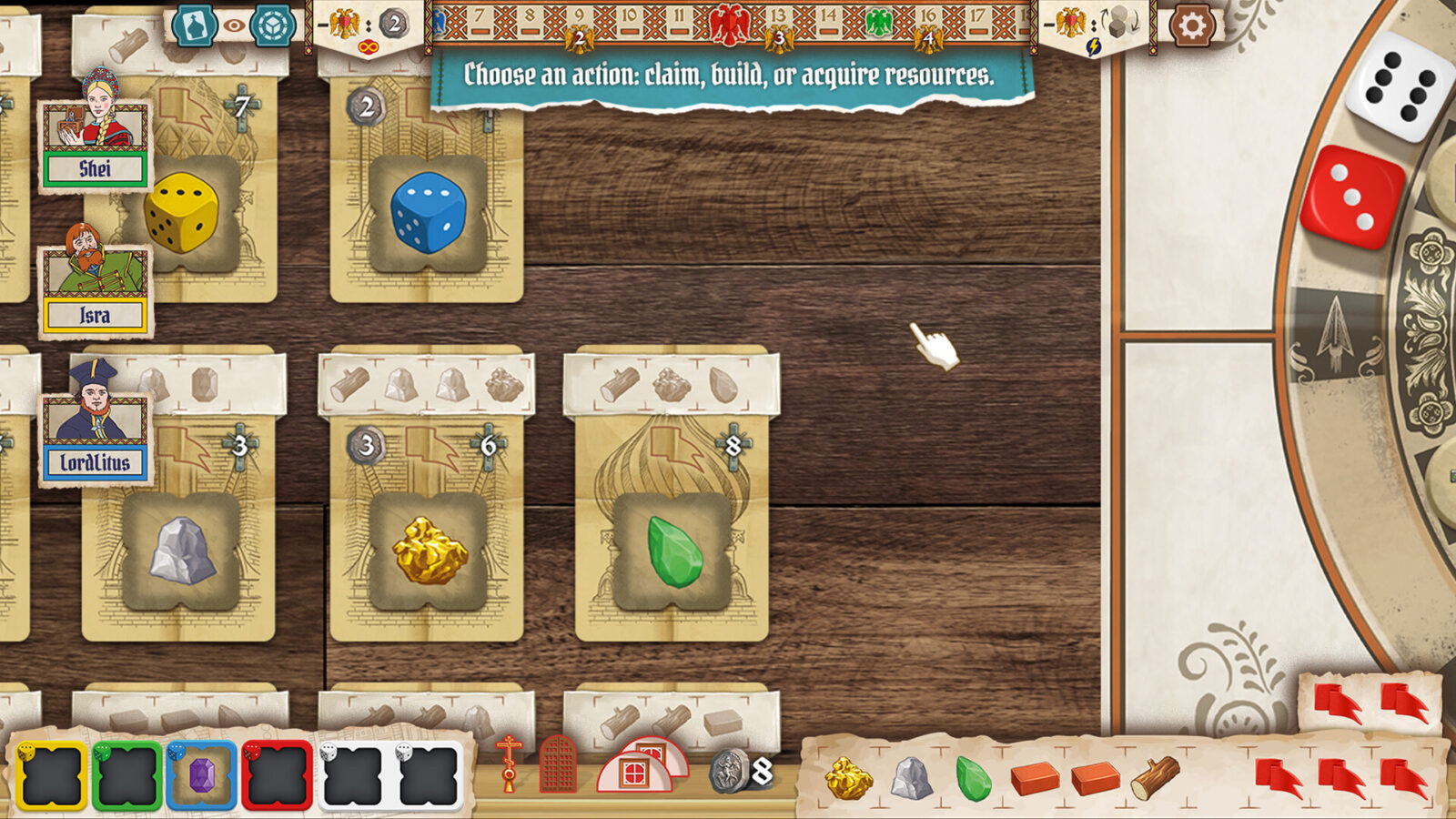
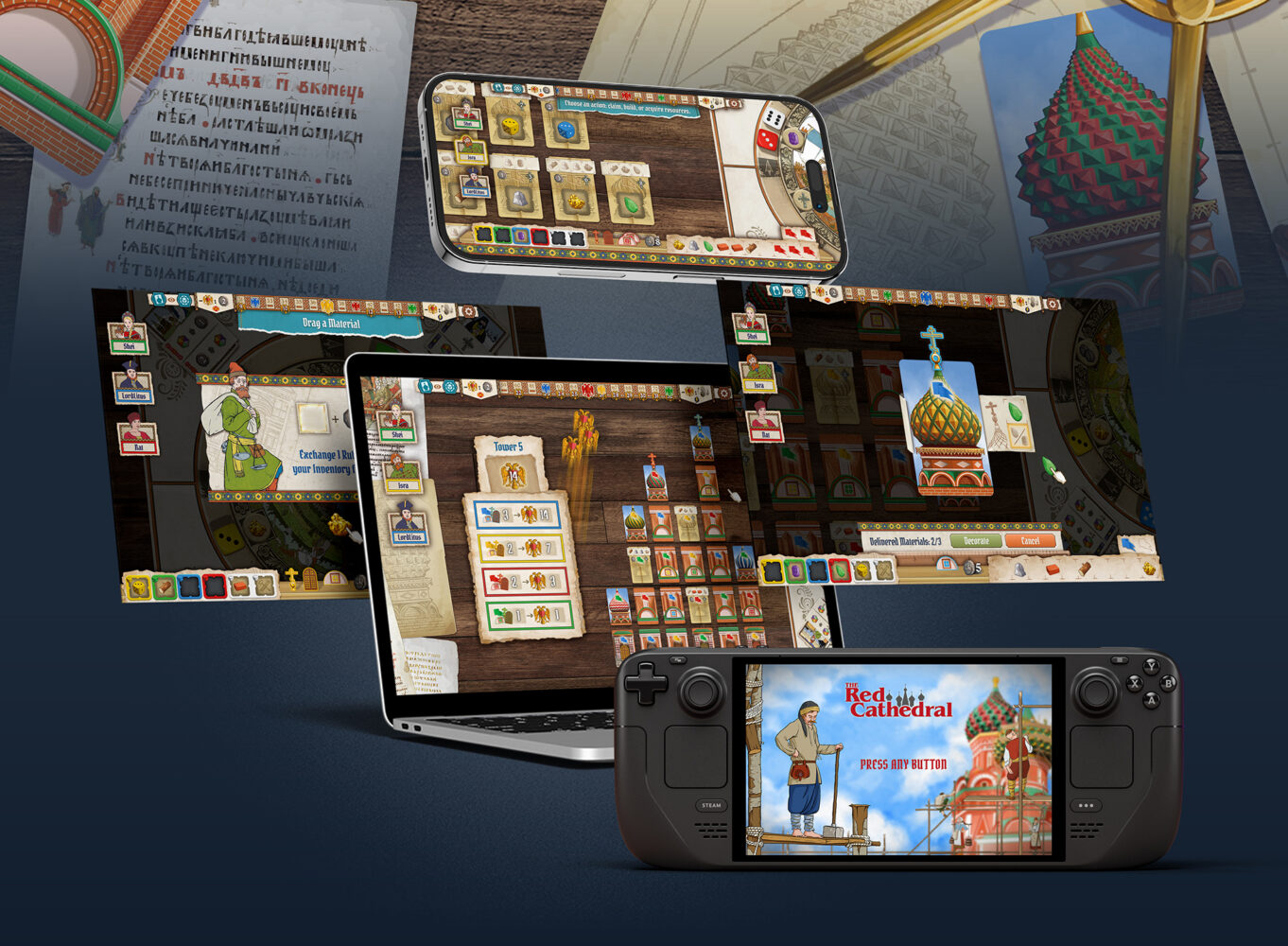
The mechanic that really hooked me is the market rondel. Dice occupy positions around a circular market, and selecting one determines its movement according to its current value, with its destination affecting the resources I can collect. What initially looks like a straightforward resource-gathering system therefore becomes a constantly shifting optimisation puzzle where positioning and timing matter just as much as what I’m trying to grab.
It didn’t take long before I stopped looking at the dice purely in terms of what they could give me right now. I started thinking about where they would end up, what opportunities that movement might create and whether I was setting myself up for a better subsequent turn. That’s exactly the sort of strategy mechanic I love: the rules aren’t particularly complicated, but their consequences are. When everything lines up, I briefly feel like Doctor Strange surveying fourteen million possible futures; when it doesn’t, the game politely reminds me I’m definitely not the Sorcerer Supreme.
Building the cathedral gives the puzzle purpose
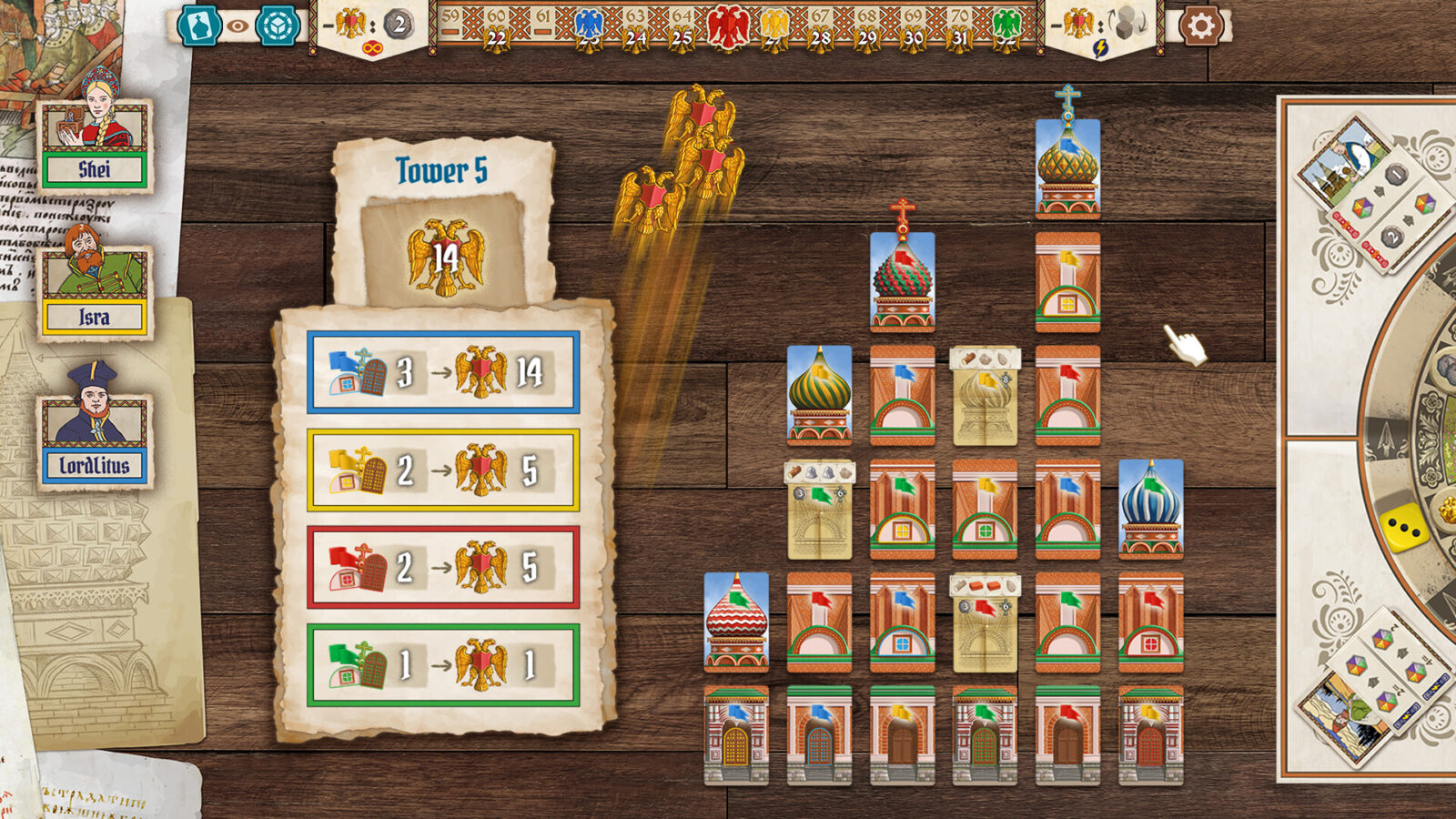
The cathedral itself stops all that resource optimisation from becoming abstract mathematics. I’m competing for prestige by claiming sections, gathering the materials needed to complete them and contributing decorations, so everything I’m doing around the market ultimately feeds back into something tangible. Watching the cathedral develop also gives the match a visual sense of progression beyond simply seeing numbers increase.
The temptation, at least for me, was to become overly ambitious. Claiming another section feels productive, but every additional commitment creates another resource problem that eventually needs solving. I repeatedly knew what I wantedto construct but still had to figure out the most efficient path towards actually getting it done. The rondel determines what opportunities are available, while the cathedral determines which opportunities matter, and the constant conversation between those two systems is the foundation of The Red Cathedral’s strategy.
Going digital solves the boring parts of board gaming
Playing the demo convinced me that The Red Cathedral is particularly well suited to becoming a dedicated digital game. I love the physicality of tabletop gaming, and software obviously can’t reproduce the satisfaction of moving real components around a board. Physical games, however, also come with setup, cleanup, component management and the sometimes impossible task of getting several adults into the same room at the same time. Digital games have discovered a revolutionary solution to this problem: clicking an icon.
The Red Cathedral automates its actions and administration, allowing me to concentrate on making decisions rather than maintaining the board state. That might sound like a minor convenience, but it’s a significant advantage for a Euro game where the interesting part is understanding the strategic consequences rather than physically executing every action. There is no setup ritual and no post-game archaeological expedition under the table searching for one missing component, which makes jumping into another match considerably more appealing.
The tutorial gets me playing instead of studying
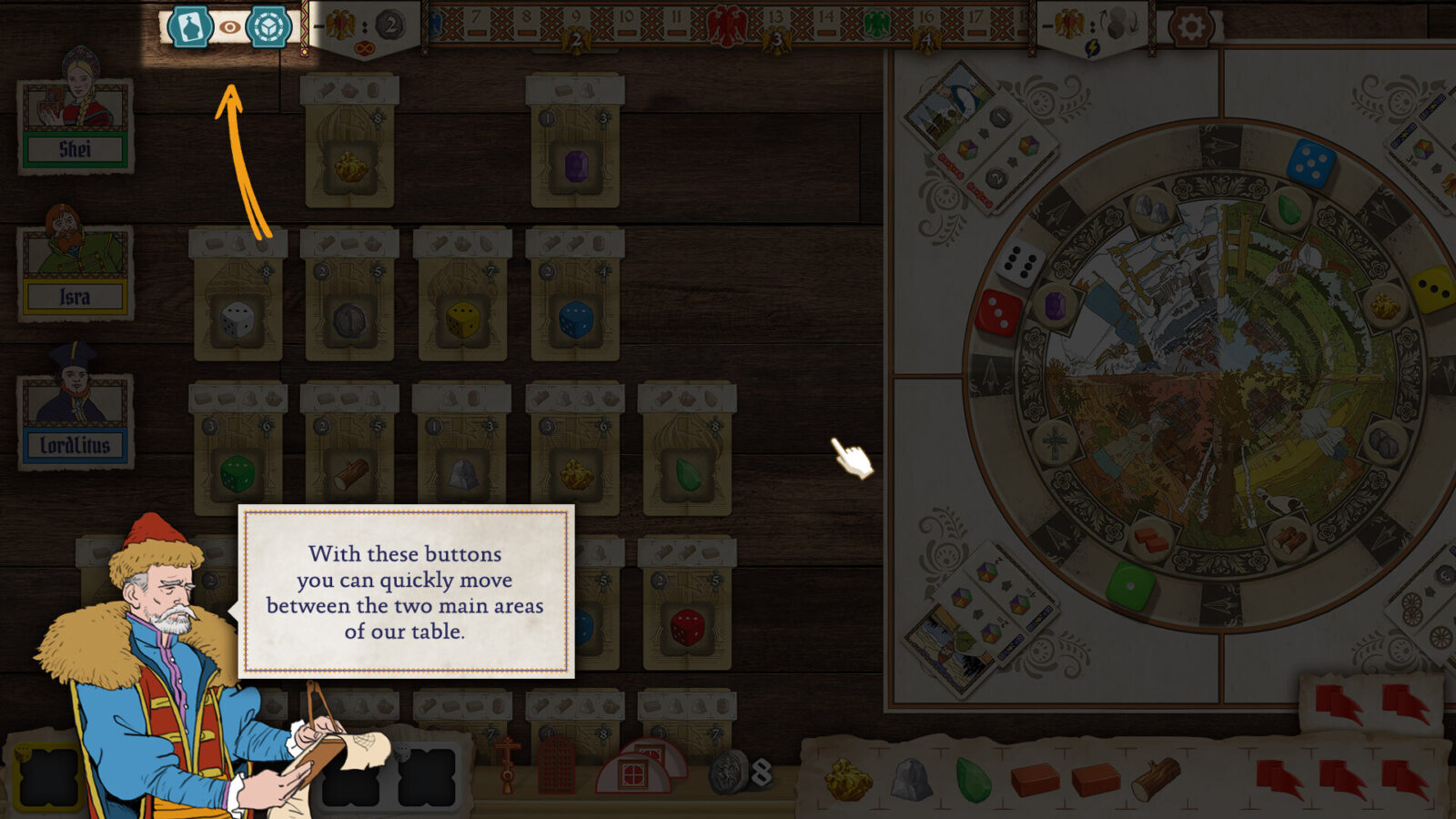
The tutorial is another area where the digital format earns its keep. The Red Cathedral’s individual mechanics aren’t overwhelmingly complicated, but understanding how everything interacts takes a little time. Being able to learn those systems while actually performing actions made the demo much easier to approach than absorbing an entire rulebook before being allowed to touch anything.
That’s important because the game occupies a nice space between accessibility and strategic depth. Once I understood the basic vocabulary, the difficulty shifted away from figuring out how to perform an action and towards deciding whichaction actually made sense. I could experiment, make mistakes and immediately see their consequences. That’s a much more enjoyable learning process than spending half an hour deciphering rules before discovering I misunderstood something on page seven.
AI makes solo play genuinely appealing
The digital version supports one to four players, and AI opponents make the game considerably more practical when nobody else is available. During the demo, I liked being able to concentrate on learning the systems without worrying about holding up other players while I examined the board like Commander Data calculating every possible outcome. The AI provided enough competition to make my decisions matter while still giving me room to understand why something had or hadn’t worked.
Solo availability also makes The Red Cathedral something I can realistically play whenever the strategic itch appears. I don’t need to organise a game night or coordinate schedules; I can simply launch it and disappear down the optimisation rabbit hole. The bigger question is how convincing those opponents will remain after dozens of matches and once experienced players properly understand the systems. That’s something the demo can’t definitively answer, but as a way of learning and casually playing, AI fits the game extremely well.
Online multiplayer could be the killer feature
As useful as solo play is, I suspect online multiplayer will ultimately provide one of the strongest reasons for owning The Red Cathedral digitally. Strategy games fundamentally change once everybody understands them. Early matches are about figuring out your own plans; later matches become about recognising everyone else’s plans and deciding whether you can exploit the same opportunities before they do.
That competitive element should work particularly well here because the market and construction systems naturally encourage players to pay attention to what’s happening beyond their own little architectural empire. Someone taking exactly the opportunity I was preparing to exploit creates the kind of frustration only another human can provide. More importantly, online multiplayer removes arguably the hardest mechanic in modern board gaming: scheduling. Sometimes getting friends onto Discord is simply more realistic than getting everyone around the same table.
Local multiplayer adds useful flexibility
Local multiplayer is also available, giving The Red Cathedral another way to replicate the tabletop experience without requiring the physical game. It’s a welcome addition, particularly for players who don’t own the cardboard version or simply want everything handled automatically. If I’m already sitting with friends in the same room, I can certainly understand the argument for getting an actual board out, but having both options is never a bad thing.
The larger appeal remains convenience. Physical games occupy shelves, require setup and eventually begin expanding into whatever remaining storage space your home still possesses. The digital version sits quietly on a drive and waits until I want it. It won’t replace the tactile charm of cardboard for me, but it makes playing The Red Cathedral far easier when convenience matters more than ceremony.
A dedicated adaptation beats wrestling with a virtual table
Another thing I appreciated about the demo is that The Red Cathedral doesn’t seem interested in reinventing itself as some enormous videogame spectacle. This is still recognisably a board game, except the software has been designed around its specific rules and interactions. That’s a significant distinction compared with general-purpose platforms such as Tabletop Simulator, where flexibility inevitably comes with additional interface friction.
I don’t want to wrestle with virtual components when I’m supposed to be wrestling with strategy. A dedicated adaptation can enforce rules, automate repetitive actions and streamline interactions while keeping the actual decision-making intact. The Red Cathedral understands that the computer should handle the boring stuff and then politely get out of my way. It doesn’t need ray-traced onion domes or Ivan the Terrible delivering a 40-minute cinematic monologue; it needs a clean way to let me play the board game.
Verdict
After playing The Red Cathedral demo, I’m impressed by how naturally this Euro board game translates into a dedicated digital experience. The cathedral-building theme gives the game personality, but the real attraction is the strategic machinery underneath it, particularly the excellent market rondel and the constant relationship between resource gathering, construction and timing. Automation removes tabletop housekeeping, while the tutorial, AI opponents and multiplayer options make the underlying game considerably easier to access whenever I actually want to play.
There is inevitably some tactile charm lost compared with sitting around a physical board, and I’m reserving judgment on long-term AI quality, online longevity and the overall value of the finished release. But the demo accomplished the most important thing it could: it made me want another match. The Red Cathedral is shaping up to be a smart digital adaptation of a wonderfully devious optimisation puzzle where apparently sensible decisions have a habit of returning several turns later to remind me that medieval architecture apparently requires a PhD in dice management.