
Netflix is moving forward with its reboot of Little House on the Prairie, a project that revives one of American television’s most enduring family dramas. The streamer plans to release all eight episodes of the first season on July 9, 2026, following its standard drop-everything-at-once model for most series. This new version positions itself less as a direct continuation of the 1974–1983 NBC series and more as a fresh adaptation of Laura Ingalls Wilder’s original book series.
Rebecca Sonnenshine serves as showrunner. Her credits include producing work on The Vampire Diaries and The Boys, along with screenwriting The Housemaid, an adaptation that demonstrated respect for its source material. She wrote the opening episodes, with additional scripts from Francesca Butler, P. Carter Kristensen, Adam Starks, Eleanor Burgess, and Tom Hanada. Directing duties are split among Sarah Adina Smith, Julie Anne Robinson, Kat Candler, Erica Tremblay, and Sydney Freeland.
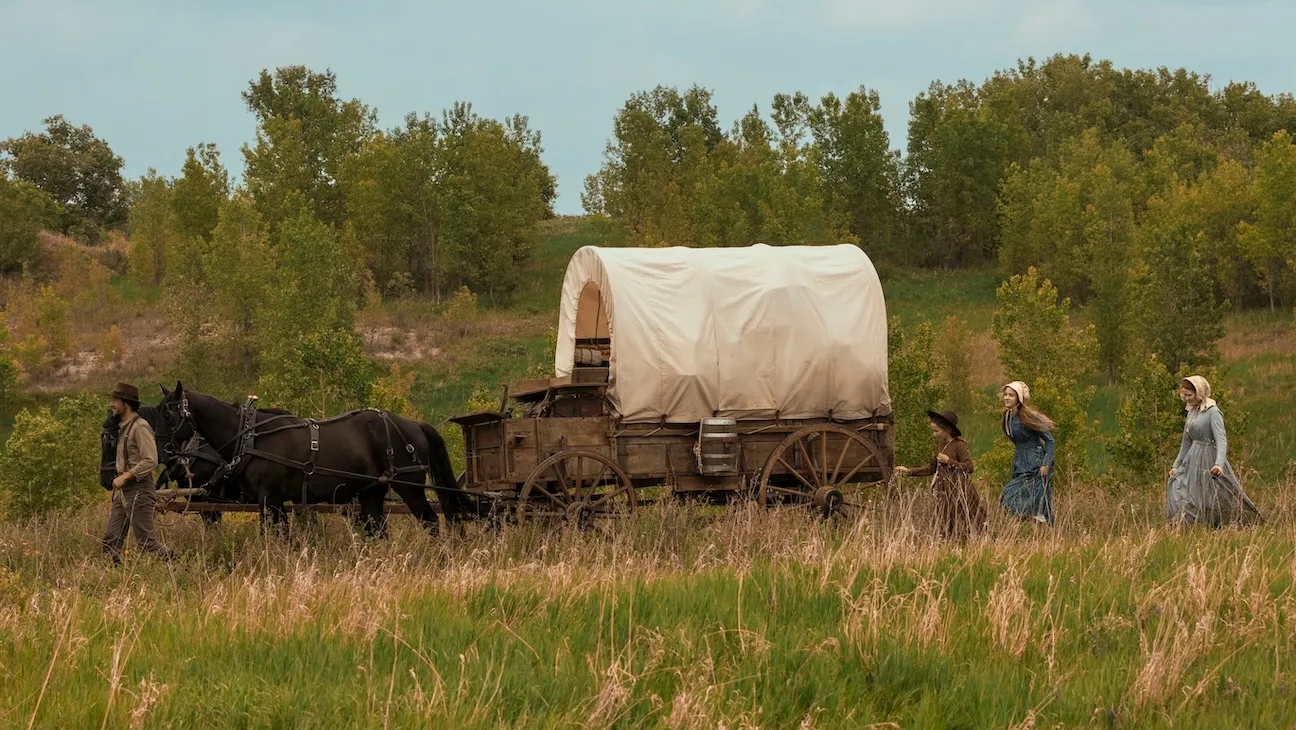
The cast features Alice Halsey as Laura Ingalls, shifting the narrative perspective toward the young daughter’s viewpoint rather than centering on her father Charles, as the earlier television adaptation often did. Luke Bracey plays Charles Ingalls, Crosby Fitzgerald appears as Caroline Ingalls, and Skywalker Hughes takes the role of Mary Ingalls. An exclusive image from the production shows Bracey in character working the fields, evoking the rustic tone many viewers associate with the franchise.
This approach aligns more closely with the books, which Wilder wrote from Laura’s point of view. The original NBC series, starring Michael Landon as Charles, famously diverged from the source when Landon pushed for contemporary social commentary on issues like racism and misogyny, creating tension with producer Ed Friendly, who favored a straighter adaptation. Netflix’s version seems inclined toward the latter: a more romanticized, idealized portrait of late-19th-century frontier life in the American Midwest. In an era hungry for sharper historical reckonings, this choice may offer comforting escapism for some audiences, yet it also risks presenting a sanitized view of pioneer existence that glosses over harsher realities.
The show’s story will follow the Ingalls family as they build lives on the prairie, emphasizing family bonds, hardships, and small triumphs. By returning focus to Laura, the reboot echoes recent adaptations like the Coen brothers’ True Grit, which similarly recentered the narrative on its young female protagonist to stay faithful to the original text.
In a notable show of confidence, Netflix renewed the series for a second season back in March 2026—months before the first season even premieres. Such early renewals are uncommon and usually reserved for projects with strong internal metrics or clear franchise potential. Whether this faith is justified will depend on how well the series balances nostalgia for older viewers with storytelling that feels relevant to newer ones. The frontier setting and family-centric drama still hold universal appeal, but translating that into eight hours of bingeable television without falling into cliché or excessive sentimentality presents a real challenge.
Ultimately, Netflix’s Little House on the Prairie enters a crowded field of reboots that must navigate reverence for the past while carving out space in the present. Its success may hinge on whether it delivers earnest warmth without ignoring the complexities of the era it depicts.