
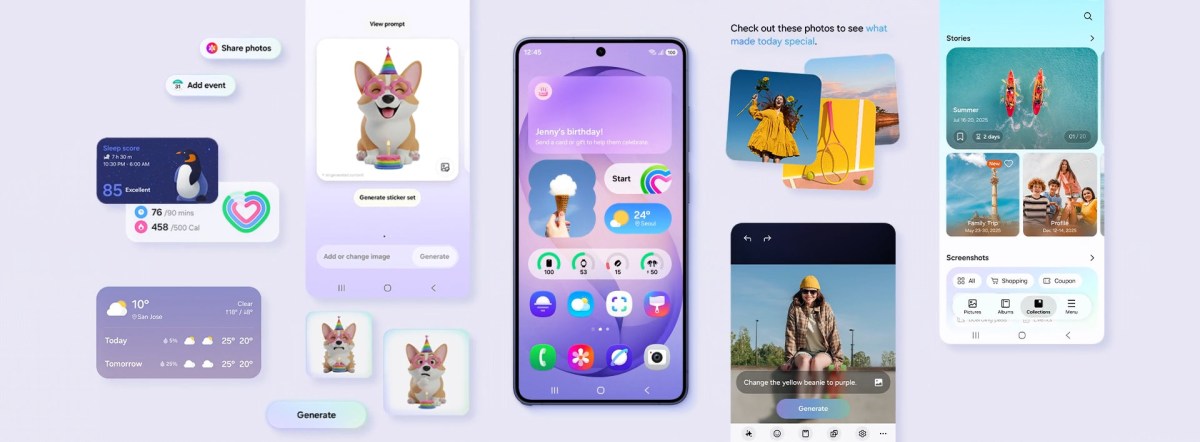
Samsung has begun rolling out One UI 8.5 to a range of its recent flagship devices, marking the end of a beta period that started in December and the arrival of its latest Android skin on phones and tablets that launched with earlier versions. The update is now reaching the Galaxy S25 series and S24 family first in Korea, with broader international availability expected in the coming days and weeks, assuming no major issues surface.
Also included are the Galaxy Z Fold7 and Flip7, along with the previous-generation Fold6 and Flip6, plus the Galaxy Tab S11 and Tab S10 lines. This staggered approach reflects Samsung’s usual pattern of prioritizing newer hardware while gradually extending support to still-viable older models, a strategy that has helped the company maintain long software lifecycles compared to many Android competitors.
The Galaxy S26 series launched already running One UI 8.5, so the current rollout serves mainly to align last year’s and this year’s flagships under the same software foundation. While the update does not introduce dramatic visual overhauls, it brings refinements to notifications, multitasking, and system animations that users have tested during the beta. These changes aim to smooth daily interactions without fundamentally altering the familiar One UI experience that has defined Samsung’s software identity for years.
One UI’s evolution has been steady rather than revolutionary. Earlier versions focused on design cohesion and productivity features, while recent iterations have emphasized better integration with foldables, improved battery management, and tighter alignment with Google’s Android updates. Version 8.5 appears to follow this incremental path, addressing lingering rough edges exposed in beta feedback rather than attempting to reinvent the interface. In a market where Apple’s iOS updates often set expectations for polish and longevity, Samsung’s multi-year support commitments have become a key selling point, though real-world consistency across device tiers still varies.
The timing is notable. With the Android ecosystem moving quickly toward AI-assisted features and more fluid cross-device experiences, One UI 8.5 positions Samsung’s existing hardware to remain competitive without requiring immediate upgrades. Owners of the S24 and S25 series, in particular, stand to benefit from continued optimization that extends the usable life of devices purchased at premium prices. Yet the gradual rollout also underscores a persistent reality in Android updates: even flagship users must wait while stability is confirmed region by region.
For users outside Korea, patience will be necessary in the short term. Samsung has not detailed every change in the public announcement, but beta participants have reported better responsiveness and minor quality-of-life improvements across the board. As with previous major One UI releases, the true test will come after widespread adoption, when edge cases and carrier-specific quirks emerge.
Overall, the One UI 8.5 rollout represents routine but welcome maintenance for Samsung’s high-end lineup. It keeps older flagships feeling current and reinforces the company’s promise of sustained software support in an industry where devices can quickly feel outdated.