
The Big Bang Theory franchise returns this summer with Stuart Fails to Save the Universe, a new sci-fi spin-off that attempts to extend the long-running sitcom’s universe into more adventurous territory. Premiering on July 23, 2026, the series will deliver ten episodes on a weekly Thursday schedule at 9 p.m. ET. Kevin Sussman reprises his role as Stuart Bloom, the comic book store owner who finds himself at the center of a multiverse crisis after accidentally damaging a device created by Sheldon and Leonard.
The show reunites several familiar faces from the original series. Lauren Lapkus returns as Denise, Brian Posehn as Bert, and John Ross Bowie as Barry Kripke. A newly released teaser also reveals Wil Wheaton making an appearance, reprising a version of his heightened self from the original show. In the brief clip, he appears in Stuart’s store, seemingly firing an energy blast at the group. Whether this signals a recurring role or a quick cameo remains unclear, but it taps into the franchise’s tradition of playful celebrity self-parody.
The premise follows Stuart as he tries to repair reality after triggering what amounts to a multiverse Armageddon. Along the way, he teams up with his girlfriend Denise, his friend Bert, and the ever-irritating physicist Barry, encountering alternate-universe versions of beloved characters from the mothership series. Created by Chuck Lorre, Bill Prady, and Zak Penn, the production comes from Chuck Lorre Productions and Warner Bros. Television. It marks the fourth series in the franchise, following the prequel Young Sheldon and the ongoing Georgie & Mandy’s First Marriage.
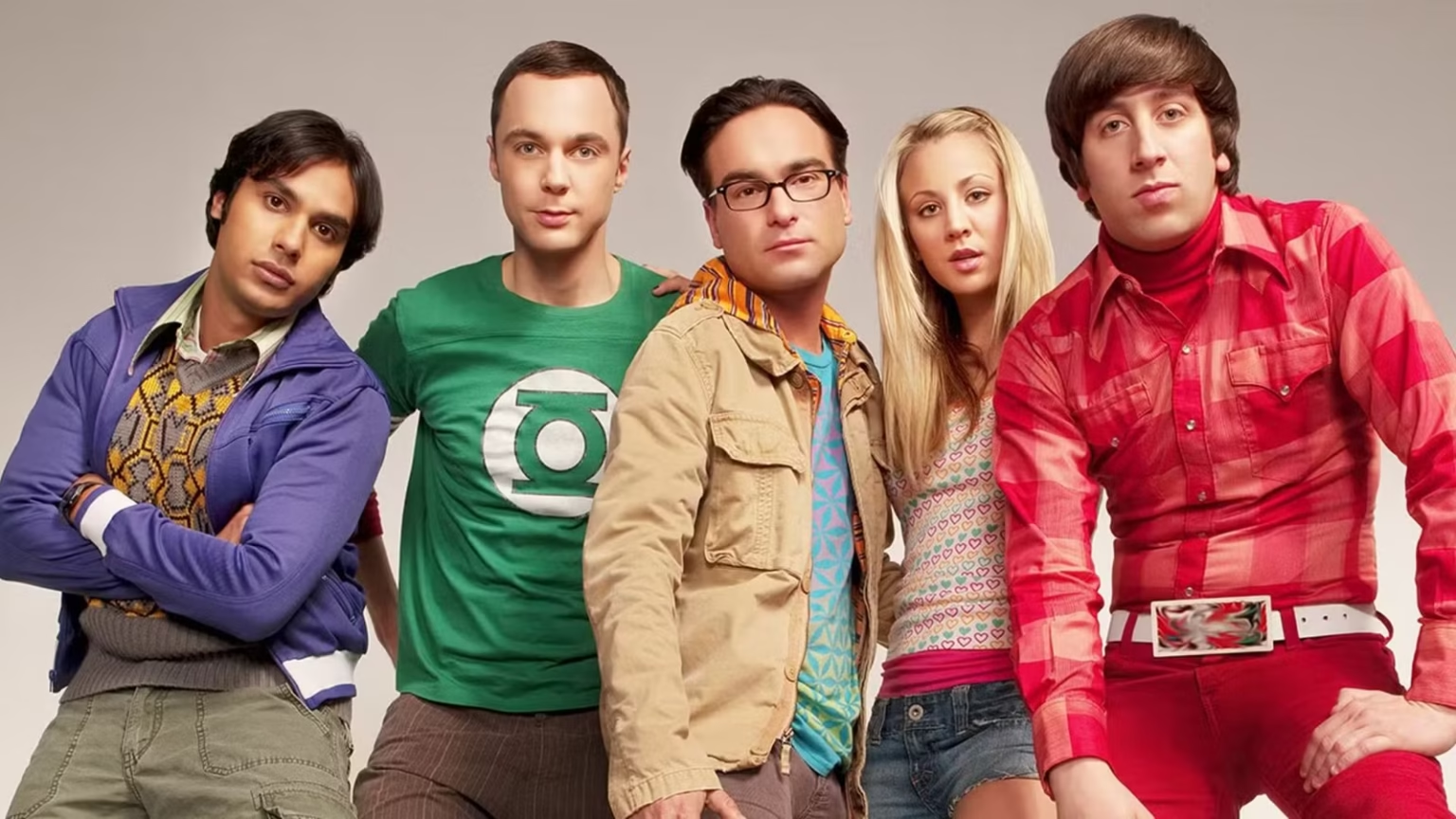
While the original Big Bang Theory enjoyed a remarkably successful twelve-season run from 2007 to 2019, this latest extension arrives at a time when many viewers may feel franchise fatigue. The decision to lean heavily into multiverse elements feels particularly timely, or perhaps convenient, given how frequently this narrative device appears across film and television in recent years. It offers an easy way to bring back familiar characters without strict continuity constraints, yet it risks reducing the story to yet another exercise in nostalgic recycling rather than fresh storytelling.
That said, centering the show on Stuart Bloom presents an interesting shift. The character always provided a grounded, somewhat hapless contrast to the brilliant but socially awkward scientists around him. Giving him the lead role could allow for different comedic rhythms, especially when paired with the established supporting cast. Still, the real test will be whether the writing can capture the original show’s balance of nerd culture references and character-driven humor without feeling like a pale imitation.
For fans who have followed the franchise through its various iterations, Stuart Fails to Save the Universe offers another chance to revisit this world. Whether it justifies expanding what was already a lengthy television universe depends on how well it balances familiarity with new ideas. The series arrives on Max, adding to the platform’s growing catalog of established IP extensions.