
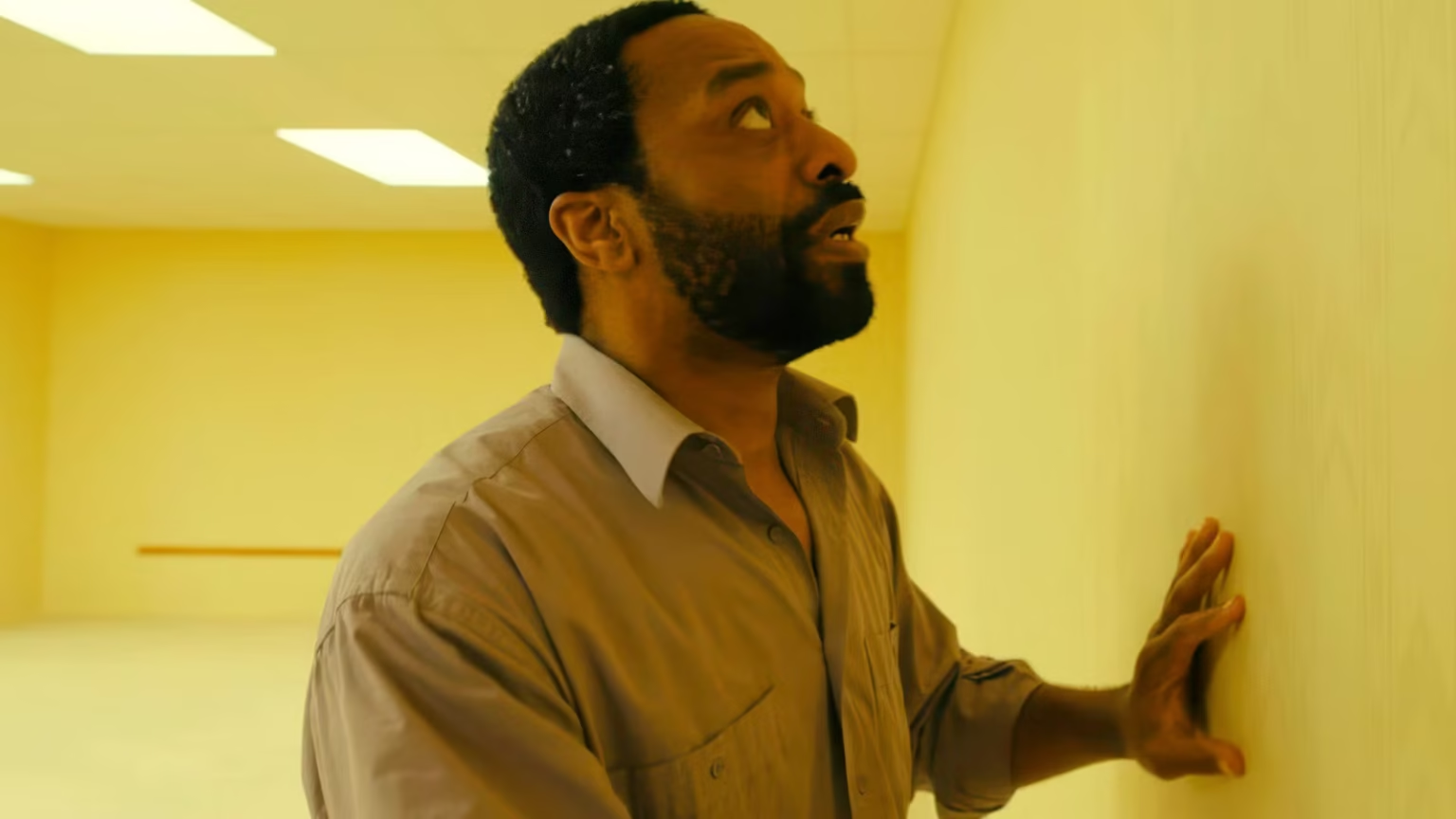
Backrooms brings the familiar internet horror phenomenon of endless liminal spaces to the big screen under director Kane Parsons. The A24 production follows Clark, a failed architect turned furniture store owner played by Chiwetel Ejiofor, who stumbles into a mysterious portal leading to a disorienting world of monotonous corridors and rooms. What begins as an exploration of isolation and architecture quickly turns inward as Clark encounters a distorted version of himself, referred to as Pirate Clark, dressed in an incongruous costume.
In a recent interview, Parsons discussed the film’s ambiguous conclusion without providing definitive answers. He described the Backrooms environment as an echo chamber reflecting Clark’s interior world, manifesting his psychological state onto the physical surroundings. The encounter culminates in Pirate Clark attacking and killing the protagonist, an act that resists simple explanation. Parsons suggested it could stem from Clark’s mental condition or even something as mundane as hunger, though he emphasized the narrative resists straightforward readings. The director expressed reluctance to over-explain, noting that audiences often defer too heavily to creator intent rather than forming their own interpretations.
This approach aligns with the strengths and limitations of adapting creepypasta-style stories. The original Backrooms concept gained traction online through atmospheric images and minimal lore, thriving on mystery and unease. Translating that to a feature film requires balancing concrete storytelling with the unsettling vagueness that made the source material compelling. Parsons’ decision to protect future possibilities hints at potential expansions, either through sequels or returns to the YouTube format where he first built his reputation with short horror videos.
The production itself reflects growing interest in digital-born horror. A24 committed significant resources, including building extensive practical sets to capture the strange, fluorescent-lit spaces. This investment signals confidence in the project’s ability to connect with viewers drawn to psychological and existential dread rather than jump-scare reliance. Yet questions remain about whether the film fully captures the infinite, bureaucratic terror of the original concept or risks becoming another example of internet culture losing its edge in Hollywood translation.
Parsons’ comments underscore a thoughtful restraint uncommon in genre filmmaking. By refusing to dictate meaning, he invites engagement with themes of identity, self-destruction, and the blurred line between external horror and internal collapse. For audiences familiar with liminal space aesthetics, the movie offers a visually committed experience, though its success will depend on how effectively it sustains tension across a full feature runtime without relying on over-familiar tropes.
In a crowded horror landscape, Backrooms stands as a notable attempt to elevate user-generated concepts into mainstream cinema. Its ending, deliberately open to interpretation, reinforces the idea that some horrors work best when left partially unresolved. Viewers seeking neat closure may feel frustrated, but those comfortable with ambiguity will likely find more to consider after the credits roll.