
MSI has announced the Claw 8 EX AI+ at Computex 2026, its latest entry in the competitive handheld gaming PC market. The device relies on Intel’s new Arc G3 processor, positioning it alongside other early adopters like the Acer Predator Atlas 8 as manufacturers explore next-generation mobile hardware options.
The Arc G3 APU, built on the B390 die with 12 Xe cores and a TDP range up to 30W, brings support for XeSS 3 Multi-Frame Generation. This technology aims to improve frame rates through frame generation and upscaling, an area where Intel has worked to close the gap with AMD’s FSR and Nvidia’s DLSS over recent years. While performance gains remain to be tested in real-world conditions, the shift from previous Alchemist architecture represents a notable step forward for integrated graphics in portable systems.
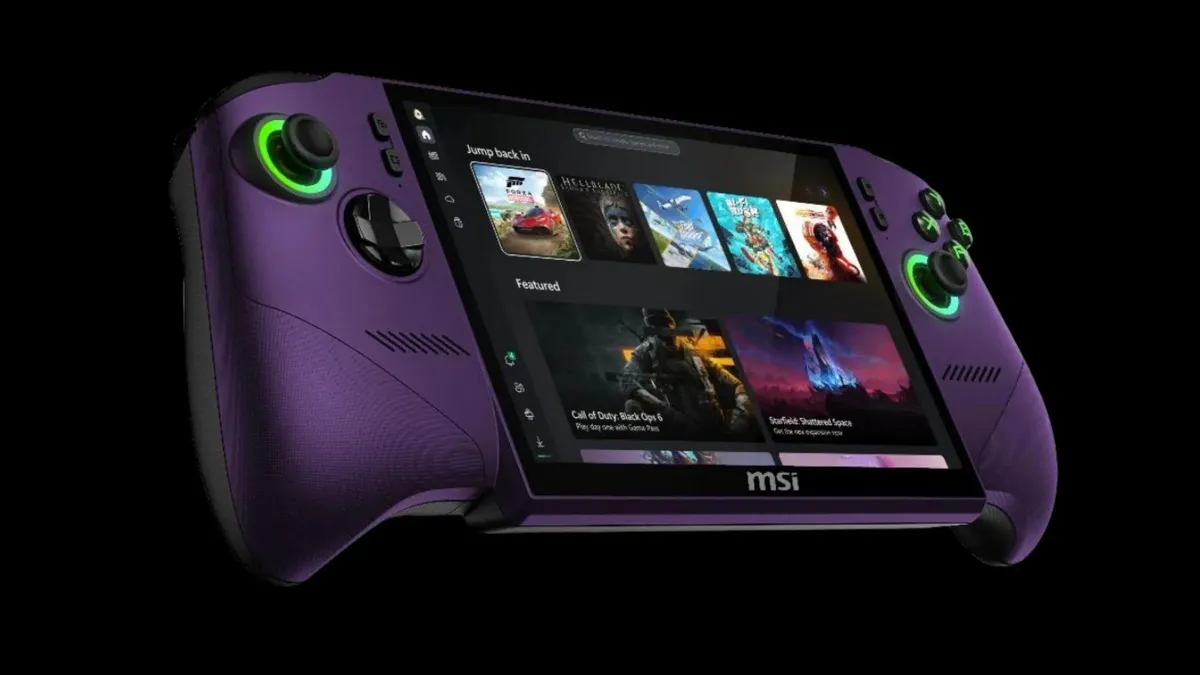
Ergonomically, the Claw 8 EX AI+ adopts a more controller-oriented design with gamepad-style grips, Hall Effect analog sticks and triggers, and an updated D-pad. It adds haptic feedback through a linear motor intended to simulate textures, moving beyond the basic rumble of earlier models. The 8-inch 1920×1200 120Hz VRR display carries over from the previous generation, while the chassis now features a distinctive purple finish with red buttons and RGB lighting around the controls. These changes draw clear influence from devices like the Asus ROG Ally series, reflecting broader industry trends toward familiar console-like handling in PC handhelds.
Battery capacity stays at 80Wh, matching the prior Claw 8 AI+ model, which should help sustain longer play sessions. Memory increases to 32GB LPDDR5x-8533, paired with the more capable graphics solution. Pricing details have not been confirmed, but expectations point toward a premium range similar to the current Claw 8 AI+ variants that start around $899. At that level, the device will face direct competition from established players including Valve’s Steam Deck and Asus offerings, especially as the handheld segment matures four years after the Steam Deck’s influential debut.
The broader market context reveals both progress and challenges. While the initial wave of devices sparked genuine excitement for portable PC gaming, the rapid integration of AI features and higher power demands have complicated the category. Many competing models still rely on AMD’s Z1 or Z2 Extreme chips, making Intel’s push with the Arc G3 an interesting alternative. Features like Xbox Mode quick resume add convenience, yet questions remain about optimization, software support, and whether these improvements truly elevate everyday gameplay beyond incremental upgrades.
Overall, the MSI Claw 8 EX AI+ illustrates the ongoing evolution of handheld gaming PCs. It incorporates newer silicon and refined controls at a time when the market risks fragmentation across similar but incrementally different options. Real-world performance, battery efficiency under load, and long-term software updates will ultimately determine its place among current alternatives. Hands-on testing will provide clearer insight into whether this hardware direction delivers meaningful advantages for users seeking capable portable gaming.