
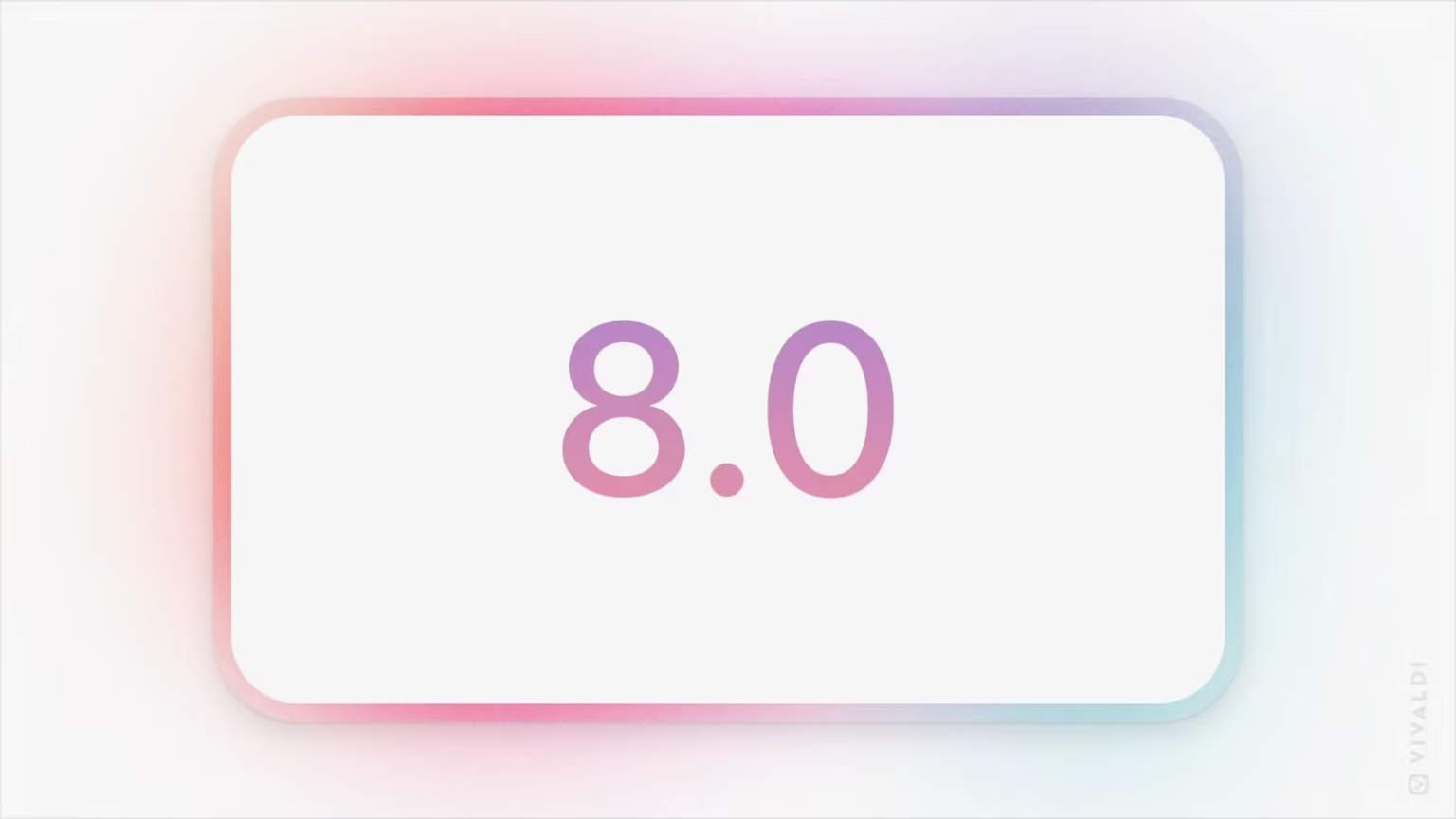
Vivaldi 8.0 arrives at a moment when many users feel exhausted by the relentless push of artificial intelligence into everyday web browsing. While competitors embed chatbots, AI summaries, and conversational search by default, this independent browser takes a deliberate step back, offering an opt-in approach to such features alongside a refreshed interface that prioritizes user control. The update, released on May 21, 2026, focuses on a unified design that merges previously distinct elements into a more seamless experience, without forcing new technologies on those who prefer to browse simply.
The most noticeable change in Vivaldi 8.0 is this unified design. Tabs, toolbars, and side panels now blend into a single continuous surface that wraps around the browser window. The result feels more intentional and less cluttered than the fragmented layouts common in earlier versions or rival browsers. For users who keep dozens of tabs open—a habit that strains system resources—this cohesion improves readability and navigation. Gestures, keyboard shortcuts, and commands all work fluidly within the new structure, allowing the interface to adapt to different working styles rather than dictating one.
Customization remains central to Vivaldi’s identity. The update includes new default themes inspired by minimalism and regional aesthetics, providing clean starting points. Users can still create their own themes or select from thousands of community options, and crucially, the option to revert to the classic layout persists. Integrated tools for email, calendar, feeds, and notes sit inside the browser on the user’s terms, reducing the need to switch applications or tabs constantly. This setup echoes earlier power-user browsers from the 2000s that emphasized flexibility over simplicity, a contrast to today’s trend of streamlined but less adaptable experiences.
In an industry racing toward AI defaults—evident in Google’s recent overhaul of Search and similar moves by other companies—Vivaldi’s privacy-focused stance stands out. The browser avoids injecting AI summaries or agents unless explicitly enabled, addressing fatigue from constant prompts and data collection. Yet this position also invites scrutiny: while resisting hype is refreshing, success will depend on whether the unified design delivers genuine improvements in daily use or simply rearranges familiar elements. Early impressions suggest a more zen-like environment for research and writing, but long-term value lies in how well it balances depth with performance on standard hardware.
Available as a free download for Windows, macOS, Linux, and with mobile versions, Vivaldi 8.0 does not claim to reinvent browsing entirely. Instead, it refines an existing philosophy that puts user choice first. For those tired of browsers that prioritize engagement metrics and AI novelty over straightforward functionality, it offers a practical alternative worth testing. The update underscores a broader tension in tech: innovation does not always mean adding more layers of automation. Sometimes the wiser path involves stripping back and letting users decide.