
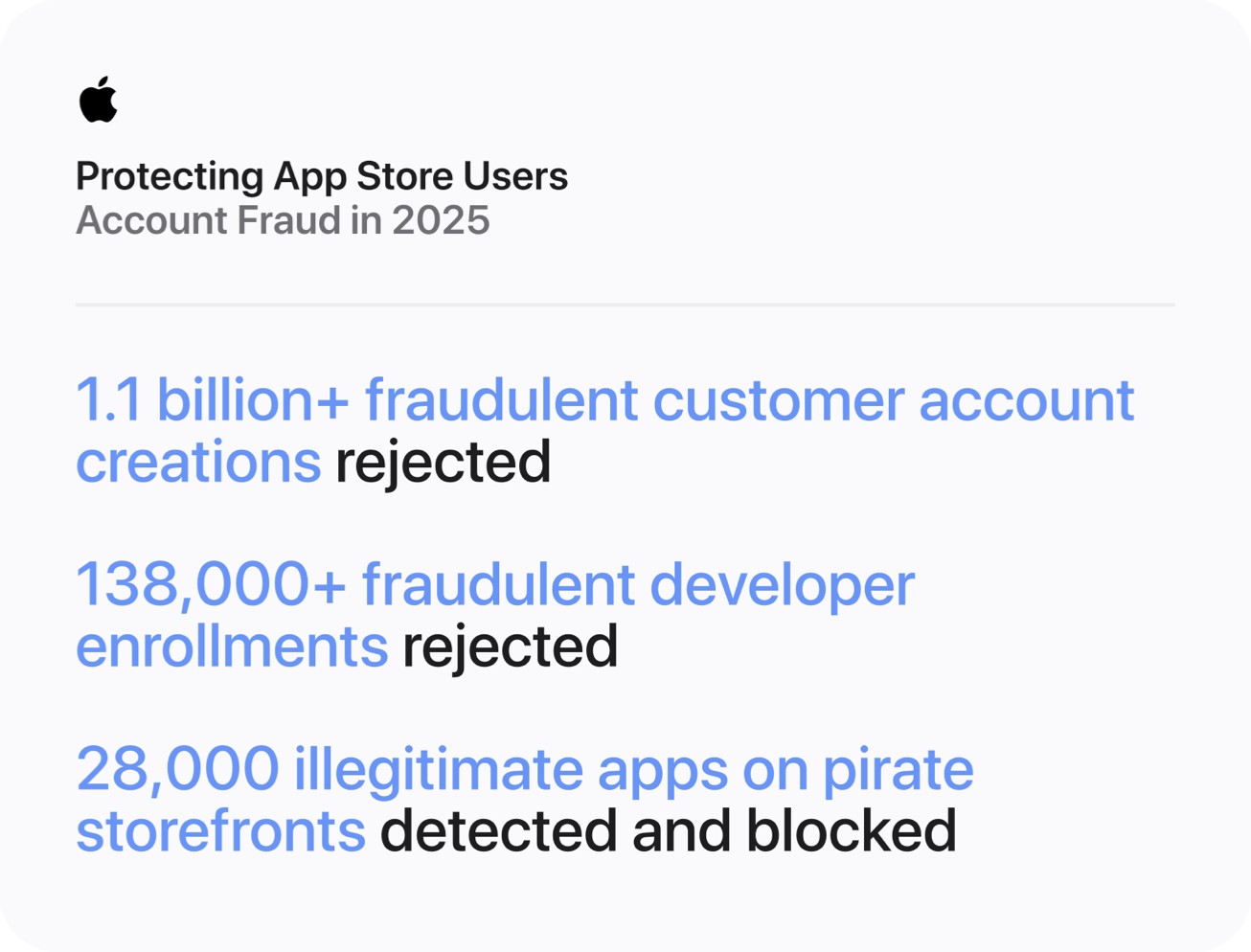
Apple’s App Store security efforts in 2025 blocked more than $2.2 billion in potentially fraudulent transactions, bringing the six-year cumulative total above $11.2 billion. The company combined human oversight with machine learning systems to reject over 2 million app submissions and prevent 1.1 billion fraudulent account creations, actions that reflect the ongoing challenge of policing a platform that now draws more than 850 million weekly visitors across 175 countries.
The scale of these numbers underscores both the persistence of digital threats and the resources required to counter them. Fraudsters have grown more sophisticated, deploying bot networks for fake accounts, review manipulation, and chart gaming. In response, Apple terminated 193,000 developer accounts and rejected 138,000 enrollment attempts on fraud grounds. It also blocked 28,000 illegitimate apps circulating on pirate storefronts—many containing malware, gambling content, or cloned legitimate software—and stopped 2.9 million attempts to install apps from outside approved channels in a single recent month.
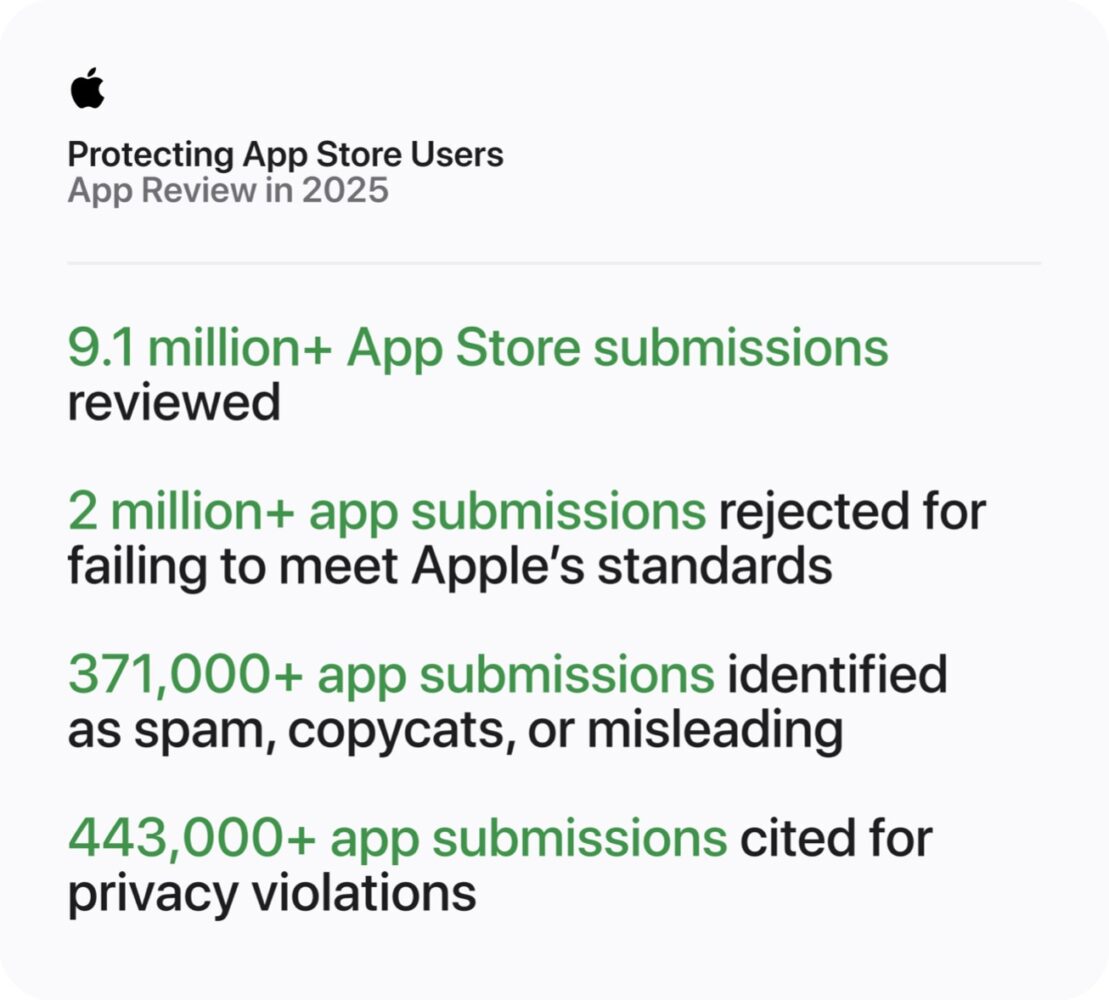
App review remains central to these defenses. Last year the team examined 9.1 million submissions and rejected more than 2 million for violating guidelines. This included nearly 59,000 cases of bait-and-switch tactics, where apps initially presented as simple games or utilities later introduced fraudulent features after approval. Over 443,000 submissions were turned away for privacy issues, while another 371,000 were flagged for spam, copying, or misleading users. The process relies on a mix of automated pattern detection and human judgment, which has helped manage the surge in submissions driven by accessible AI development tools. Yet the volume—welcoming 306,000 new developers while maintaining quality—illustrates the tension between openness and control in large app marketplaces.
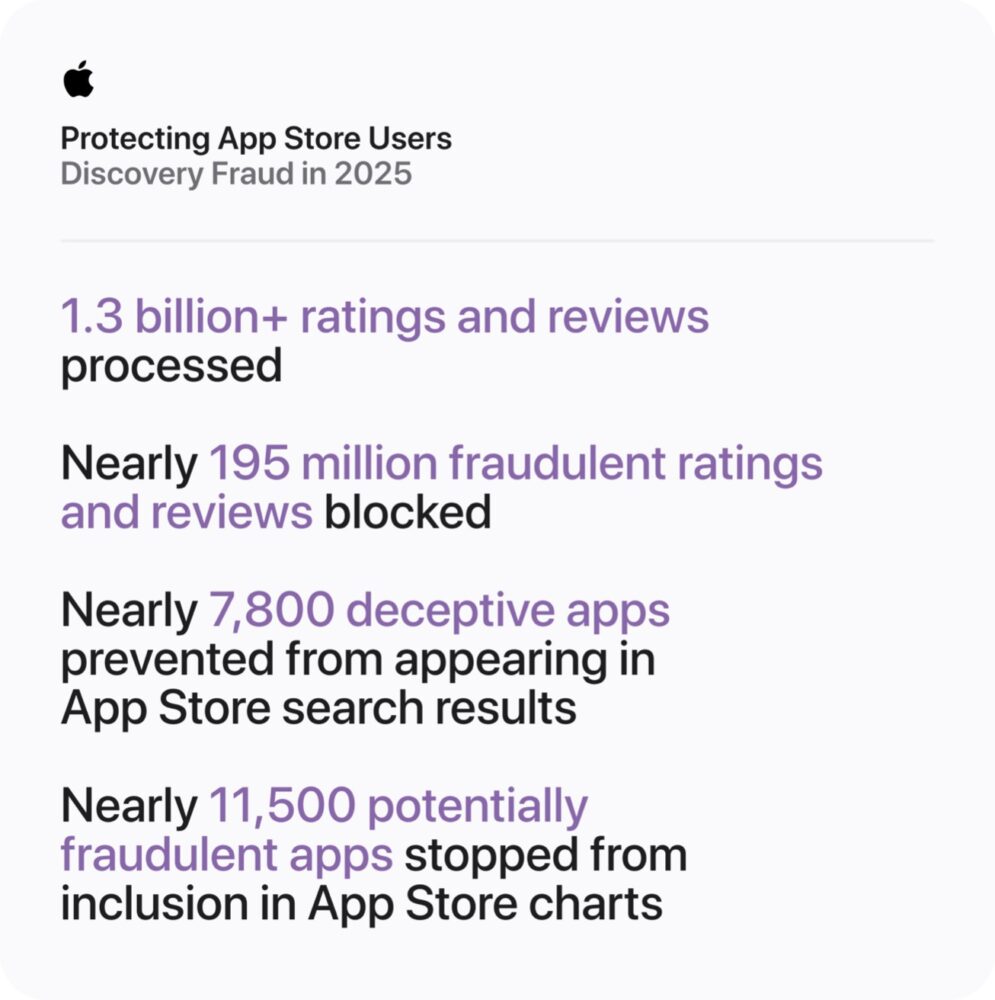
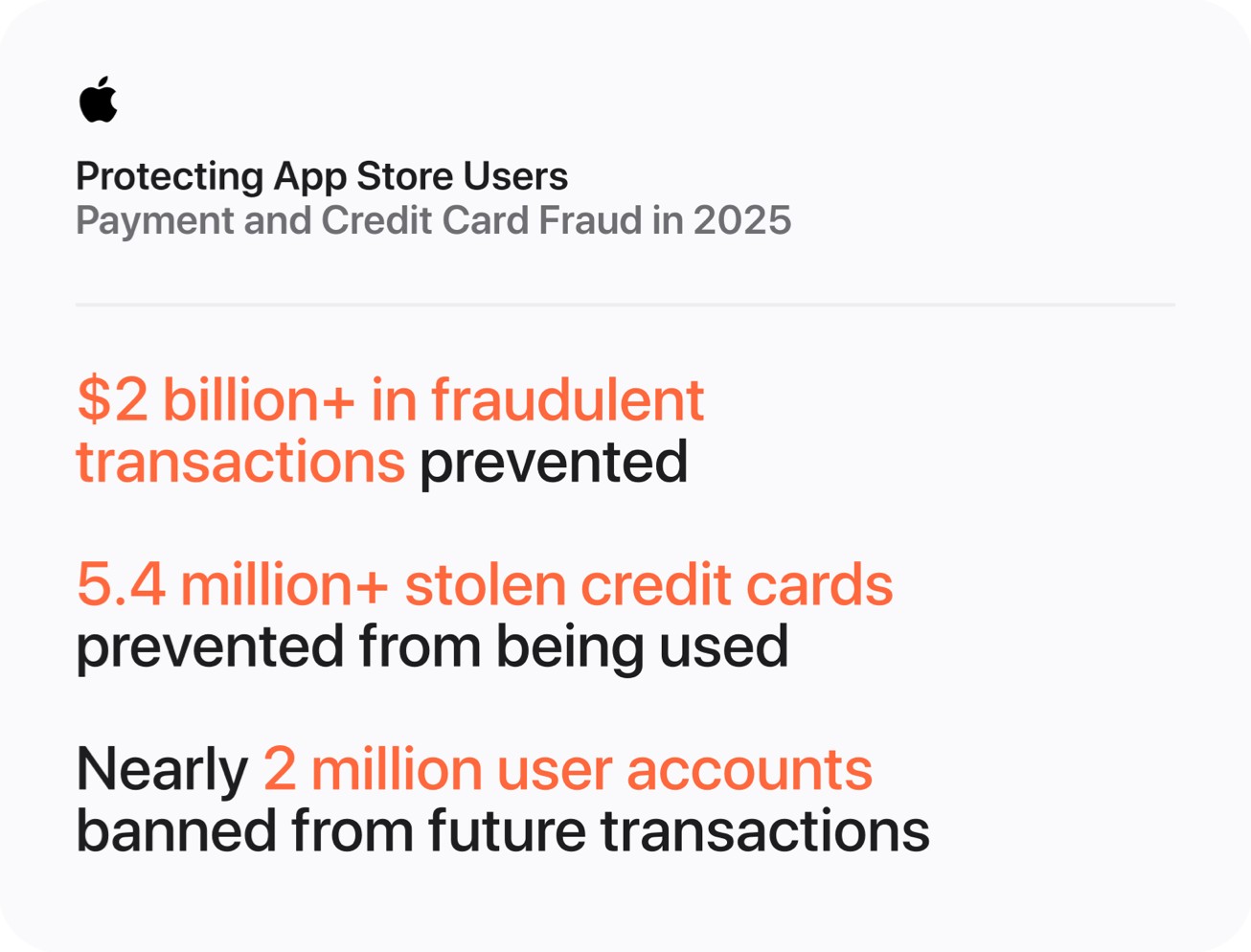
On the discovery side, Apple processed 1.3 billion ratings and reviews and blocked nearly 195 million fraudulent ones. It also removed thousands of apps from search results and charts to limit manipulation. In payments, the company prevented the use of 5.4 million stolen credit cards and banned almost 2 million accounts from further transactions, protecting the in-app purchase system used by hundreds of thousands of apps.
These measures extend to families through stricter Kids category rules, which led to the rejection of more than 5,000 apps last year, alongside parental tools like Screen Time and Ask to Buy. Such features give users some agency, though critics have long noted that Apple’s closed ecosystem, while reducing certain risks, also limits choice and competition compared with more open platforms.
Overall, the 2025 figures show incremental progress against evolving threats rather than a definitive victory. Fraud prevention in app stores has become a continuous arms race, with each advance by defenders matched by new tactics from bad actors. Apple’s multilayered approach—part technology, part manual review—has kept its marketplace relatively clean, but the billions still lost annually across the wider digital economy suggest that no single platform holds all the answers. Users and developers alike benefit from vigilance, yet sustained trust will depend on transparency about both successes and the inevitable limitations of any curation system.