
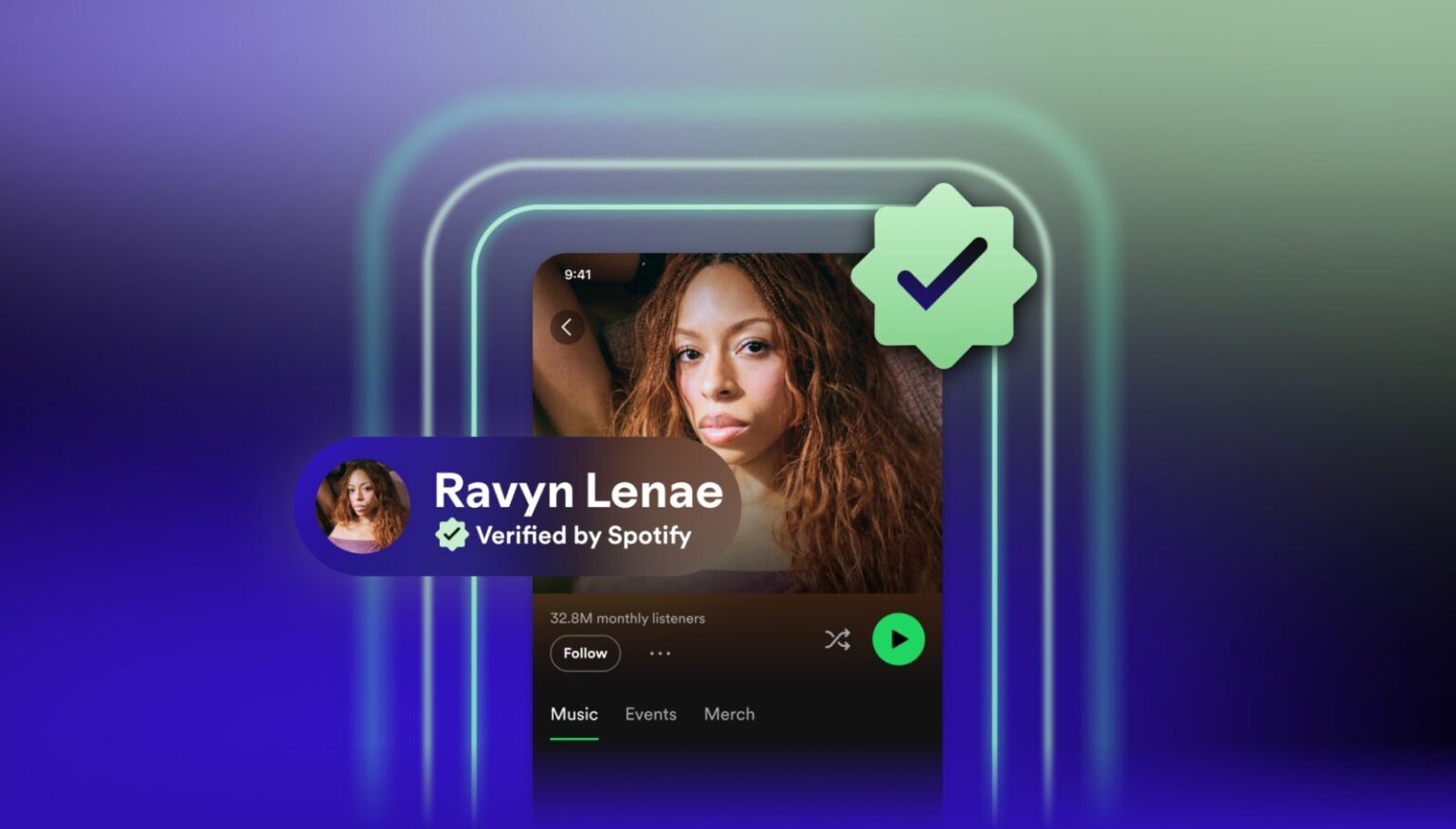
Spotify is introducing verified artist badges on its platform to help users separate human musicians from the growing wave of AI-generated tracks and personas. The move comes as streaming services grapple with a surge in synthetic content that is diluting the music ecosystem and complicating discovery for listeners.
Under the new “Verified by Spotify” program, artists qualify for the badge by demonstrating a tangible, real-world presence. This includes concert dates, merchandise, linked social accounts, and consistent listener engagement over time rather than fleeting viral spikes. Profiles centered on AI-generated music or virtual personas are explicitly ineligible. At launch, the company claims that more than 99 percent of artists people actively search for will receive verification, covering a wide range of independent creators across genres and regions. The green-checkmarked badges will appear on artist profiles and in search results over the coming weeks, with verification continuing on an ongoing basis for the platform’s vast catalog.
The initiative prioritizes artists with sustained fan interest and cultural contributions over “functional music” makers whose output is optimized for background listening or algorithmic playlists. Spotify is also testing a new profile section that highlights career milestones, releases, and touring activity, offering context even for those still awaiting badges. This arrives alongside an earlier “Artist Profile Protection” feature that lets musicians review and control tracks associated with their names before they go live.
The timing reflects broader industry pressure. Last month, Sony Music requested the removal of more than 135,000 AI-generated songs impersonating its artists across streaming services. Rival Deezer reported that AI tracks now account for 44 percent of daily new uploads on its platform. While Spotify has not disclosed its own figures, the problem is clearly accelerating: generative tools have lowered the barrier to music creation so dramatically that platforms risk being flooded with low-effort, algorithm-friendly slop.
Historically, verification systems have had mixed success. Social platforms’ blue checks evolved from authenticity signals into status symbols and then sources of confusion after paid options diluted their meaning. Spotify’s approach tries to tie verification more closely to verifiable human activity and fan engagement, which is a pragmatic step. Yet challenges remain. Determining “consistent engagement” could favor established acts or those with strong marketing budgets, potentially leaving emerging independent artists in limbo. The distinction between human and AI may also blur as tools improve and hybrid collaborations become common. A badge offers reassurance, but it is not a complete defense against impersonation or the deeper question of what constitutes authorship in an AI-augmented creative economy.
For listeners, the badges provide a clearer signal amid recommendation overload. For genuine artists, they offer modest protection against dilution of their profiles and audiences. Still, the program underscores a reactive posture from streaming giants: platforms are now building guardrails after years of prioritizing volume and engagement metrics that inadvertently rewarded the very flood they now seek to manage.
In the end, Spotify’s verification effort is a necessary but incremental response to a structural shift in music production. It may help restore some trust in the short term, yet the long-term health of the platform—and the industry—will depend on how effectively it balances discoverability for human creators against the relentless efficiency of generative AI.