
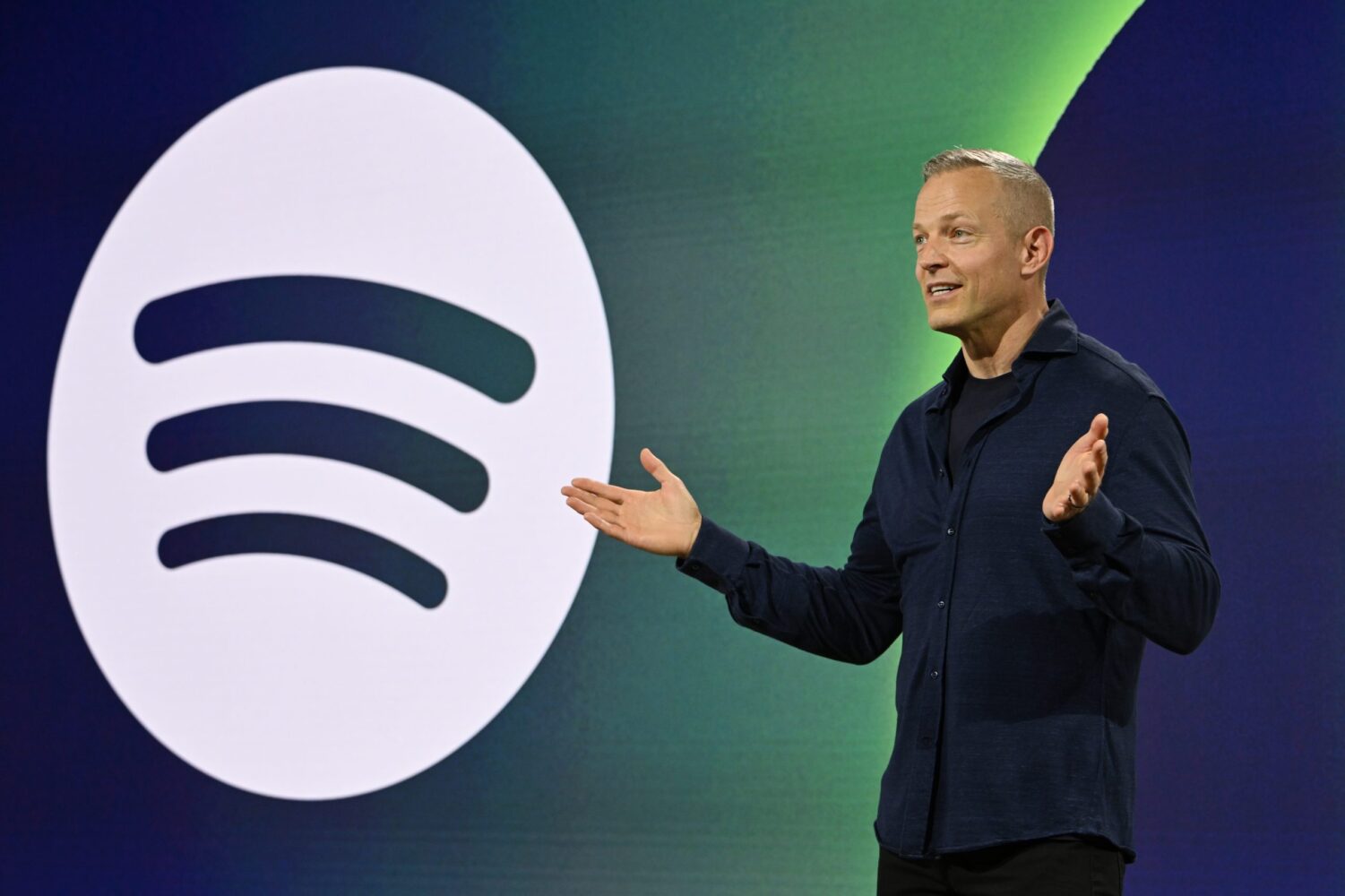
Spotify held its third investor day in New York City yesterday, providing analysts and shareholders with a detailed update on strategy and ambitions as the company marks its 20th anniversary. Co-CEOs Alex Norström and Gustav Söderström, leading their first such event since assuming their roles at the start of 2026, joined other executives to outline how the streaming service plans to evolve in an increasingly competitive media landscape.
The presentations built on ideas introduced four years ago around the so-called Spotify Machine, shifting emphasis toward generative tools powered by what the company calls its Large Taste Model. This relies on vast amounts of user data—3.4 trillion daily taste signals—to move beyond recommending content into creating personalized experiences in real time. While the ambition to blend curation with user-driven generation sounds promising, it raises familiar questions about how much control audiences truly want versus how platforms might shape tastes through algorithmic nudges.
Norström and Söderström highlighted Spotify’s considerable scale: operations in 184 markets, 761 million monthly active users, and nearly 300 million subscribers. They positioned the platform as a key connector between creators and audiences, noting steady financial progress since the 2022 investor day. This includes an 18 percent compound annual growth rate in revenue on a foreign exchange neutral basis, a 32 percent gross margin, significant operating margin improvement, and nearly €3 billion in free cash flow for 2025. These numbers reflect a maturing business that has moved well beyond its early disruption phase, though sustaining that trajectory amid rising competition from Apple, Amazon, and emerging AI-native services will not be straightforward.
The co-CEOs outlined four guiding principles for the next era. First, they emphasized the power law dynamics in user behavior, arguing there is no average listener. Spotify is therefore expanding higher-priced add-ons and products to extract more revenue from its most engaged users. Audiobooks+ subscribers, for instance, already show notably higher lifetime value than standard premium users. This focus makes commercial sense but risks widening the gap between casual and heavy users, potentially complicating the service’s broad appeal over time.
Second, the company is leaning into social and interactive features. Observing how users naturally share and co-create playlists, Spotify has scaled tools like Jam and collaborative playlists, now reaching tens of millions of people. These efforts tap into genuine social dimensions of music consumption and could strengthen user retention by turning passive listening into shared experiences.
Third, artificial intelligence takes center stage. Spotify aims to transition from recommendation engines to generative systems where users shape outcomes through prompts and taste profiles. Features like Prompted Playlists position the platform as an early attempt at a generative media player. The approach is pragmatic given the rapid rise of AI tools elsewhere, yet it also invites scrutiny over training data, artist compensation, and whether generated content dilutes cultural originality.
Finally, the concept of “time well spent” underscores Spotify’s effort to build a service users value enough to pay for, rather than one optimized purely for addictive engagement. In an attention economy filled with regret-inducing platforms, this stance is refreshing, though execution will determine whether it remains a genuine differentiator.
Overall, Spotify’s 2026 investor day recap revealed a company methodically expanding its ambitions while confronting the limits of its current model. The coming years will test whether these generative and social shifts deliver sustainable growth or simply add complexity in an already crowded field.