
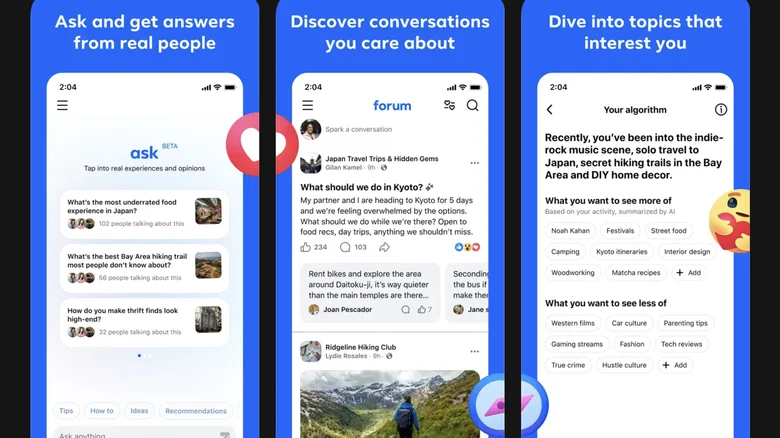
Meta has introduced a new standalone app called Forum, designed as a dedicated space for Facebook Groups discussions, though the company released it without any formal announcement or major promotion. Spotted first in the App Store by tech observer Matt Navarra, the app positions itself as a focused environment for meaningful conversations, drawing comparisons to Reddit’s community-driven model while remaining firmly tied to Meta’s ecosystem.
Users must log in with an existing Facebook account, meaning profiles and activity sync across platforms rather than offering the anonymity many associate with Reddit. While participants can adopt anonymized usernames visible to others, group administrators retain access to real identities. This setup prioritizes continuity over fresh starts: posts made in Forum appear in the main Facebook app and vice versa, allowing conversations to flow seamlessly between the two. Upon first use, the app prompts users to indicate preferences, which likely influences the feed to include not just joined groups but also suggested ones based on interests.
The approach differs notably from Facebook’s general feed, which mixes friends’ updates, followed pages, and algorithmically recommended content. Forum narrows the focus to group-based threads, potentially creating a less cluttered experience for those seeking specific discussions. Yet it echoes Meta’s earlier attempt in this area. Years ago, the company launched a standalone Groups app that ultimately shut down in 2017, reflecting a pattern of testing community tools before quietly retiring them when engagement wanes or integration proves more practical within the core platform.
Forum incorporates current AI capabilities common in social apps today. One feature, called Ask, aggregates responses from across groups to answer user questions without manual searching. Another assists group moderators with administrative tasks. These additions aim to improve usability, but they also raise familiar questions about how Meta handles data across its services, especially given the company’s history of privacy scrutiny and algorithmic influence on user behavior. When contacted, Meta described the app as still in testing, noting its practice of publicly experimenting to gauge interest.
In a landscape where Reddit has built a reputation for unfiltered, interest-based communities, Meta’s entry feels like an incremental evolution rather than a bold departure. It leverages Facebook’s massive user base—billions strong—while addressing complaints about scattered group interactions. However, the lack of true separation from Facebook’s broader ecosystem may limit appeal for users wary of centralized data collection or seeking independent spaces. Past experiments suggest such apps often serve as temporary features rather than enduring products, potentially folded back into the main app if they gain traction.
For Meta, this quiet launch aligns with broader efforts to retain users amid competition from specialized platforms. Whether Forum sustains interest depends on execution, particularly around moderation tools and AI reliability. In an era of fragmented social media, it represents another attempt to consolidate community features under one corporate umbrella, balancing convenience against concerns over platform dependency.
The development underscores ongoing challenges in social networking: delivering focused experiences without alienating users sensitive to data practices or repetitive algorithmic nudges. As testing continues, Forum’s real test will be whether it fosters genuine engagement or simply redirects existing Facebook activity into a new container.