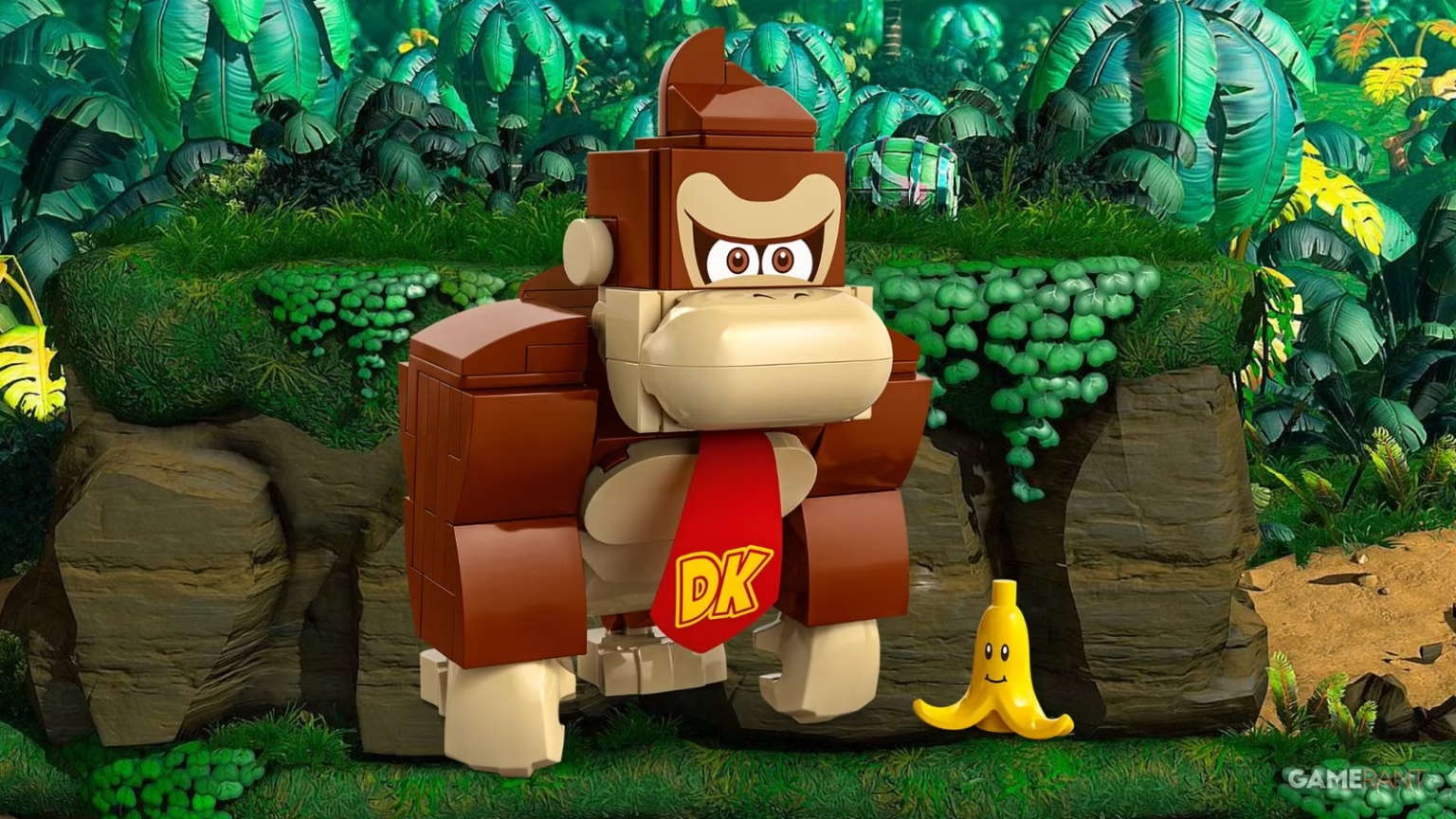
LEGO has confirmed it is expanding its Nintendo partnerships with dedicated sets based on the Donkey Kong series. The announcement arrives after years of smaller Donkey Kong elements appearing within the company’s Super Mario line, signaling a more focused approach to the long-running franchise.
The move fits into LEGO’s broader pattern of mining classic gaming properties for construction sets. Previous efforts have included Zelda, Animal Crossing, and Mario-themed collections, which have generally performed well but sometimes felt limited in scope. A short Instagram video showing a rolling barrel marked with familiar arcade-style details has fueled speculation. Some observers suggest it points toward a replica of the original 1981 Donkey Kong arcade cabinet, similar to LEGO’s earlier Game Boy set. Such a product would likely feature compact versions of Mario, Pauline, and Donkey Kong himself, offering a nostalgic nod rather than grand new environments.
Donkey Kong’s history is worth recalling here. Introduced as a villain in that early arcade title, the character evolved into a likable hero across multiple platforms. The Donkey Kong Country games on the Super Nintendo in the 1990s represented a high point, blending strong level design, memorable music, and platforming challenges that still hold up. Later entries had mixed results, with long gaps between major releases. The recent Donkey Kong Bananza on Switch 2 has sold over 4.5 million copies in under a year, marking the first substantial new game in the series for more than a decade. Its commercial success likely encouraged LEGO to invest more deeply in the intellectual property.
That said, expectations should remain measured. While Donkey Kong Bananza has brought renewed attention, the character’s overall cultural presence has been inconsistent compared to Mario’s enduring dominance. LEGO sets could capture key elements like destructible jungle environments or pirate ships from past games, yet there is always the risk that these products prioritize collectible appeal over faithful gameplay representation. Historical parallels with other licensed LEGO lines show that initial excitement often gives way to questions about value and replayability once the novelty fades.
Looking ahead, the Donkey Kong license offers room for creativity. Potential sets might draw from fan-favorite levels or characters like Diddy Kong, Dixie, or the villainous King K. Rool. There is even quiet speculation about a possible Donkey Kong film, given Seth Rogen’s voicing role in The Super Mario Bros. Movie and Illumination’s upcoming Nintendo project slated for 2028. Whether that materializes remains uncertain.
Overall, this development reflects the ongoing convergence of physical toys and digital gaming heritage. LEGO’s track record suggests competent execution, but the real test will be whether these sets add meaningful depth to the Donkey Kong universe or simply repackage familiar nostalgia. Fans have waited a long time for fresh momentum around the big ape, and these new products could either capitalize on that interest or highlight how much the franchise has relied on sporadic revivals.