

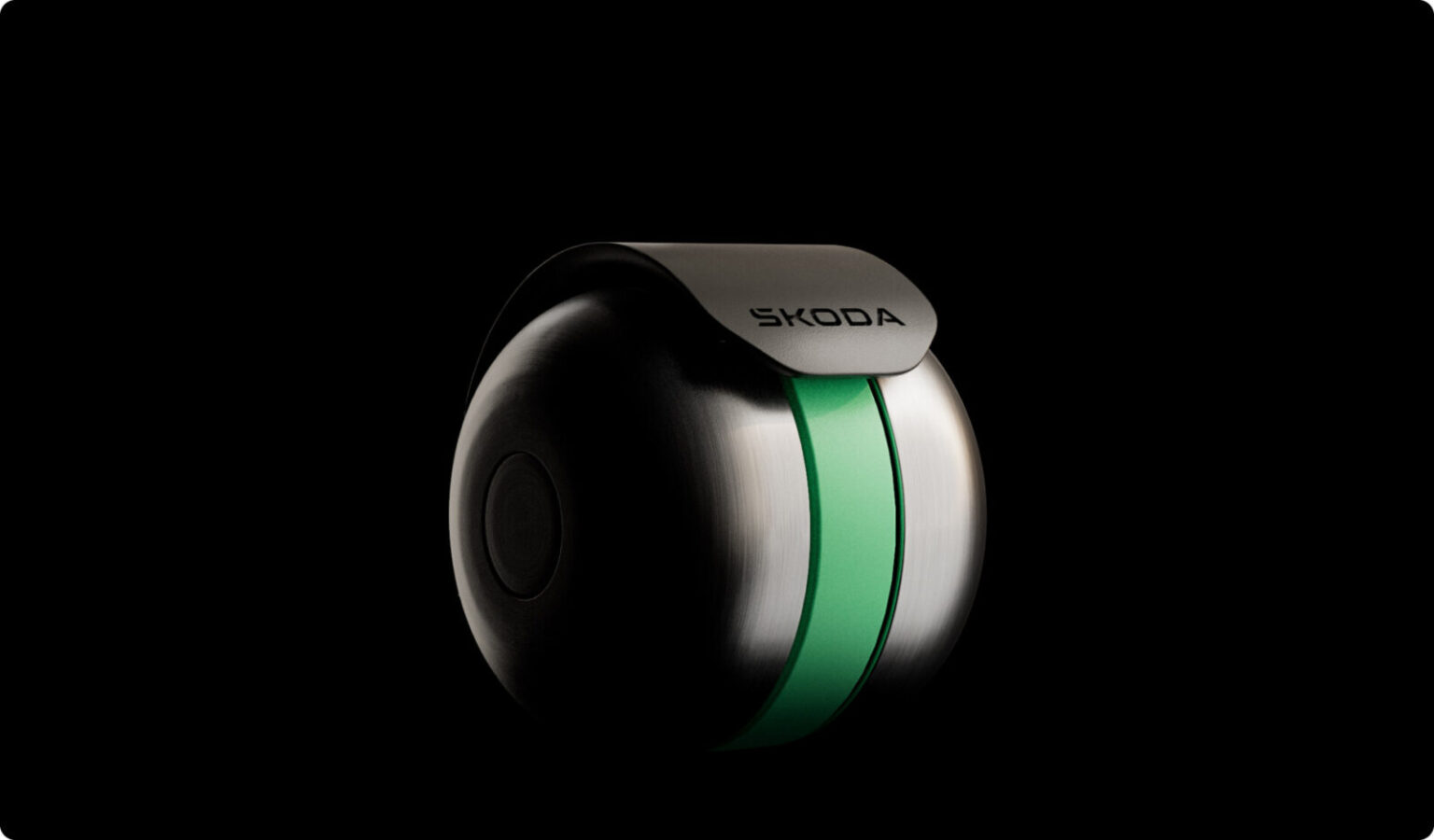
The growing use of headphones with active noise cancellation has quietly changed how people move through cities, often reducing awareness of nearby traffic. A new concept from Škoda Auto, developed with researchers at the University of Salford, explores how a simple adjustment to a long-standing device—the bicycle bell—might address this shift in urban behavior.
The project, called the skoda DuoBell bicycle bell, focuses on a practical issue: traditional bell sounds can be filtered out by noise-cancelling algorithms, limiting their effectiveness in alerting pedestrians. Rather than introducing a digital system, the approach remains entirely mechanical. The idea is to modify the sound profile of the bell so it falls within a frequency range that active noise cancellation systems struggle to suppress.
Researchers involved in the project studied how these headphone systems process external noise and identified what they describe as a “safety gap”—a band of frequencies less affected by filtering. By tuning the bell to operate within that range, the DuoBell increases the likelihood that its sound reaches pedestrians, even when they are using headphones.
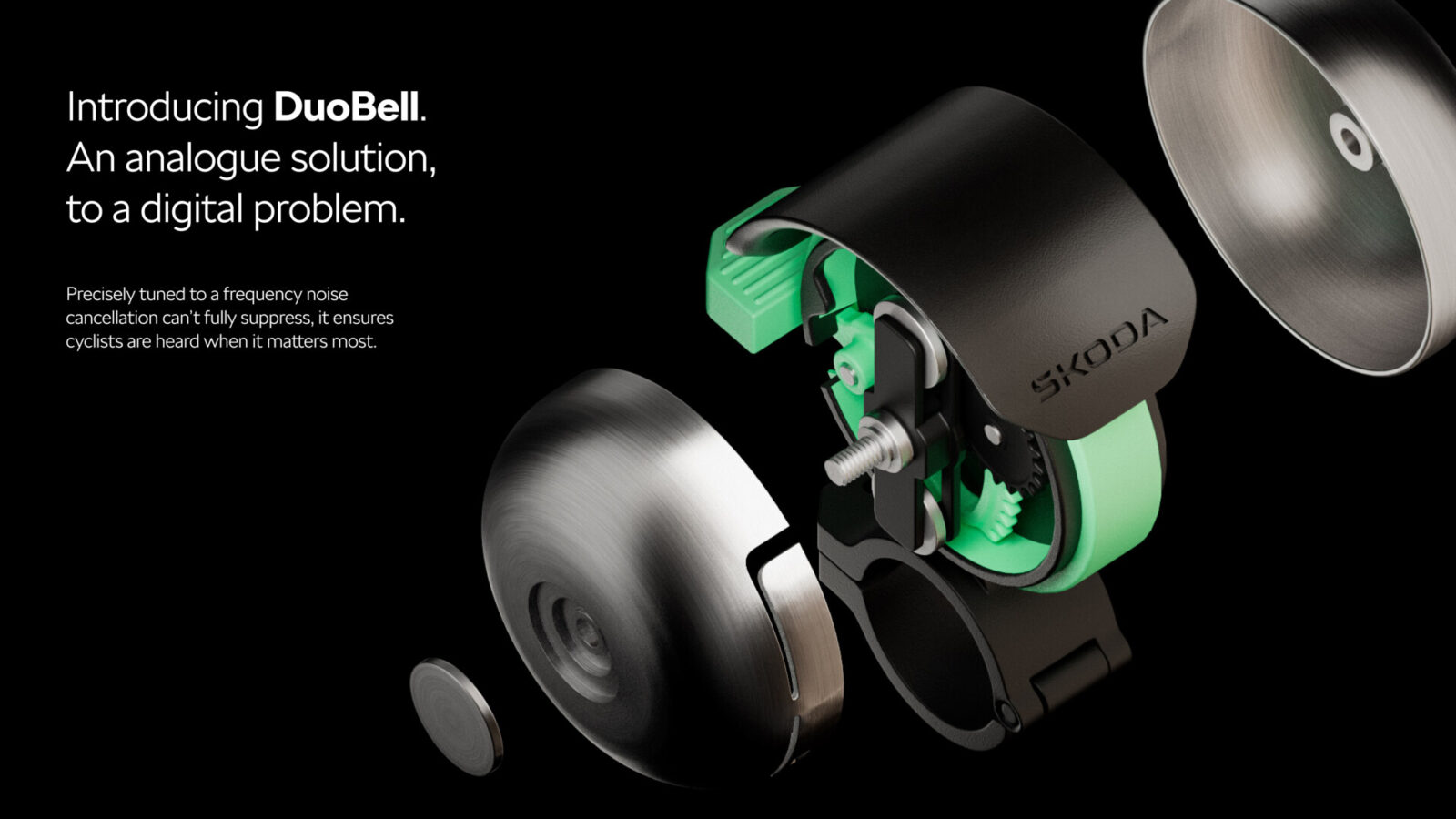
The design also introduces subtle mechanical changes. An additional resonator and a modified hammer mechanism create irregular, rapid strikes instead of a uniform tone. This variation appears to make it harder for algorithms to classify and cancel the sound effectively. While the concept may seem incremental, the testing suggests measurable results: users wearing noise-cancelling headphones had up to 22 meters of additional reaction distance compared to standard bells.
Field trials in London, conducted with delivery riders, offered some real-world context. Participants reportedly found the bell more noticeable in busy environments, though broader testing across different cities and conditions would likely be needed to confirm consistent results.
The project also reflects a wider trend in urban mobility. As cycling infrastructure expands—particularly in regions like the Middle East where investment in mixed-use urban spaces is increasing—interactions between cyclists and pedestrians are becoming more frequent. In that context, even small improvements in awareness can have practical safety implications.
Notably, the DuoBell remains a prototype rather than a commercial product. Škoda has indicated that the research behind it will be shared more openly, suggesting the initiative is as much about contributing to discussion around urban safety as it is about product development.
There is also a historical layer to the project. Škoda’s origins in bicycle manufacturing date back to the late 19th century, and the company continues to maintain a visible presence in cycling-related initiatives. The DuoBell can be seen as a continuation of that connection, though framed in the context of modern urban challenges rather than brand storytelling.
While the concept does not radically change cycling hardware, it highlights a shift in how everyday tools may need to adapt to evolving technology habits. As noise-cancelling devices become more common, similar adjustments across other safety signals could follow. The skoda DuoBell bicycle bell offers one example of how small, targeted changes might address a problem created by larger technological trends.