

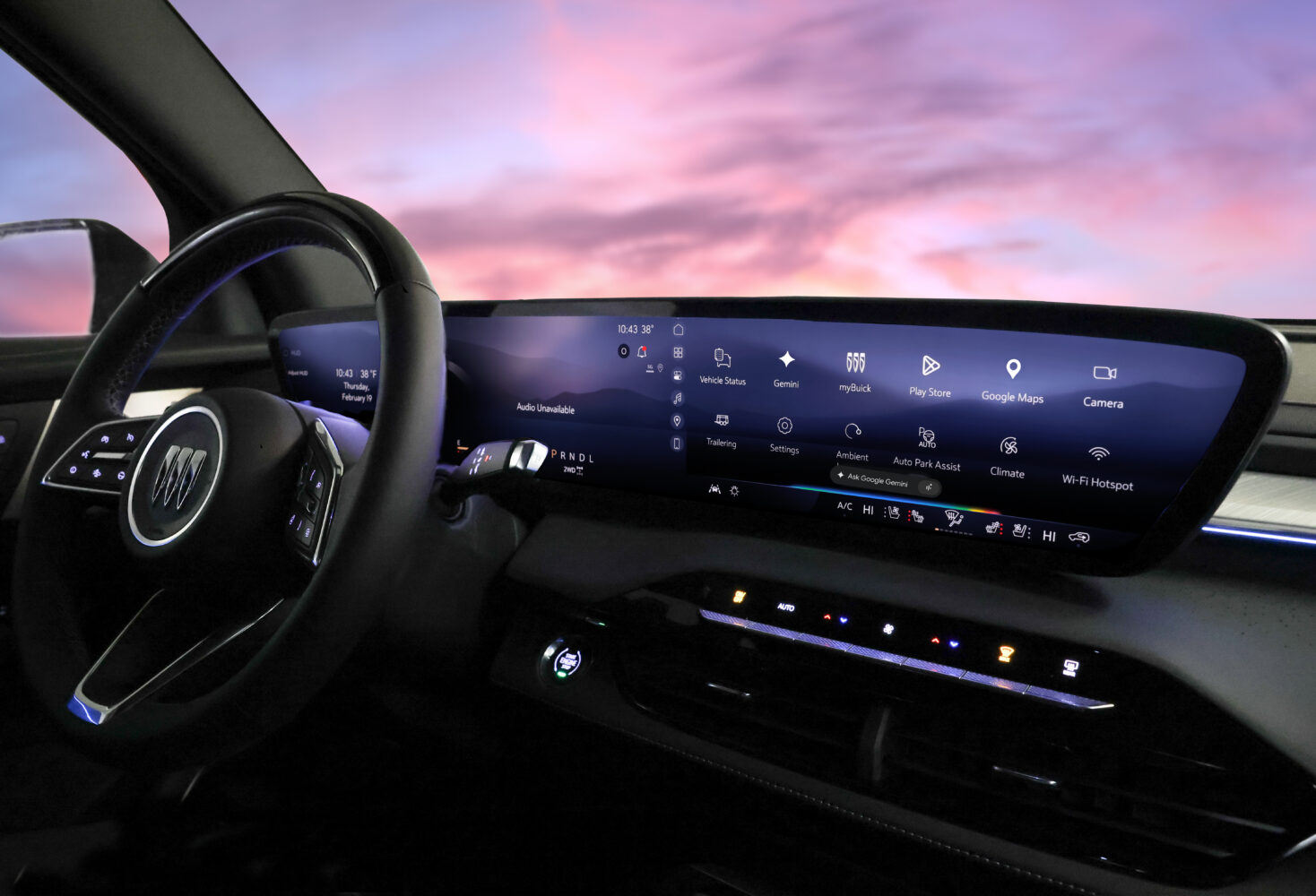
General Motors is preparing to integrate Google Gemini into more than four million of its existing vehicles, marking a significant expansion of conversational artificial intelligence in everyday driving. The update targets 2022 and newer models from Cadillac, Chevrolet, Buick, and GMC equipped with Google built-in infotainment systems. Owners should receive notifications over the coming months as the rollout begins in the United States before expanding elsewhere.
To access the feature, drivers will need an active OnStar subscription, a Google account signed into the vehicle’s Play Store, US English set as the default language, and explicit opt-in for Gemini. Once enabled, the system replaces the existing Google Assistant, shifting from simpler voice commands to more fluid, back-and-forth dialogue. Users can ask Gemini to read incoming text messages aloud, draft replies including emojis, generate playlists, locate nearby services such as gas stations or charging points, and even map routes with multiple stops—all within a single ongoing conversation thread that supports follow-up questions.
This move fits into a broader pattern of automakers embedding advanced AI directly into vehicle systems rather than relying on smartphone mirroring. Yet it arrives alongside GM’s earlier announcement that it plans to discontinue Android Auto and Apple CarPlay support across its lineup by 2028. The company has cited concerns over cellphone dependency and potential driver distraction, though integrating a more capable large language model like Gemini raises questions about whether those issues are truly being addressed or simply reframed. Extended conversations with an AI could prove equally, if not more, engaging than glancing at a phone screen, especially during routine commutes.
The deployment represents one of the wider consumer rollouts of Gemini to date, though practical limitations remain. Early voice assistants in cars often struggled with context, accents, and complex requests; Gemini’s multimodal capabilities may improve reliability, but real-world performance in noisy cabins or under varying connectivity conditions will determine its usefulness. Privacy considerations also linger—conversations processed through cloud-based AI inevitably involve data transmission, even if Google maintains standard safeguards.
For GM, the update offers a way to refresh older vehicles without hardware changes, potentially extending their appeal in a market increasingly shaped by software features. Competitors, including Tesla with its own in-house AI voice systems, have pursued similar paths, though approaches differ sharply in openness and reliance on external platforms. Tesla’s strategy emphasizes proprietary development, while GM continues deepening its partnership with Google.
As the feature spreads beyond the US to additional languages and regions, its value will hinge less on marketing claims and more on whether it delivers meaningful convenience without adding cognitive load. In an era where cars already bristle with screens and alerts, the success of Gemini will depend on restraint as much as capability—something voice interfaces have rarely mastered. Drivers may appreciate hands-free playlist curation or quick replies, but the core challenge of keeping attention on the road persists.
This integration underscores a maturing phase for automotive AI: no longer experimental novelties, these tools are becoming standard expectations. Whether they genuinely reduce distractions or introduce new ones is a question that only widespread daily use can settle.