
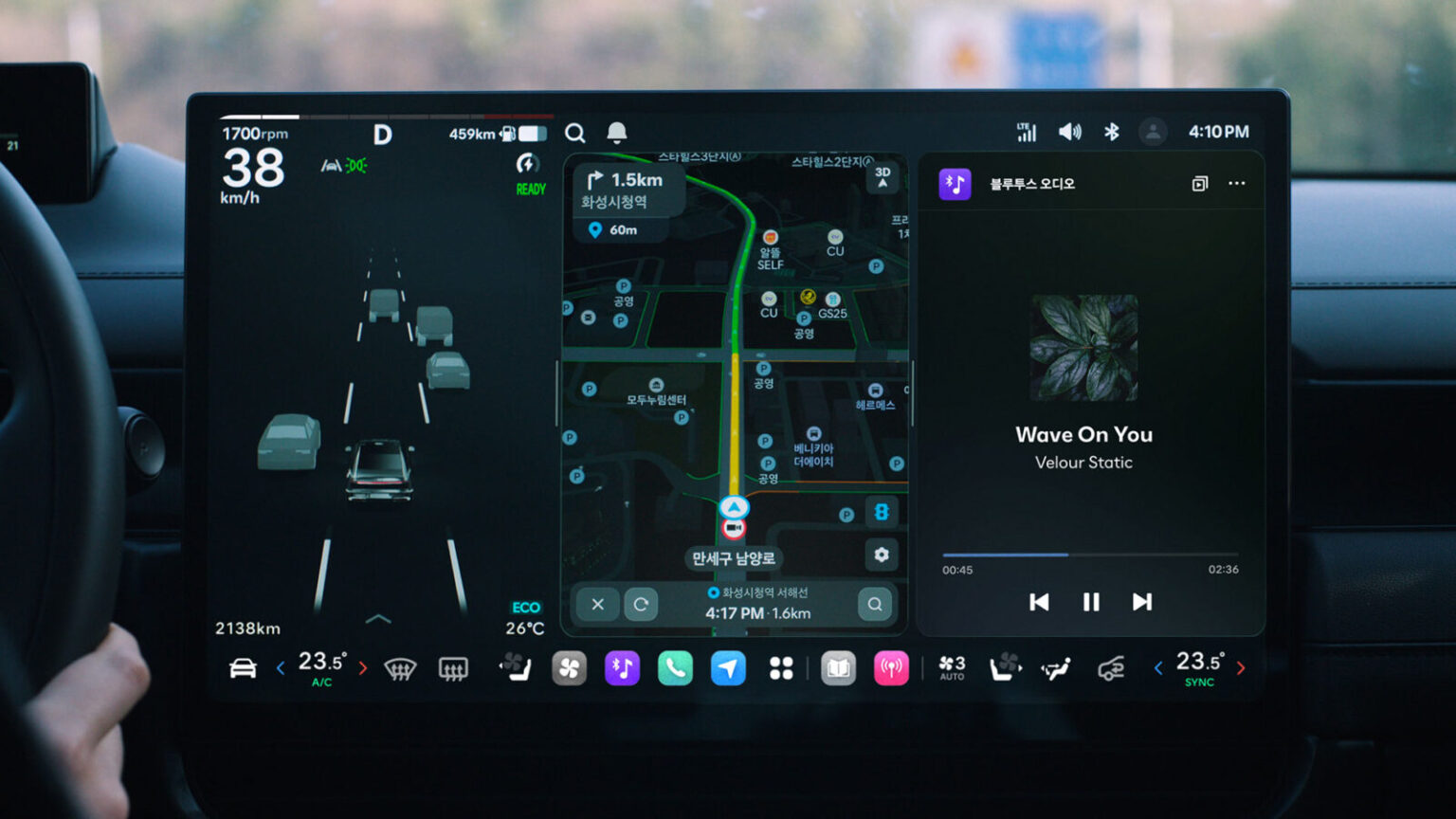
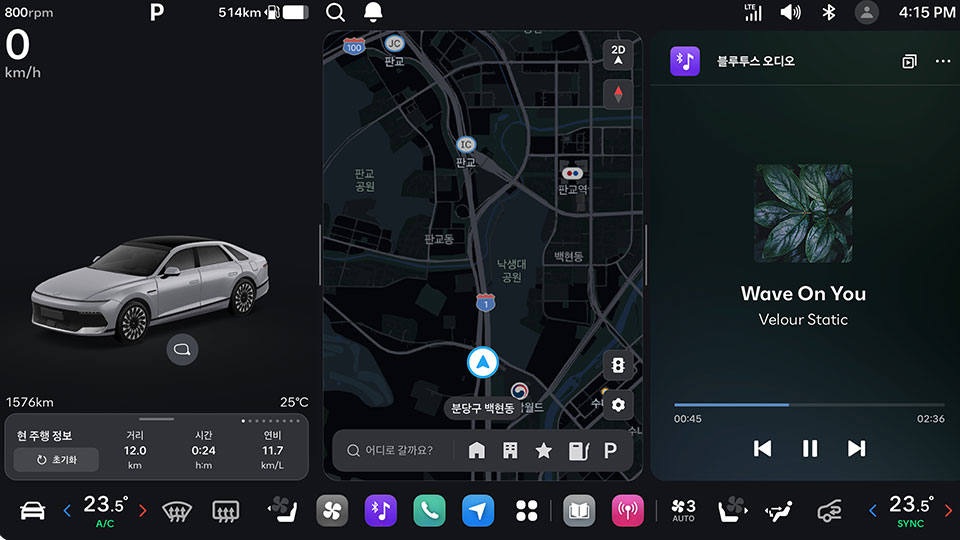
Hyundai Motor is betting on software to sharpen its edge in an increasingly digital auto market. The South Korean manufacturer has rolled out Pleos Connect, its latest infotainment platform built around an AI voice assistant that promises more fluid, conversational exchanges rather than rigid command-and-response interactions. The system pairs this with a broad central touchscreen arranged in a clean, minimalist style clearly influenced by Tesla’s design language.
Positioned for easy driver visibility, the display aims to reduce distraction, while Hyundai has wisely kept physical buttons on the steering wheel and lower console. This hybrid layout stands in contrast to the fully screen-dependent approaches of some competitors, reflecting a more cautious stance on safety after years of criticism directed at touch-heavy interfaces that pull attention away from the road. In an industry still learning the limits of voice control amid engine noise, accents, and spotty connectivity, such restraint feels pragmatic rather than timid.
The launch underscores Hyundai’s accelerating attempt to transform from a volume carmaker known for dependable, value-oriented vehicles into one capable of competing on digital sophistication. Traditional automakers have watched Tesla redefine expectations with over-the-air updates, seamless app integration, and regular interface refreshes since the early 2010s. Many legacy brands spent the past decade playing catch-up, often with mixed results—glitchy early systems, abandoned features, and customer frustration over interfaces that aged poorly compared to smartphones. Hyundai’s move fits this broader pattern of established players investing heavily to close that gap, especially as electric and software-defined vehicles become central to future growth strategies.
Yet the real test for Pleos Connect will come in everyday use. Voice assistants in cars have a long history of underdelivering despite bold claims. Background noise, regional dialects, and complex multi-step requests frequently expose their weaknesses. If Hyundai’s version genuinely handles natural dialogue better than current offerings from Google, Apple, or Amazon, it could mark meaningful progress. If not, it risks joining the pile of automotive tech that sounded revolutionary in press events but proved cumbersome on actual drives. The minimalist aesthetic may impress in showrooms, but drivers ultimately care more about reliability than visual flair.
This development arrives at a pivotal moment for the global industry. Software is no longer a nice-to-have add-on but a key battleground for customer loyalty, resale value, and recurring revenue through subscriptions and updates. Hyundai, which has steadily expanded its market share through strong product execution in segments like SUVs and EVs, now faces pressure to prove it can deliver digital experiences that match its hardware reputation. Retaining physical controls suggests the company is attuned to feedback from buyers who remain skeptical of futuristic cabins that prioritize style over usability.
Whether Pleos Connect sets a new standard or simply narrows the gap with leaders remains uncertain. What is clear is that Hyundai is treating software as seriously as powertrains, a shift many established manufacturers have been slow to embrace fully. Success will hinge less on flashy unveilings and more on consistent performance across millions of miles and varied driving conditions. For now, the system represents another careful step in the long transition toward vehicles defined as much by their code as by their engineering.