
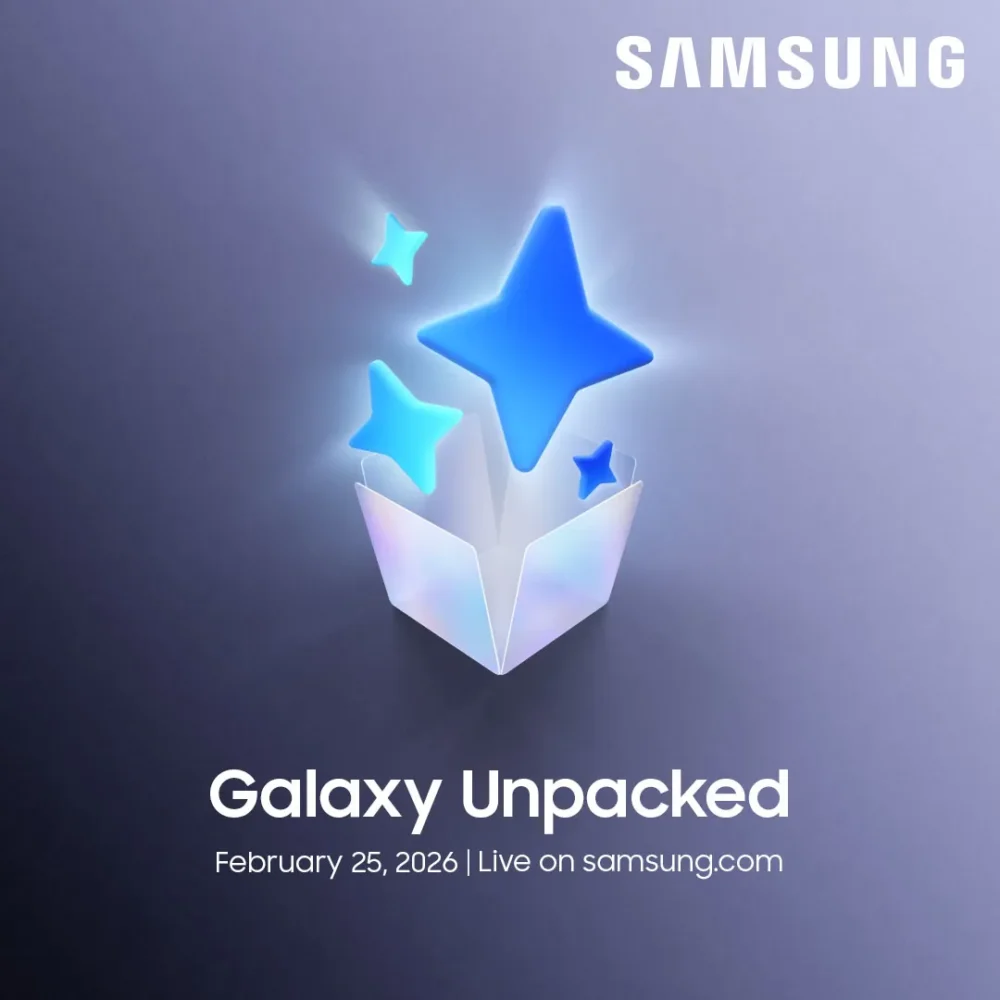
Samsung has officially confirmed that its next Galaxy Unpacked event will take place on February 25, 2026, in San Francisco, putting an end to months of speculation around the timing and location of its first major product launch of the year. The confirmation follows a steady flow of rumors that began circulating in November 2025, many of which pointed to a late-February event on the US West Coast rather than Samsung’s more typical early-year schedule. Those details have now been validated through official invitations sent to media.
The February Unpacked event is expected to focus on the next generation of the Galaxy S series, continuing Samsung’s annual refresh of its flagship smartphone lineup. Alongside new hardware, the company is also expected to spend considerable time discussing updates to Galaxy AI, which it has positioned as a core part of its mobile strategy. Samsung has framed these AI developments as more personal and adaptive, with features designed to operate directly within everyday smartphone interactions rather than as standalone tools.
While Samsung has not yet shared a full product roadmap ahead of the event, the emphasis on AI suggests a continuation of its recent push to integrate on-device intelligence more deeply into photography, productivity, and system-level features. Whether these updates represent incremental refinements or more substantial changes will likely become clearer during the keynote.
For viewers outside the United States, Samsung has confirmed that the event will be livestreamed globally. The presentation will begin at 10:00 a.m. Pacific Time and 1:00 p.m. Eastern Time. For audiences in the UAE, this translates to a start time of 10:00 p.m. Dubai time (GST) on February 25, 2026. The livestream will be available on Samsung.com, the Samsung Newsroom, and the company’s official YouTube channel.
Media outlets will be attending in person, with hands-on sessions and follow-up briefings expected to take place after the main presentation. As with previous Unpacked events, Samsung is likely to use the stage not only to introduce new devices, but also to outline how it sees its ecosystem evolving over the coming year.