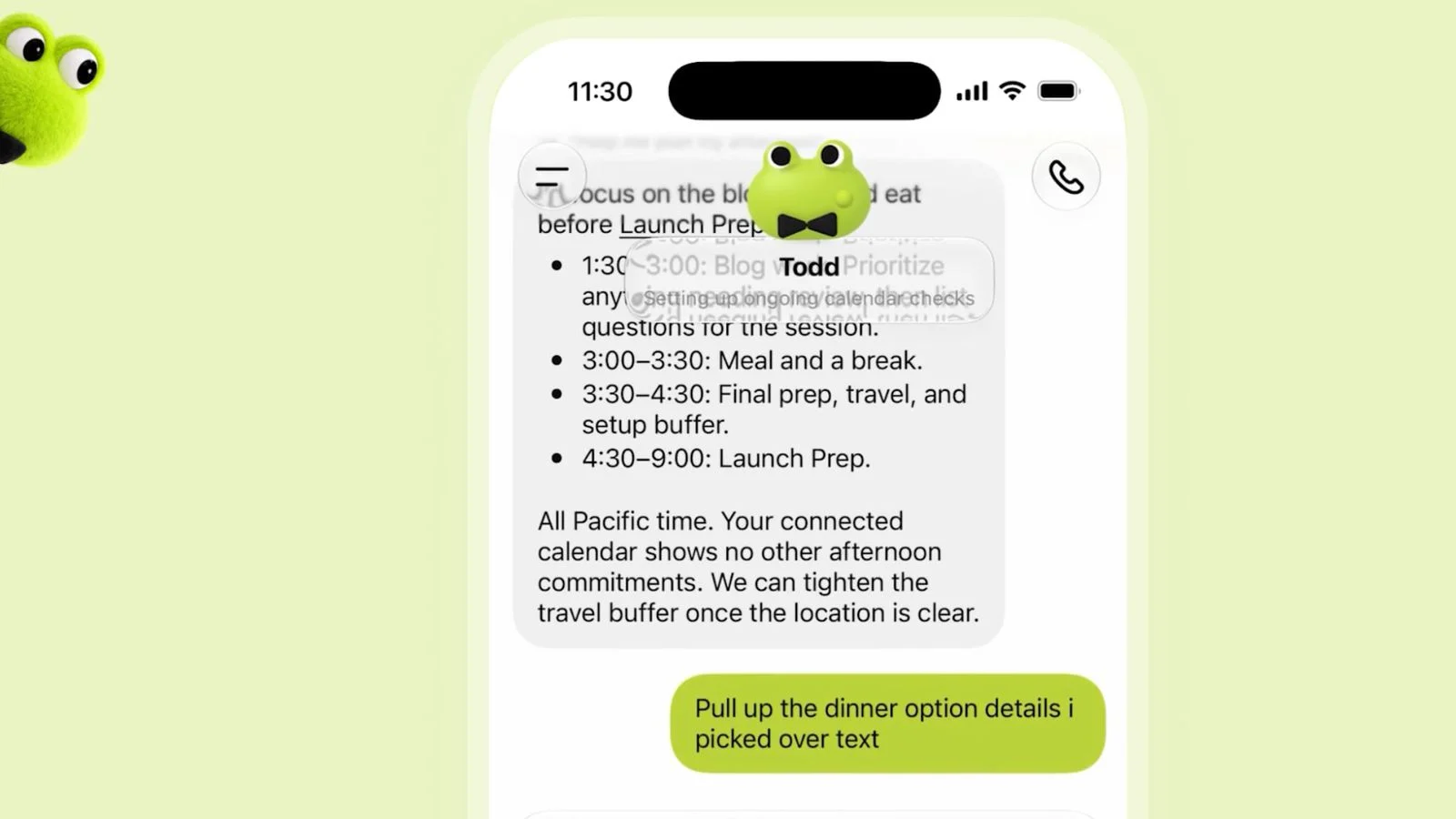

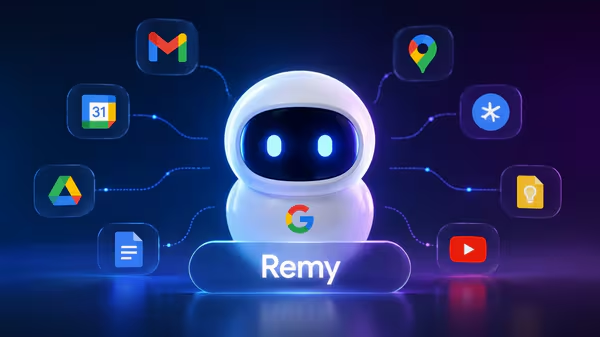
Google is internally testing a new proactive AI agent called Remy, a Gemini-powered tool designed to move beyond answering questions and instead perform actions on users’ behalf. According to reports, employees are trying an early version within a staff-only Gemini app, where Remy is described as a round-the-clock personal assistant for work, school, and everyday tasks. It would monitor topics of interest, manage complex workflows in the background, and adapt to individual preferences over time.
The agent reportedly pulls context from a wide range of sources, including user chats, connected Google apps, location data, and what are referred to as “Agent files.” In theory, this would allow it to send messages, share documents, or even complete purchases without constant prompting. That marks a shift from current Gemini features, which still require explicit user instructions for most actions, even as Google experiments with multi-step agentic workflows and computer control. Remy appears more ambitious, resembling an expanded version of earlier internal experiments like Google Labs CC, but with broader integration across services such as Gmail, Calendar, Docs, Drive, Keep, Tasks, GitHub, WhatsApp, Spotify, Google Photos, and others.
This direction reflects a broader industry push toward autonomous AI agents capable of handling routine digital labor. Companies have long promised digital assistants that anticipate needs rather than react to commands, yet real-world results have often fallen short. Early voice assistants like Siri and Alexa delivered convenience in narrow areas but struggled with reliability and context. Modern large language model-based agents show more promise, especially in controlled environments, but they also introduce new risks. Giving an AI broad access to email, calendars, location history, and messaging apps raises significant privacy considerations, even with enterprise safeguards. Errors in automation—such as sending the wrong document or misinterpreting intent—could create awkward or costly mistakes that users might not catch immediately.
Google has not publicly confirmed Remy’s existence or offered a release timeline. Speculation suggests it could surface during Google I/O, which begins May 19, where AI agents are expected to feature prominently. For now, it remains an internal project, consistent with how the company has developed other experimental features before wider testing.
The challenge for tools like Remy lies less in technical capability and more in trust and usefulness. Users already face notification overload and context-switching fatigue across apps. An always-on agent that learns preferences could reduce some of that burden, particularly for repetitive administrative work. However, it could also amplify existing issues with AI hallucinations or biased assumptions drawn from personal data. Historical parallels, from early automated email filters to today’s calendar suggestions, show that these systems improve incrementally but rarely replace human judgment entirely.
If released, Remy would represent Google’s most concerted effort yet to embed proactive intelligence into daily digital life. Its value will depend on transparency around data handling, clear boundaries on what it can and cannot do autonomously, and whether the benefits outweigh the added complexity of managing yet another layer of algorithmic decision-making. For the moment, it remains an intriguing but unproven step toward more capable personal AI.