

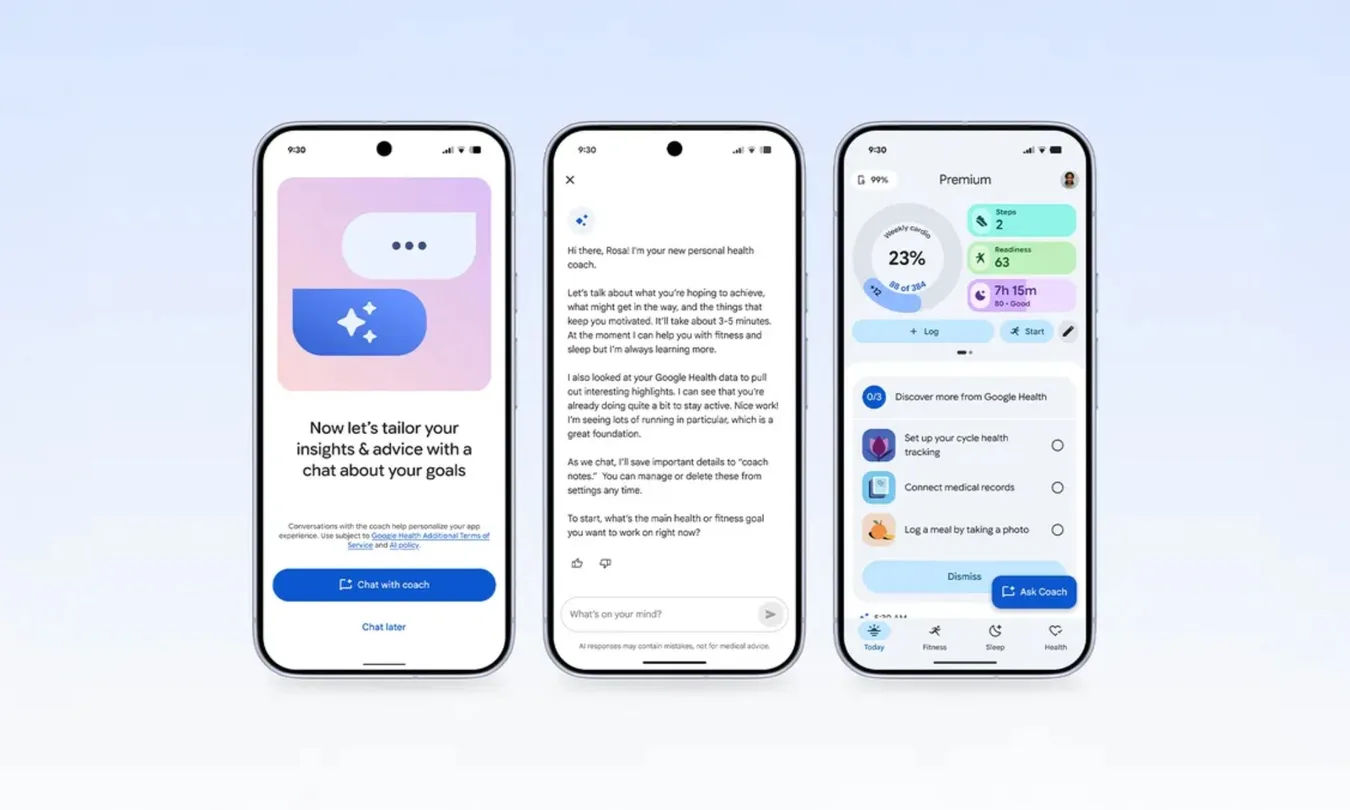
Google is stepping into the crowded AI health coaching space with a new Gemini-powered assistant launching inside a rebranded Google Health app. Set to arrive on May 19, 2026, the service promises personalized guidance on fitness, sleep, nutrition, and overall wellness for $9.99 a month. While the pitch sounds comprehensive, it arrives at a time when consumers have grown wary of how much personal data these tools require and whether the advice truly outperforms simpler tracking apps or human professionals.
The feature has been in development for some time. Originally previewed as the Fitbit AI Coach in 2025, it lived within the Fitbit app for premium subscribers. Now the entire app is transitioning to Google Health, bringing the coach along under its new name. The change reflects Google’s broader strategy to consolidate health services after acquiring Fitbit years ago, moving beyond standalone fitness tracking toward a more integrated platform that can pull in medical records, third-party data, and real-time context like weather or menstrual cycles.
Onboarding begins with a conversation about goals, routines, equipment, and any injuries, allowing the coach to tailor recommendations. It analyzes workout and sleep data, suggests adjustments based on recovery, and offers an “Ask Coach” option for quick questions. Users can log meals or sessions by snapping photos, and in the US, those who opt in can sync medical records for summaries of test results or medications. The app’s redesigned tabs for fitness, sleep, and health metrics tie everything together, with weekly plans that adapt to changing circumstances.
Google has consulted medical experts, clinicians, and even NBA star Stephen Curry’s performance team to ground the advice in established research rather than pure algorithmic guesswork. Privacy remains a stated priority: health data won’t feed Google’s advertising system, a commitment carried over from the Fitbit acquisition. Still, the reliance on extensive personal information invites the usual questions about long-term data security and potential future policy shifts, especially as AI health tools proliferate.
Pricing holds steady with the old Fitbit Premium model at $9.99 monthly or $99 annually. Existing subscribers transition seamlessly, while Google AI Pro or Ultra users receive it bundled at no extra cost. The upcoming Fitbit Air tracker, a screenless $99 band launching May 26, will include three months of the premium service, giving buyers a low-commitment trial.
This rollout comes after Apple reportedly paused its own health coaching efforts, handing Google a window to gain ground. Yet success will depend on real-world performance. AI coaches have shown promise in nudging users toward better habits, but they still struggle with the nuance of individual physiology and motivation that experienced trainers provide. Past health apps often delivered initial excitement followed by waning engagement once the novelty faded.
Google Health Coach represents another step in the industry’s push to blend wearable data with large language models, but it also highlights ongoing tensions around subscription fatigue, data privacy, and the limits of algorithmic wellness guidance. Whether it becomes a daily companion or just another app notification remains to be seen in the months ahead.