

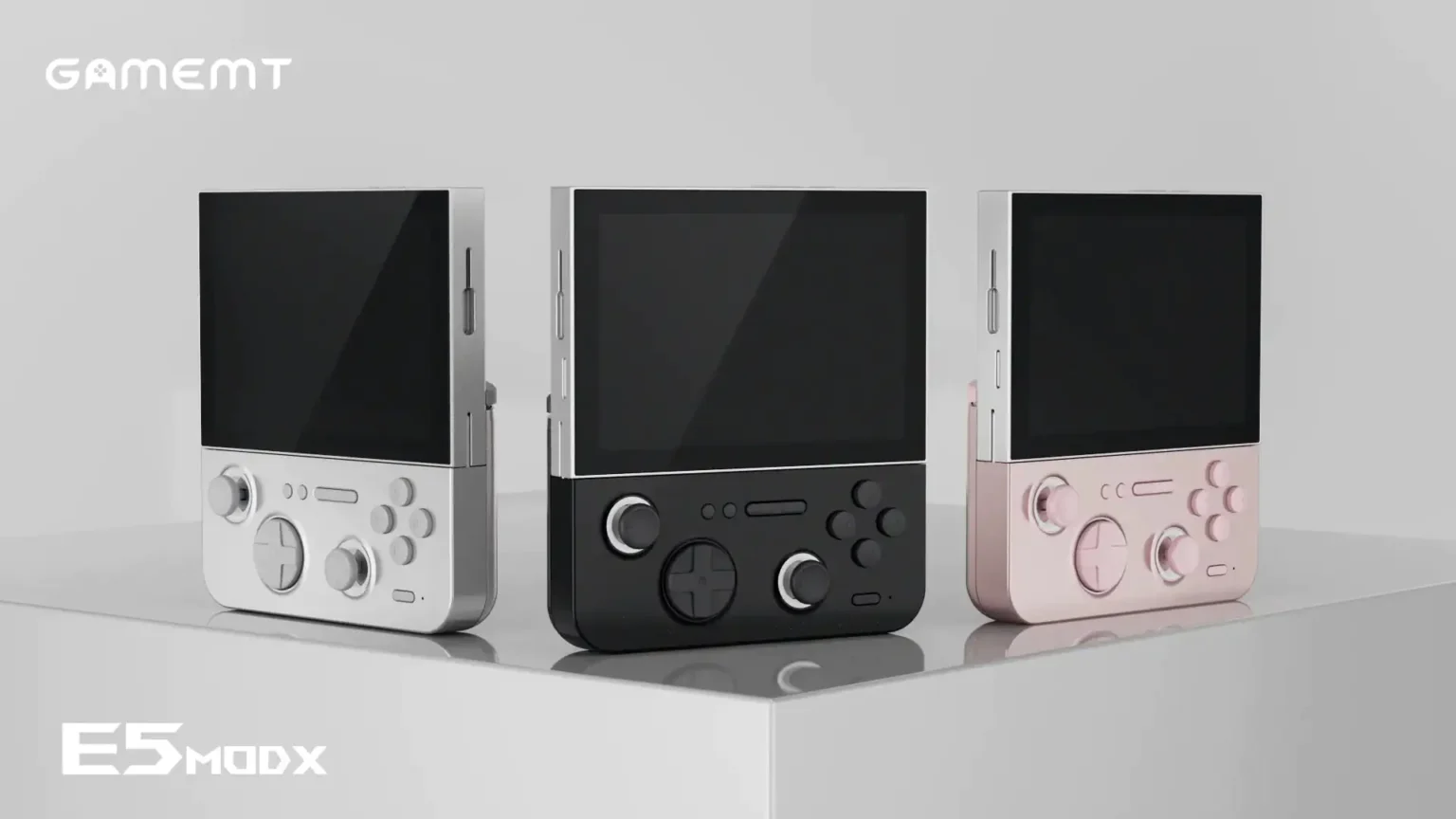
Recent videos have given a clearer look at the GAMEMT E5 Modx, a modular Android-based handheld that stands out in a crowded field of retro emulation devices for its detachable screen and controller design. While the company behind it has a mixed track record with hardware quality, this latest effort highlights an unconventional approach that could appeal to players seeking flexibility beyond standard handhelds.
The device separates into two main parts: a display module housing the processing hardware and a metal gamepad shell. Early footage from retailer Royibeila shows the unfinished chassis with button cutouts and a screen that detaches completely. A promotional clip demonstrates a built-in kickstand similar to the Nintendo Switch, along with Bluetooth pairing compatibility for Android, iOS, PC, and even the Switch itself. This setup allows the gamepad to function independently as a controller for smartphones or other systems, effectively turning the unit into a hybrid accessory.
Under the hood, the E5 Modx relies on a MediaTek Helio P60 processor from 2018, paired with 3GB of RAM and storage options of 32GB or 64GB. The 1024×768 display, likely around 5 to 5.5 inches, prioritizes a 4:3 aspect ratio suited for older games. Performance expectations remain modest: the chip aligns roughly with entry-level emulation handhelds capable of handling Nintendo 64, Dreamcast, and PSP titles with reasonable consistency, though it falls short of smoother PlayStation 2 or more demanding modern emulation. A recent test video running God of War on PS2 suggests ongoing development, but real-world results will depend on software optimization and cooling.
This modular concept arrives amid growing interest in versatile gaming hardware. The Nintendo Switch popularized hybrid play years ago, and third-party makers have experimented with detachable elements before. Yet few have pushed the idea as far as magnetically swapping the screen for a phone, potentially addressing the common frustration of carrying multiple devices. It echoes earlier experiments in modular tech, such as some failed smartphone gaming attachments, but executes them in a more self-contained package.
That said, practical concerns linger. GAMEMT’s previous devices have drawn criticism for build quality and support, and an older chipset in 2026 raises questions about longevity, especially as emulation demands increase. Battery life, heat management during extended sessions, and software updates remain unconfirmed variables that could determine whether the novelty translates into daily usability. Pricing and availability details are still sparse, though the retailer indicates testing is advancing and pre-orders may follow soon.
For enthusiasts tired of rigid form factors, the E5 Modx offers an intriguing experiment in blending handheld, controller, and phone-gaming roles. It may not redefine the category like premium competitors, but its willingness to try something different highlights how the retro handheld market continues to evolve through small, specialized manufacturers pushing unconventional boundaries. Success will hinge on execution rather than concept alone.