
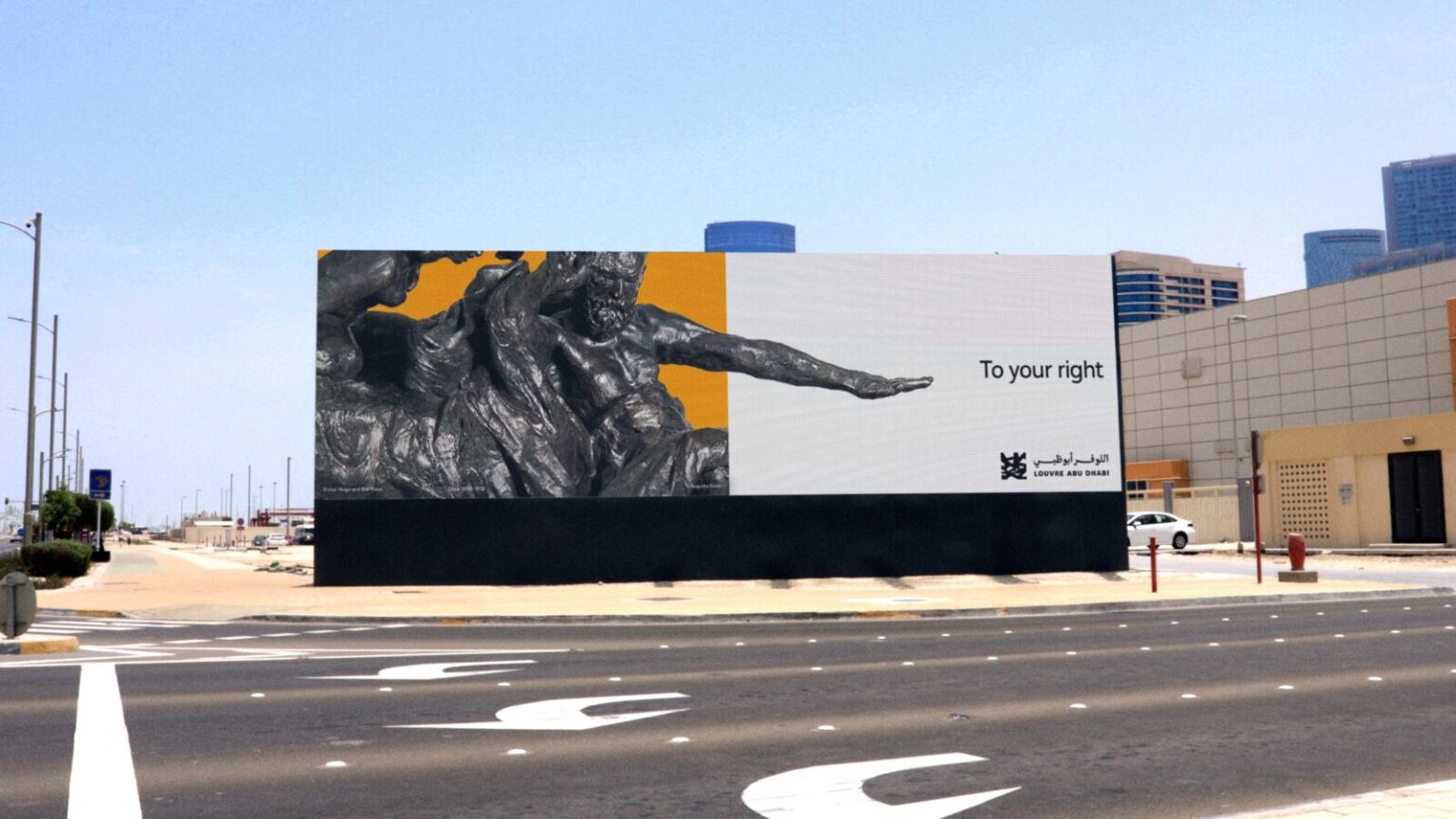
Louvre Abu Dhabi has introduced a location-based outdoor campaign that uses reproductions of artworks from its collection as functional street signage, aiming to make the museum more visible and accessible within the UAE’s crowded tourism environment. Rather than relying on conventional promotional messaging, the initiative focused on physical navigation, using art as a literal guide toward the museum.
The campaign was developed in collaboration with Publicis Middle East and responds to a familiar challenge for large cultural institutions in destination-driven cities: proximity does not always translate into awareness or visitation. While Louvre Abu Dhabi is internationally recognized, its geographic distance from high-traffic tourist areas has often made it less top-of-mind for visitors navigating the city.
To address this, selected artworks from the museum’s collection were adapted into bespoke directional signs and installed across key tourist hubs. These signs functioned as wayfinding tools rather than billboards, offering directional cues that physically pointed visitors toward the museum. The approach reframed outdoor advertising as infrastructure, embedding cultural references directly into the urban landscape instead of placing them alongside it.
The concept extended beyond city streets. Inside the museum, the same visual language was used for internal navigation, creating continuity between the external journey and the on-site experience. Works from both public galleries and storage collections were brought into visible circulation, reducing the distinction between exhibition space and public environment. This integration positioned the act of arriving at the museum as part of the cultural experience itself, rather than a step that precedes it.
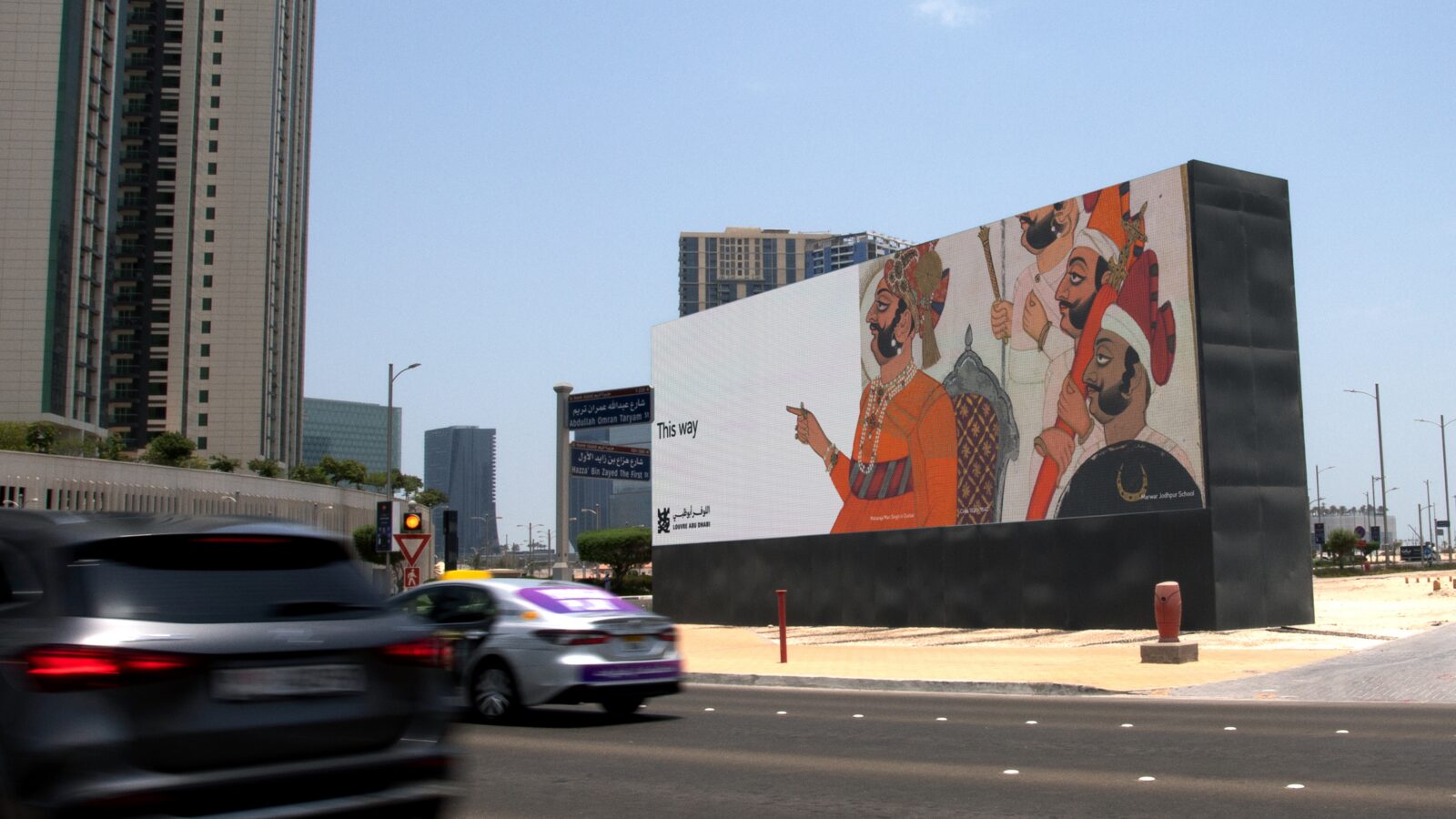
A supporting digital campaign reinforced the physical installation. Targeted messaging highlighted current exhibitions, seasonal programming, and practical incentives such as free entry for children. Media placements were informed by data insights, including travel patterns and audience behavior, with the intent of reaching visitors already moving through nearby tourism corridors. The emphasis was less on persuasion and more on relevance, connecting directions with timely reasons to follow them.
According to figures shared by the museum, the campaign produced measurable short-term results. During its first week, Louvre Abu Dhabi recorded a 37.5 percent increase in visits compared to the same period the previous year. Online ticket sales also rose significantly, with a reported year-on-year increase of nearly 80 percent. While such results reflect favorable timing and seasonal demand as well as creative execution, they suggest that reducing friction in discovery and navigation can have a direct impact on cultural attendance.
Rather than presenting art as something to be sought out, the campaign placed it directly in the path of everyday movement. In doing so, Louvre Abu Dhabi tested a quieter form of outreach, one that treats visibility, orientation, and access as central to cultural engagement rather than secondary to it.