
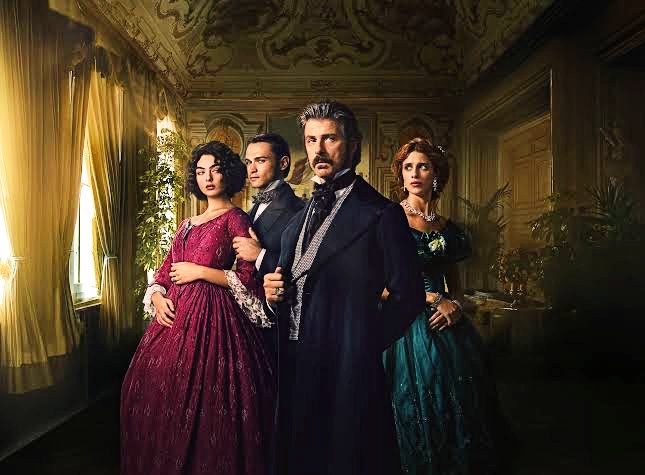
Every geek knows the type who reads the book first and then whispers “that’s not how it happened” through the whole movie. Streaming has turned that habit into a genuinely fun hobby, because classic literary adaptations are no longer the dusty, bonnet-heavy dramas we suffered through in school. Netflix has been assembling a seriously impressive shelf of literary heavyweights from Italy, Colombia, Türkiye, Poland and the US. This guide covers what’s worth your time, what to expect from each one, and how to get the most out of stories that existed long before anyone pointed a camera at them.
Why streaming keeps raiding the classics shelf
The cynical explanation is that classic novels are pre-tested IP with no licensing headaches, which is the closest prestige TV gets to a cinematic universe. The kinder explanation is that these stories survived for a century or more because their themes still hit hard, from class anxiety to the terrifying question of what we owe the things we create. The effect now runs both ways, with The Leopard’s novel jumping more than 1,180% in Italian sales the week after the series dropped and Orhan Pamuk’s Museum of Innocence returning to number one in Türkiye. Treat those numbers as proof of curiosity rather than proof of quality. Still, when a 19th-century Polish novel trends like a viral clip, something is clearly working.
What makes an adaptation worth your evenings
Faithfulness is overrated, and a page-for-page recreation can feel like a cosplay that nails every stitch but none of the swagger. The adaptations that last understand why a book mattered and find a screen-native way to deliver that feeling, even if subplots get trimmed. Format matters just as much, because sprawling multigenerational novels suffocate inside a two-hour film, which is why the 1955 East of Eden only tackled the final stretch of Steinbeck’s book. A limited series gives these stories room to breathe, though it also risks filler that would embarrass a JRPG side quest. The best format is simply the one that matches the book’s scale.
Read first or watch first?
For dense, intimidating novels like One Hundred Years of Solitude, watching first is a smart move, because faces and places make a notoriously confusing family tree far easier to follow on the page. Think of it as playing the tutorial before switching to hard difficulty. For shorter classics like Frankenstein or Pride & Prejudice, reading first pays off, since it lets you spot exactly where the adaptation honours or rebels against its source. Several of these titles are also non-English productions, and while dubs are a fine fallback, original-language audio with subtitles keeps far more texture intact. Give subtitles two episodes before deciding, because your brain adjusts faster than you’d expect.
The Leopard: a gorgeous slow burn for history lovers
Giuseppe Tomasi di Lampedusa’s 1958 novel follows a Sicilian aristocrat watching his world crumble during Italy’s unification, and its core idea that things must change so everything can stay the same feels uncomfortably modern. The Netflix series arrives in the long shadow of Visconti’s lavish 1963 film, which makes for a fascinating double feature. It suits viewers who enjoy Succession-style power manoeuvring in period costume. Anyone craving pace and cliffhangers should skip it, because its strength is mood and melancholy rather than plot twists. Go in expecting elegance, not adrenaline.
Frankenstein: del Toro’s monster movie at last
If any director was born to adapt Mary Shelley’s 1818 novel, it’s Guillermo del Toro, who has spent his career insisting monsters deserve empathy. Starring Oscar Isaac, Jacob Elordi and Mia Goth, it premiered at Venice and was recognised in nine categories at the 98th Academy Awards. As the only feature film here, it’s the easiest single-evening commitment on the list. Expect something more operatic and tragic than scary, which may disappoint anyone hoping for jump scares. For everyone curious about the real story behind the neck-bolt cliché, it’s the most accessible entry point.
One Hundred Years of Solitude: the impossible adaptation
Gabriel García Márquez’s 1967 masterpiece was long considered unfilmable, and Netflix’s Spanish-language version shot in Colombia is the first screen adaptation ever made. Part 1 arrived in 2024 and Part 2 concluded the saga in August 2026, so the full story is finally available for a proper binge. It suits fans of sprawling sagas who want something more literary than swords and dragons. The repeating family names will test your memory like a Souls boss tests your patience, so keeping a family chart handy isn’t cheating. Skip it if you prefer tight, linear storytelling, because Macondo moves in cycles.
Museum of Innocence and The Doll: two obsessive love stories
Pamuk’s Museum of Innocence follows Kemal, a wealthy Istanbul man whose fixation on Füsun leads him to collect everything she touched, and the nine-episode series released in February 2026 is an intimate, uncomfortable character study rather than a swooning romance. Bolesław Prus’s The Doll, widely regarded as Poland’s greatest novel, tells of a self-made Warsaw merchant chasing an aristocrat who sees him mostly as a wallet. Released on 16 September 2026, its fresh interpretation of the 19th-century story reached the Top 10 in 26 countries. Both suit viewers who love class tension and psychological depth, with The Doll offering the bonus of discovering a classic rarely discussed outside Poland. Purists and anyone squeamish about obsession narratives should temper expectations.
Little House on the Prairie: comfort viewing
Laura Ingalls Wilder’s pioneer stories return in a reboot that spent five weeks in the Global Top 10 across 85 countries, racked up 24.5 million views and earned a second season. It’s the most family-friendly and least demanding title here, the cosy co-op campaign of this list rather than the hardcore raid. Viewers should know the original books reflect attitudes of their era, particularly toward Native Americans. If you want literary bite or moral ambiguity, look elsewhere. As a palate cleanser between heavier tragedies, it does its job well.
East of Eden: Steinbeck finally gets the full treatment
Steinbeck’s 1952 retelling of Cain and Abel across generations in California’s Salinas Valley premiered on Netflix on 1 October 2026, with Florence Pugh as the chilling Cathy Ames. It’s written by Zoe Kazan, granddaughter of the director behind the James Dean film, which adds a delightful legacy-character twist. Unlike that film, the limited series has room to cover the whole sprawling novel. It’s the strongest pick for fans of morally complex villains and multigenerational drama. If you start only one series this month, this is the timely choice.
Coming soon: Pride & Prejudice and Age of Innocence
Dolly Alderton’s Pride & Prejudice lands on 3 December 2026, starring Emma Corrin as Elizabeth Bennet alongside Olivia Colman and Jack Lowden, and it faces the brutal task of competing with beloved 1995 and 2005 versions. Emma Frost’s adaptation of Edith Wharton’s The Age of Innocence, starring Ben Radcliffe, Camila Morrone, Kristine Froseth and Margo Martindale, is in production with no release date yet. Reserve judgement on both until they actually arrive rather than crowning or condemning them based on casting news. The long wait for Wharton gives you time to read the novel or watch Scorsese’s 1993 film. Patience, like grinding XP, tends to pay off.
Bottom Line
The right pick depends on your mood more than the buzz. East of Eden is the timely starting point, Frankenstein is the best single-night watch, and One Hundred Years of Solitude rewards anyone ready for a genuine epic. The Leopard, Museum of Innocence and The Doll suit patient viewers who love international storytelling, while Little House on the Prairie covers family comfort viewing. Whatever you choose, let it send you back to the book, because that’s where the real endgame content lives.