
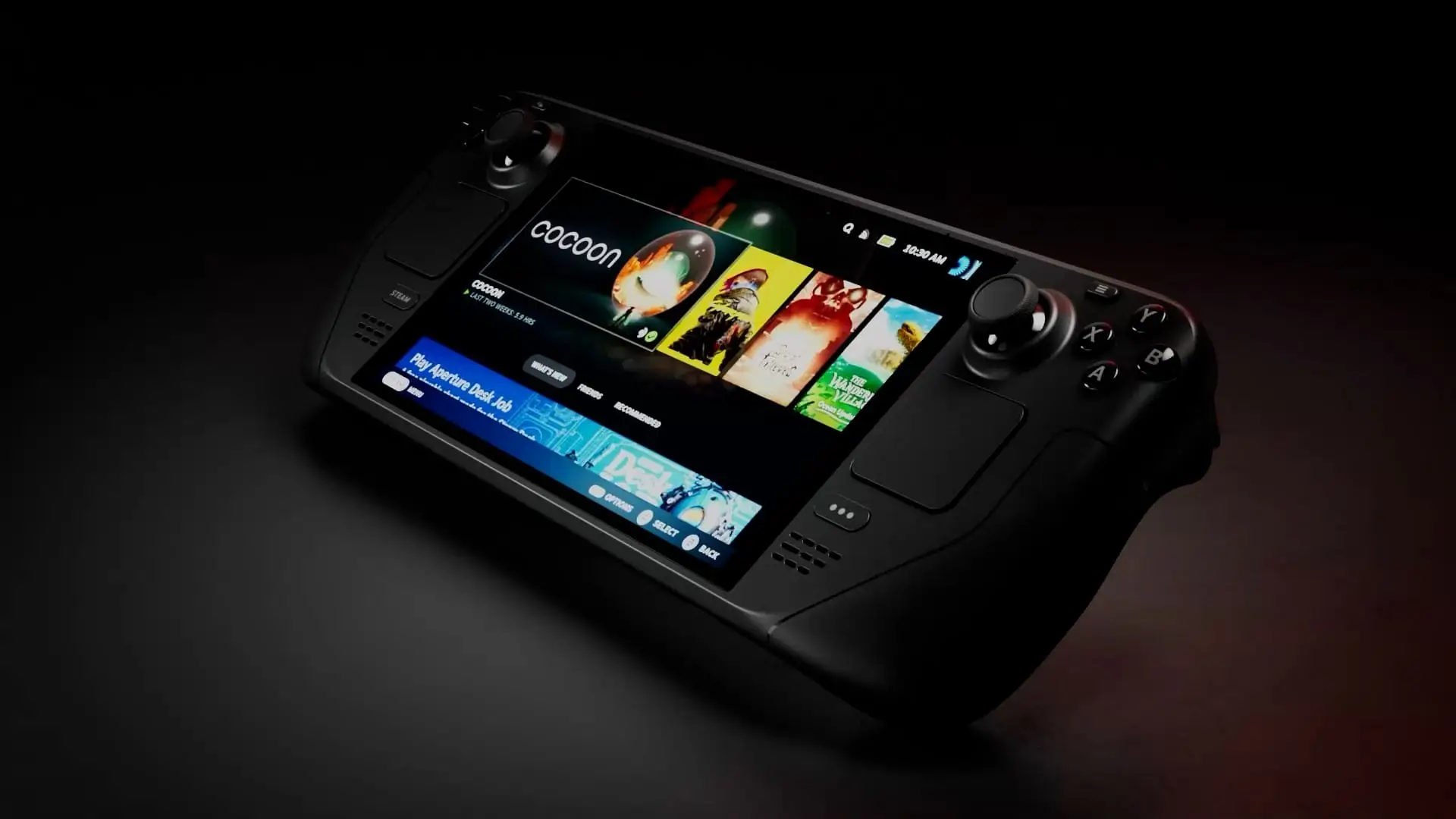
Valve’s next handheld may not be built on the bleeding-edge AMD graphics many fans were hoping for. Prominent hardware leaker Kepler_L2 now claims that Gainsborough, the custom AMD chip rumoured to power a Steam Deck 2, could use RDNA 3.5+ or a mobile RDNA 4 variant rather than the next-generation RDNA 5 architecture suggested in earlier reports. A separate post on X puts the GPU at 12 compute units.
None of this is confirmed. Valve and AMD haven’t acknowledged Gainsborough, and there’s still debate over whether the chip is meant for a Valve device at all. The main thread tying it to the Deck is naming convention, since the original handheld’s APU was codenamed Aerith and AMD has a habit of naming custom silicon after painters. That’s a reasonable hint, not proof.
For context, the current Steam Deck runs RDNA 2 graphics with eight compute units clocked at 1.6GHz, inside an APU that draws between 4W and 15W. Jumping to 12 compute units on a newer architecture would be a meaningful step, but the raw number tells us very little on its own. Clock speeds, power limits, memory bandwidth and cooling all matter as much in a handheld, and the leak covers none of them.
The closest existing comparison is AMD’s Radeon 880M, a 12-CU RDNA 3.5 laptop GPU that handles lighter games comfortably but struggles with demanding AAA releases. That’s a rough reference rather than a forecast, since a custom handheld chip tuned by Valve would run under very different constraints.
The reason this rumour has struck a nerve is that Valve has set its own bar high. Designer Pierre-Loup Griffais has said publicly that a 20 to 50 percent performance bump at the same battery life wouldn’t be enough to justify a successor, and that the company wants a clearer generational leap. A modest RDNA 3.5 upgrade would sit awkwardly against that goal, unless Valve finds major efficiency gains elsewhere.
Meanwhile, the competition hasn’t waited. Windows handhelds from Asus, Lenovo and MSI have moved through multiple generations since the Deck launched in 2022, many running AMD’s newer mobile chips. Valve’s advantage has always been SteamOS, pricing and tight optimisation rather than raw power.
Valve has said its next handheld is getting closer but isn’t ready, and that the ongoing RAM shortage hasn’t changed its plans. Until the company shows actual hardware, the Steam Deck 2 remains a collection of codenames and conflicting leaks, and this latest one raises more questions than it answers.