
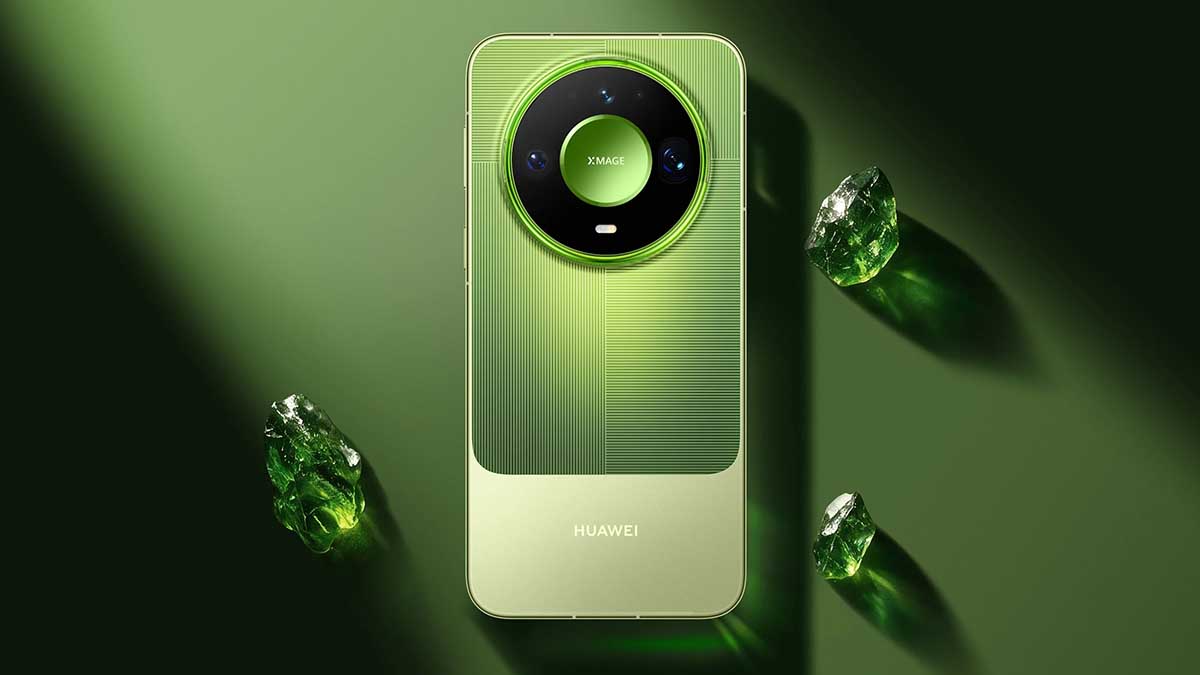
Huawei’s Mate 90 series has arrived in China, and its biggest story isn’t the camera or the screen. It’s how much of the phone Huawei now builds itself, more than seven years after US sanctions cut it off from Google’s software and leading-edge chip suppliers.
The lineup has four models: the standard Mate 90, the Mate 90 Pro, the Mate 90 Pro Max and a design-focused Mate 90 RS Ultimate Design. Each runs on a different in-house Kirin processor, and Huawei groups them under what it calls its Tau chip family. The standard model uses the Kirin 9030 and the Pro uses the Kirin 9035. The Pro Max Premium Edition and RS get the Kirin 9050 Pro, which Huawei says adds hyper-threading support and hardware ray tracing for games. Huawei describes the Pro Max chip’s architecture with figures like 125 TB/s of inter-die bandwidth. Those numbers sound impressive but tell buyers very little until independent testing shows what the silicon actually does.
The same caution applies to the performance claims. Huawei reports gains of 20 to 31 percent over the Mate 80 generation. Those results come from its own labs and compare devices running HarmonyOS 7 against older phones on HarmonyOS 6. That makes it hard to tell how much of the improvement comes from the chip and how much from the software.
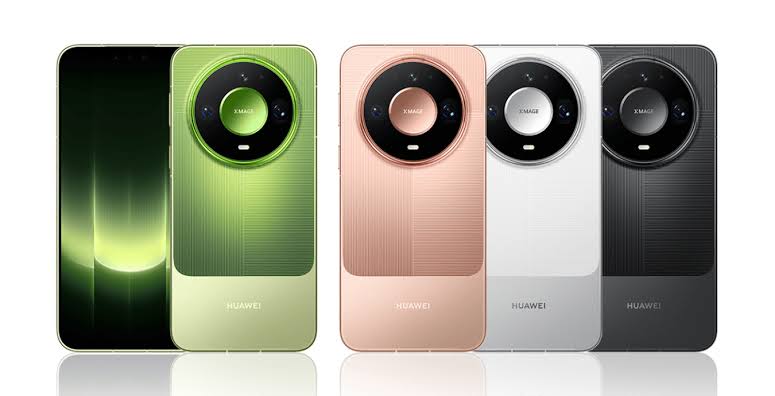
The display specs are just as ambitious. The Pro’s second-generation Linglong panel uses tandem OLED and reaches 12,000 nits, but only in a small highlight covering 1 percent of the screen. The Pro Max and RS add wider BT.2020 colour coverage. Durability is a clear focus as well. Higher-end models get new Kunlun glass on the front and camera cover, and every model is rated IP68 and IP69.
For photography, the Pro Max carries a 200MP periscope telephoto with an RYYB sensor. Huawei is also introducing the XMAGE Z10, a separate modular camera with a 1-inch sensor and a 24–240mm optical zoom. Pricing and availability for the module haven’t been detailed.
AI features run on a 30-billion-parameter on-device model on the Pro Max and above. They include call summaries, live translation and photo editing using voice or text. Huawei says HarmonyOS 6 and 7 now run on more than 90 million devices. That’s a meaningful base for a platform that no longer supports Android apps.
Prices in China start at CNY5,999 (about $895) for the standard model and reach CNY12,999 (about $1,940) for the RS. Several features, including four-SIM support, are tied to Chinese carriers. Huawei hasn’t announced international availability, and that’s the real question for buyers in the Middle East. The hardware looks competitive. Whether HarmonyOS’s app ecosystem can support a phone at this price outside China is still unproven.