
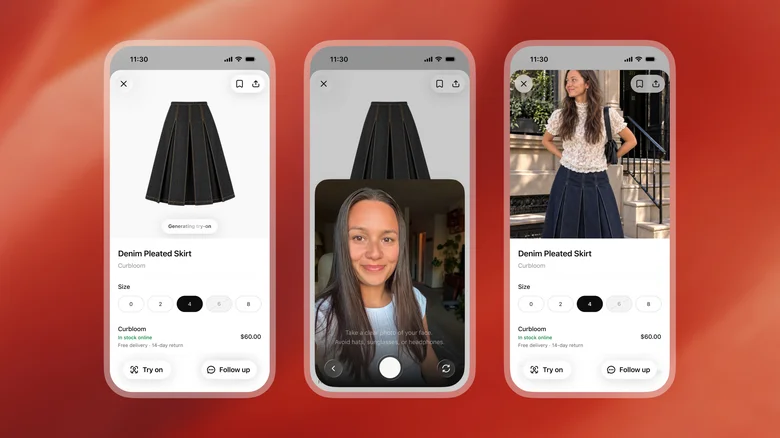
ChatGPT is expanding into online shopping again, this time with a feature that lets users see clothes on themselves before buying. The new Virtual Try On tool generates images of a user wearing an item, using photos they upload of themselves.
It works directly inside a conversation. When ChatGPT shows a clothing product, users can tap the item, choose “Try on,” and supply a selfie and a full-body photo. The system then produces an image of them wearing that piece. The tool isn’t limited to products ChatGPT recommends. A screenshot of clothing from anywhere can be used too, so in practice ChatGPT works as a fitting room for the whole internet, not just its own search results.
The images are generated by ChatGPT Images 2.5, OpenAI’s latest image model, which launched in September. OpenAI is also adding a way to save products to the Library section of the app, so items found in one conversation can be revisited later. It’s a small change, but it shows ChatGPT gradually taking on features normally found in shopping apps.
The idea isn’t new. Google added a similar try-on feature to Search in 2025, where users upload photos to see themselves in different outfits. OpenAI is catching up rather than leading here. Its advantage is that the feature appears inside conversations, where people may already be asking for outfit ideas or product comparisons.
There’s a limit to what virtual try-ons can do. A generated image can suggest how a colour or style looks on someone, but it can’t confirm fit, fabric drape or sizing. Those are the factors that usually lead to returns. The output is the model’s best guess, and it shouldn’t be treated as a reliable preview of the real item.
Privacy is a bigger concern. The feature asks users for a face photo and a full-body photo, which is sensitive personal data. On personal ChatGPT accounts, uploaded images can be used to train OpenAI’s models by default unless the user opts out. Anyone trying the feature should check those settings first.
The bigger question is what OpenAI gets out of all this. It previously let users complete purchases inside ChatGPT through Instant Checkout, but that feature has since been discontinued. The company does run ads inside chats that merchants can use to promote products. A try-on tool alone won’t pay for the enormous cost of running these models. But OpenAI keeps adding shopping features, which suggests it sees commerce as a long-term business, even if it hasn’t settled on how to make money from it.