
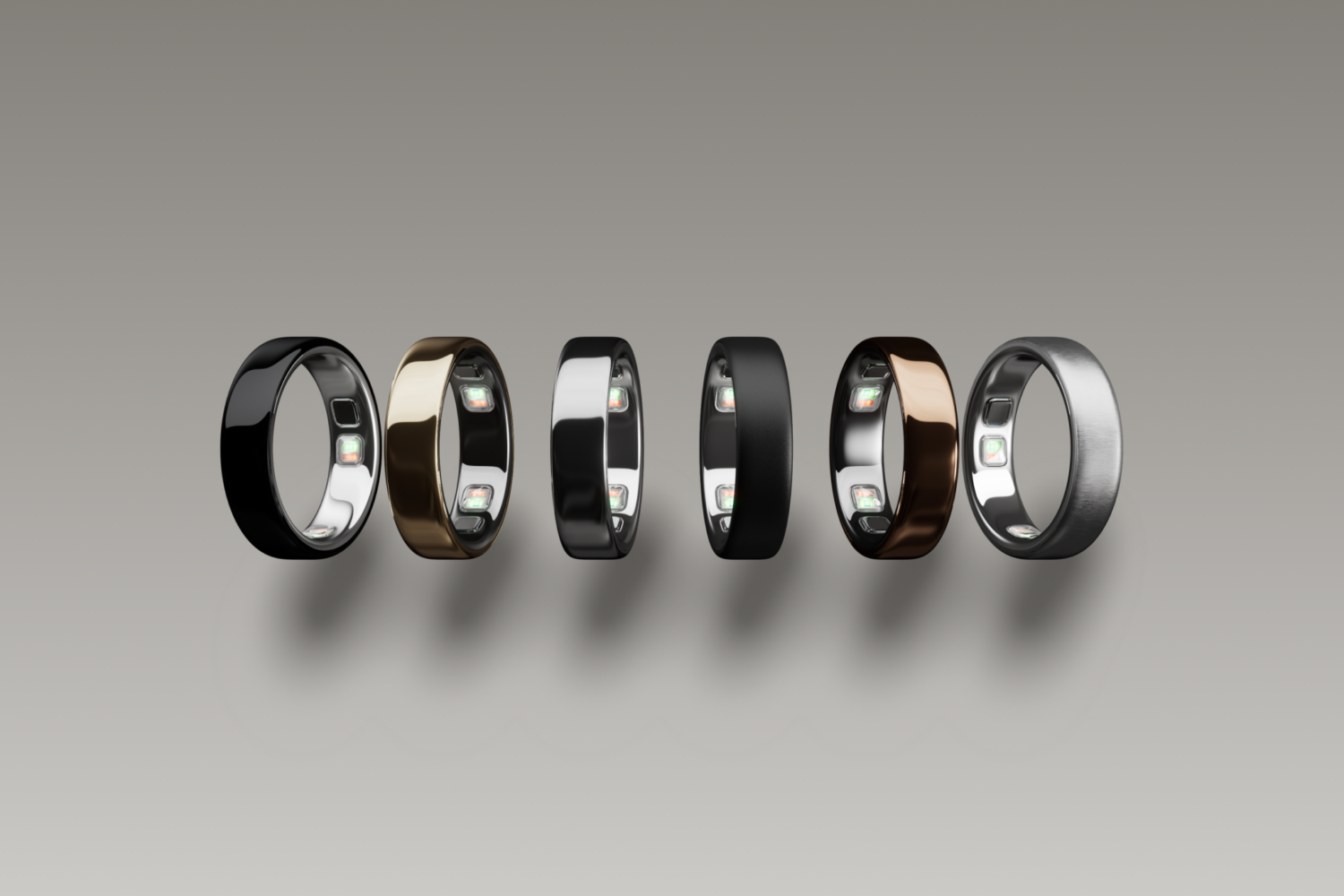
Oura may be preparing to become a public company, but the smart ring category it helped popularise is becoming considerably harder to dominate.
The Finnish wearable company filed to go public on September 3 after reporting $1.21 billion in revenue for the nine months ending June 30, nearly double the comparable figure cited in its filing. Oura also says it sold 3.6 million rings during the previous year and has around five million paying members. The filing follows the arrival of the Oura Ring 5, its latest and smallest-generation wearable.
Those numbers give Oura substantial momentum, but competitors are increasingly trying to make smart rings do more than quietly monitor sleep, activity and recovery. The emerging battle is about turning a tiny piece of jewellery into something closer to a general-purpose wearable computer.
Ultrahuman is pushing particularly hard in that direction. Its $479 Ring Pro, expected to begin US shipments in mid-September, uses a redesigned heart-rate sensing system and dual-core processor. More significantly, the company recently raised $70 million in a funding round backed by Qualcomm’s venture arm and is exploring rings capable of running software directly on the device, potentially supporting AI applications and even games.
That ambition comes after a difficult period in the US. An International Trade Commission ruling in October 2025 sided with Oura in a patent dispute and prevented Ultrahuman from importing new ring inventory. The Ring Pro consequently uses a redesigned form factor intended to avoid the disputed patent.
Circular, meanwhile, is approaching the problem from a different direction. Its forthcoming Ring 3 Pro and Ring 3 Slim are expected early next year with NFC contactless payments and vibration alerts. The Pro is also slated to include FDA-cleared ECG functionality for AFib detection alongside blood-pressure trends, glucose tracking and sleep analysis. Pricing has not been announced.
RingConn’s $349 Gen 3, launched in May, combines familiar heart rate, blood oxygen, sleep, stress and activity measurements with vascular health insights and vibration-based alerts. Samsung remains the biggest consumer-electronics name in the category with its $399 Galaxy Ring, although its health capabilities are comparatively limited against specialist rivals in areas such as sleep apnea and AFib detection.
Then there is Dreame, which illustrates how quickly smart rings are expanding beyond passive tracking. Its announced device combines health monitoring with haptic notifications and a touch-sensitive control surface capable of actions such as changing music or triggering a smartphone camera. Pricing and availability remain unknown.
There is an obvious tension here. Smart rings originally offered an appealing alternative to screen-heavy wearables: discreet sensors that could collect useful health data without demanding constant attention. Adding payments, notifications, touch controls, displays and apps risks recreating the smartwatch on a much smaller finger.
Oura’s IPO filing therefore arrives at an interesting moment. Its biggest challenge may no longer be convincing people that smart rings are useful. It may be deciding how much functionality a smart ring actually needs while competitors race to squeeze increasingly ambitious technology onto our fingers.