

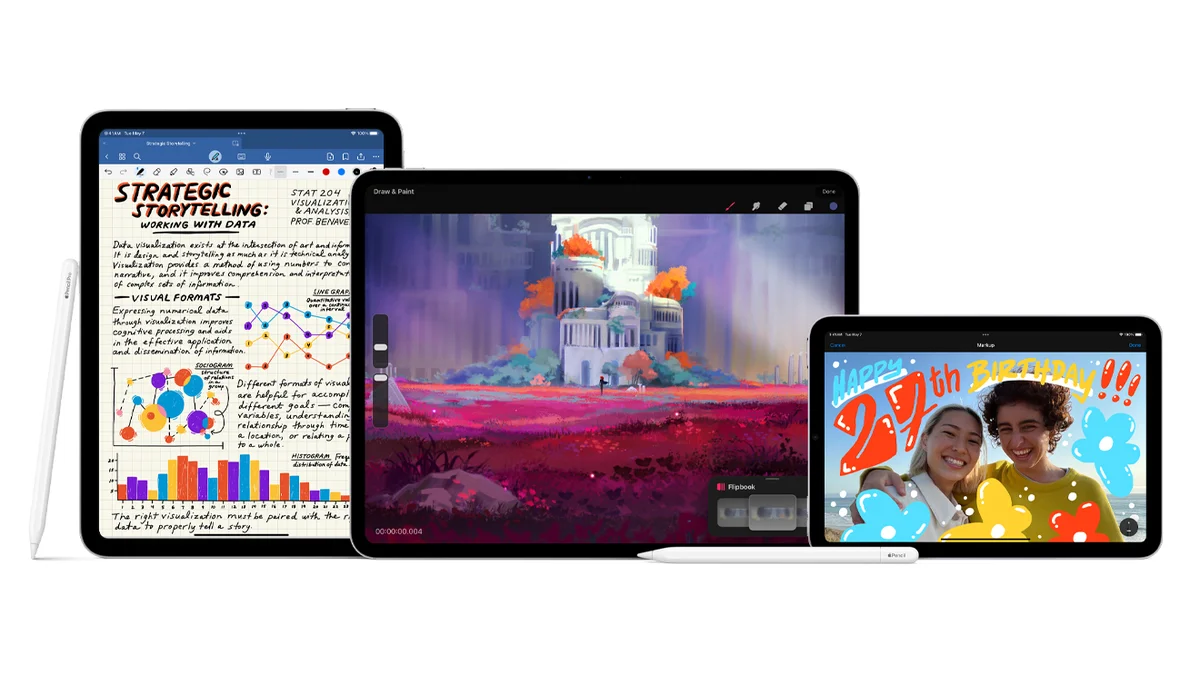
Apple is set to refresh its stylus lineup with two new Apple Pencil models in the first half of 2027, aligning with updates to the iPad Pro range. According to reports, these accessories will succeed the current entry-level USB-C version and the more advanced Apple Pencil Pro introduced in 2024. The move highlights ongoing challenges in accessory durability and regulatory pressures rather than a leap in creative tools.
The budget model, internally referenced as B582, will update the basic USB-C charging Pencil that many users rely on for everyday note-taking and light sketching. The second, labeled B632, targets the Pro variant known for features like haptic feedback and squeeze gestures. While these refreshes arrive over a year from now, they fit Apple’s pattern of syncing stylus releases with major iPad hardware cycles. Past generations have shown that new Pencils often arrive alongside tablets to justify upgrades, even when core iPad designs see only incremental internal changes.
A notable aspect involves repairability. Today’s Apple Pencils are notoriously difficult to service, with components glued together in a way that makes battery replacement or fixes impractical for most owners. This design choice has drawn criticism over the years, contributing to a perception of disposability in what should be a long-term creative investment. Upcoming EU regulations on replaceable batteries appear to be influencing the redesign, pushing Apple toward more serviceable constructions. Unlike some competitors whose styluses already support easier part swaps, Apple would essentially be addressing a longstanding shortfall here.
The timing makes practical sense. With iPad Pro models expected to focus on subtle internal enhancements in 2027 rather than dramatic external overhauls, refreshed accessories provide tangible talking points. Users who depend on the Pro Pencil for precise work—artists, students, and professionals—stand to gain the most from improved longevity, while those on the basic model receive a modest but necessary update. Holding off on purchases until these versions launch could prove worthwhile for anyone facing current repair frustrations or battery wear.
That said, expectations should remain measured. No major new interaction methods are anticipated, and the changes seem driven more by compliance and maintenance realities than breakthrough user experiences. Apple’s accessory strategy has often prioritized ecosystem lock-in over modularity, a contrast to more flexible options in the broader market. This Pencil update, if realized as described, represents a step toward addressing user pain points rather than redefining digital input.
In the wider context of tablet accessories, styluses have evolved from niche tools to everyday companions for productivity and creativity. Yet issues like repair costs and environmental impact persist across the industry. For Apple users, a more fixable Pencil could extend the usable life of both the stylus and paired iPad, potentially reducing electronic waste—a quiet but meaningful consideration amid growing scrutiny of tech consumption patterns.