


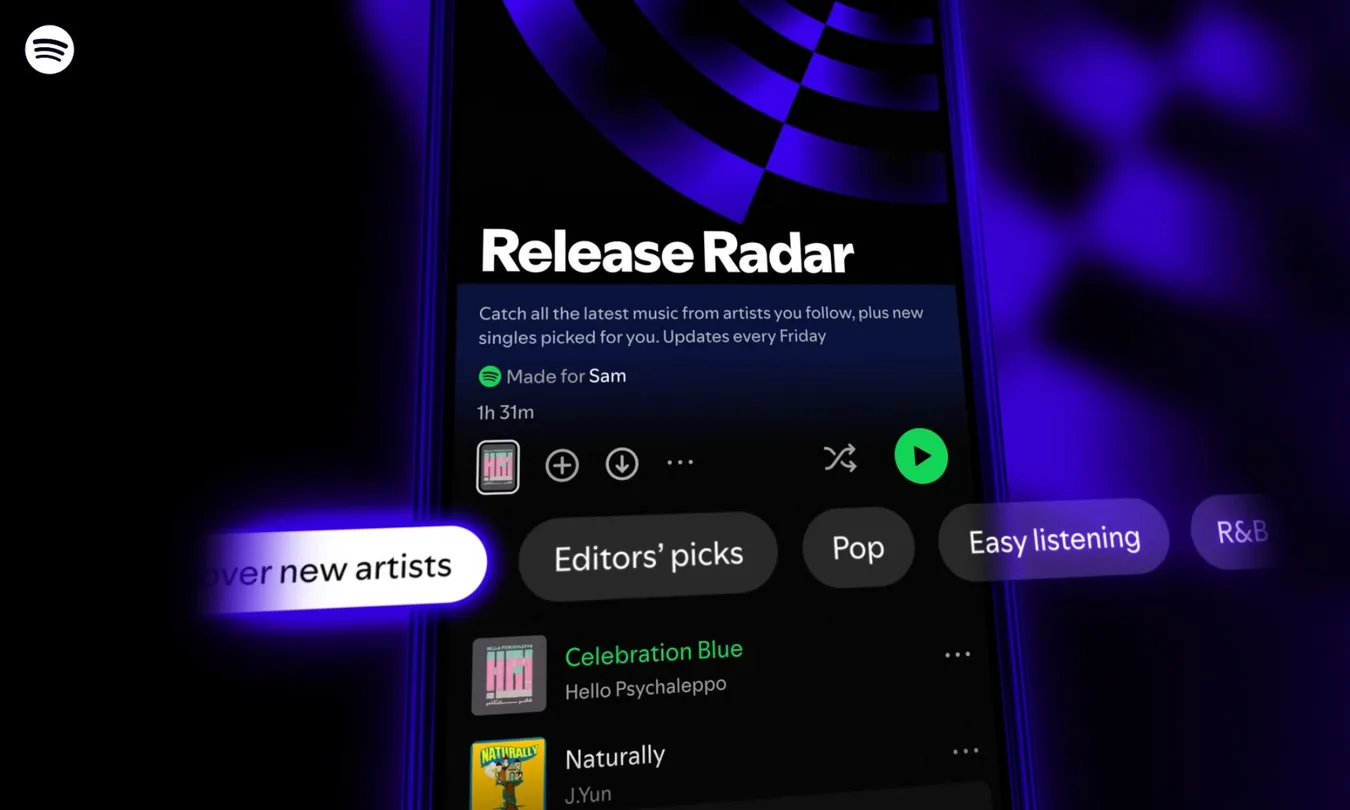
Spotify has introduced session controls to its Release Radar playlist, offering users more direct influence over the weekly selection of new music. Available now on mobile and desktop, these options arrive amid ongoing debates about how effectively algorithms surface fresh tracks in an era of overwhelming streaming catalogs. Rather than passively accepting the platform’s default mix, listeners can now adjust the playlist before playback, selecting up to five preferences tailored to their current mood.
The controls emphasize flexibility. One choice steers the playlist toward entirely unfamiliar artists, encouraging genuine discovery beyond familiar names. Others draw on three personalized genre suggestions derived from individual listening patterns, allowing users to zero in on specific styles without broad algorithmic guessing. An “Editors’ picks” setting hands curation back to Spotify’s team for those seeking a more guided experience. These additions build on years of incremental tweaks to Release Radar, which has long served as a key tool for new releases but has sometimes drawn criticism for feeling inconsistent or overly influenced by popularity metrics rather than taste alignment.
Spotify also claims underlying recommendation improvements that better match tracks to user preferences, though such statements warrant scrutiny given the inherent challenges of predictive modeling in diverse musical landscapes. Historically, music discovery platforms have struggled to balance serendipity with relevance—early internet radio services like Pandora relied on manual tagging, while modern algorithms risk echo chambers. This update attempts to thread that needle by giving users veto power within the session, a modest but practical step that acknowledges listeners’ agency rather than pretending the machine always knows best.
Visually, Release Radar receives a refreshed cover and header design, resulting in a cleaner interface that feels less cluttered. The playlist reportedly draws nearly nine million weekly listeners, underscoring its role in Spotify’s discovery ecosystem. Users can access the updated version every Friday via the Fresh New Music section on the home tab or through the Made For You hub at any time.
Beyond the playlist changes, Spotify has expanded library pinning capabilities, now allowing more than four items to be saved for quicker access. This small quality-of-life improvement addresses a frequent user complaint about navigation friction in large collections.
In practice, these controls could reduce the hit-or-miss nature of Release Radar for many, particularly those with eclectic or evolving tastes. Yet they also highlight a broader truth: even refined algorithms benefit from human intervention. As streaming libraries balloon and attention spans fragment, tools that empower choice without abandoning algorithmic support represent a sensible evolution. Listeners tired of random suggestions may find renewed value here, though the real test lies in whether the filtered results consistently deliver depth over surface-level familiarity.