
Lego is expanding its Smart Play technology beyond Star Wars for the first time, introducing a dozen Pokémon-themed sets scheduled for release this August. The move marks a notable shift in the company’s approach to blending physical building with digital interaction, targeting a younger demographic after years of focusing its more advanced collaborations on adult fans.
Until now, Lego’s Pokémon offerings have centered on detailed, nostalgic models aimed at collectors in the 18-plus range. The new Smart Play lineup changes that emphasis, echoing the modular Mario series that successfully combined bricks with app-based play. Prices start at $15 for the smallest set and reach $120 for the largest, making the collection accessible while still requiring additional purchases for full functionality.
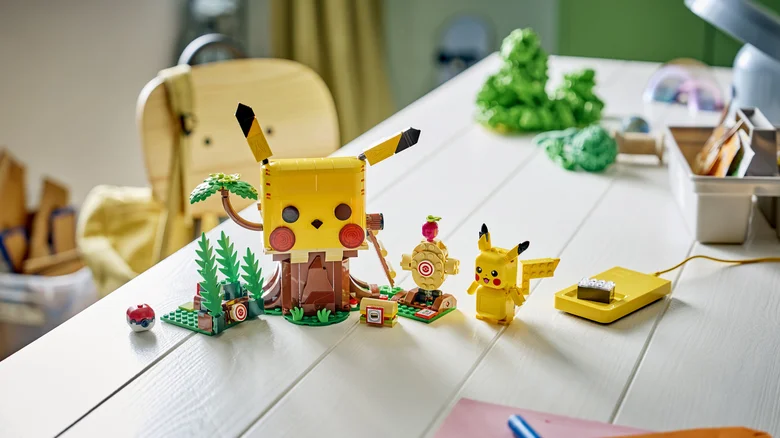
The two flagship sets illustrate the system’s core mechanics. The Charizard vs. Jolteon Ultimate Battle set, priced at $120, includes 18-centimeter and 12-centimeter figures, two Smart Bricks, four Smart Tags, and a charger. Inserting a Smart Brick into each Pokémon unlocks specific sounds and battle interactions, while Smart Tags enable features like health restoration during pretend fights. A separate training target adds another layer of engagement. The $70 Training House with Pikachu offers a brick-built tree house, a Pikachu figure, one Smart Brick, and tags that support activities centered on nurturing, feeding, and training the character.
The remaining ten sets focus on recognizable Pokémon, many from the original generation, and range from $15 to $90. Models like Jigglypuff gain microphone and speaker capabilities with a Smart Brick, while others respond to movement. However, the absence of standalone Smart Bricks means buyers must purchase complete sets to unlock these features, which could frustrate parents or fans looking to expand existing collections without redundant purchases. This closed ecosystem approach echoes past criticisms of Lego’s tech integrations, where compatibility and upgrade costs sometimes limited long-term appeal.
Lego has also announced in-store activations, turning select locations into PokéStops and Gyms for exclusive rewards between August and September. These tie-ins extend to the companion app, offering digital backgrounds, stickers, and apparel. While such cross-promotions can enhance the experience, they also reflect the broader industry trend of using physical toys as gateways to digital ecosystems, raising questions about whether the play remains truly open-ended or becomes increasingly tethered to apps and subscriptions.
Compared to earlier attempts at smart toys, Lego’s execution here benefits from the company’s long history of quality building experiences. The Pokémon franchise itself has endured for decades through games, cards, and animation, maintaining relevance across generations. Yet the Smart Play line’s success will likely depend on how seamlessly the technology integrates without overshadowing the simple joy of building and imaginative play that has defined Lego for generations. For families navigating the balance between physical and digital entertainment, these sets offer an interesting option, though one that demands careful consideration of the full cost of entry.