
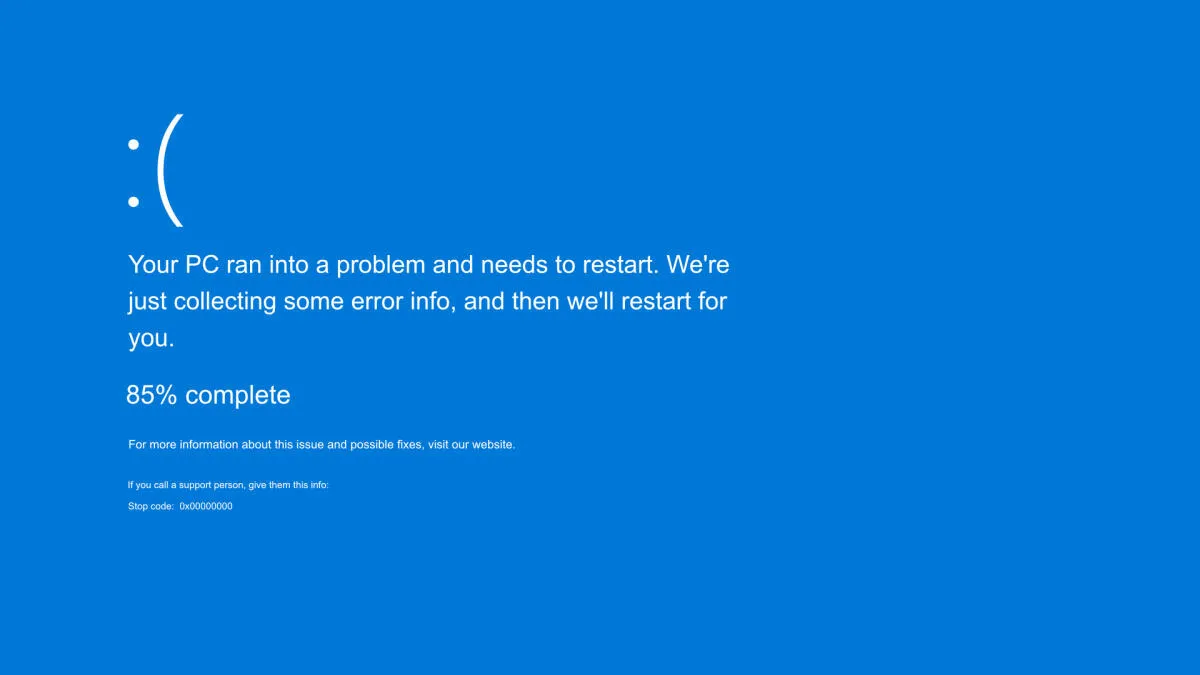
Windows is replacing its long-standing Blue Screen of Death (BSOD) with a new Black Screen of Death, marking the end of an era that began nearly four decades ago. This change is part of broader updates under the Windows Resiliency Initiative, a program launched in response to last year’s CrowdStrike outage that disrupted operations for around 8.5 million Windows devices, impacting sectors ranging from airports to government services.
The Windows Resiliency Initiative aims to strengthen system security and stability, seeking to reduce the risk of widespread outages. As part of these efforts, Microsoft is introducing features such as quick machine recovery, designed to help PCs reboot more efficiently in the event of an unsuccessful restart, minimising downtime for users and businesses.
Despite the significance of the visual change, Microsoft has described the new Black Screen of Death merely as a “simplified UI,” without addressing the nostalgia attached to its predecessor. Since its introduction in Windows 1.0 back in 1985, the blue error screen has become a cultural symbol of system crashes, often appearing in public spaces at unfortunate moments and earning recognition far beyond tech circles.
The decision to move from blue to black remains unexplained. Whether it was influenced by reputational concerns tied to widely circulated images of BSOD crashes in airports or public billboards, or simply a design choice to align with modern UI themes, Microsoft has not elaborated.
Over its nearly 40-year run, the BSOD has remained a stark reminder of underlying system failures, surviving through major shifts in technology and culture, from the pre-internet era to today’s AI-integrated operating systems. Its replacement with a black variant closes a chapter familiar to generations of Windows users, signalling Microsoft’s push to redefine even the most iconic aspects of its user experience.